



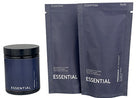


CoQ10+ Refill
90 Vegan capsules per bottle

Heart

Energy

Nervous System

Vegan
-
Ubiquinone CoQ10 - 100mg
-
Produced naturally by fermentation
-
With Thiamine (Vitamin B1)
-
Fully Vegan and Clean Ingredients
- 30-day supply with refills delivered monthly.
- Pause or cancel anytime.
We stand by our science — enjoy 90 days risk-free. Read more


1 tablet typically provides:
Per Portion - *NRV
Coenzyme Q10 - 100mg
Thiamine (Vitamin B1) - 0.165mg - 15%NRV*
* Nutrition Reference Value
Ingredients
Ingredients:
Microcrystalline Cellulose, Coenzyme Q10, Capsule Shell: Hydroxypropyl Methylcellulose, Thiamine Hydrochloride
Allergens
Allergens:
Although rigorous precautions are taken to prevent any cross-contamination, this product is manufactured in a facility that handles allergy-based materials.
Disclaimer
Disclaimer:
Always consult your health practitioner before taking nutritional supplements, especially if you are taking medication or are under medical supervision. Not recommended for use by pregnant or breastfeeding women. You should not take supplements as a substitute for a varied balanced diet or healthy lifestyle. Store in a cool dry place, out of reach of children.
SUITABLE FOR VEGETARIANS OR VEGANS
Take 1 -3 capsules per day, with a meal.
Do not exceed recommended dose.
Take it with a meal, preferably in the morning. Coenzyme Q10 is fat-soluble, so taking it with food, especially one that contains healthy fats may help your body absorb it more efficiently.
Morning is ideal for those using it as part of their energy-support routine.
Delivery time begins after the carrier receives your package.
 CoQ10+Refill
The Persona
Promise
Discover what makes us different and why our customers trust us.


At Persona we don't use marketing claims.
Every health benefit you see is approved by european authorities and backed by science.
It's how we build trust.
Learn more about CoQ10+ RefillEvery cell in your body needs energy to function. This energy comes from the food you eat, which your body’s metabolism transforms into the power that fuels everything from a simple thought to a long walk. This complex process relies on the right nutrients to run smoothly.
To support this essential metabolic process, our formula provides Thiamine (Vitamin B1) and Co-Enzyme Q10. Thiamine is an essential vitamin, while CoQ10 is a compound naturally found in the body’s cells, especially in the mitochondria.
Your cells are like tiny power plants. This is where Thiamine plays its role.
- Thiamine contributes to normal energy-yielding metabolism.*
It is a key part of the process that helps your body convert food into usable energy, a process that is happening in every cell.
Not all forms of CoQ10 are the same. Our formula uses the ubiquinone form, which is a well-studied compound produced naturally by fermentation. This form is chosen for its stability and purity.
Understanding Bioavailability
Why the form of a vitamin matters as much as the vitamin itself
The Restaurant Example
Imagine ordering salmon at a restaurant. The menu says "salmon", but what arrives could be perfectly grilled, raw, or still wrapped in plastic. Technically all salmon, but only one is actually nourishing.
Vitamins work the same way. A label might say "Vitamin C 1000 mg," but that vitamin could be in a form your body barely absorbs, or one it uses efficiently. The form determines whether your body can actually use what you're taking.
What Is Bioavailability?
Bioavailability is the amount of a nutrient that actually enters your bloodstream and reaches your cells.
If you take 100 mg of a vitamin but only 20 mg gets absorbed, the bioavailability is 20%. The rest passes through unused.
What affects bioavailability:
- The chemical form of the vitamin
- Your individual gut health and genetics
- What you eat alongside the supplement
Common Vitamin Forms Explained
Methylated Vitamins (Active Forms)
Some people struggle to convert standard vitamins into their active, usable forms due to genetic variations. Methylated vitamins skip that step; they're already active.
Example: Methylcobalamin (B12) vs Cyanocobalamin
- Methylcobalamin Active form, immediately usable
- Cyanocobalamin Synthetic, requires conversion (which 40-60% of people struggle with due to MTHFR gene variants)
Common forms: Methylfolate (5-MTHF), methylcobalamin (B12), P-5-P (B6)
Natural vs Synthetic
"Natural" doesn't automatically mean better; it depends on the specific vitamin.
Example: Vitamin E
- Natural (d-alpha-tocopherol): Derived from plants, more biologically active
- Synthetic (dl-alpha-tocopherol): Contains 8 forms, only one your body prefers
Example: Vitamin C
- Ascorbic acid (synthetic) is molecularly identical to natural vitamin C and equally effective
- Liposomal vitamin C: Wrapped in fat bubbles for enhanced absorption and higher blood levels
Fat-Soluble vs Water-Soluble
Fat-soluble vitamins (A, D, E, K) need fat to be absorbed. Taking them with food containing healthy fats significantly improves uptake.
Water-soluble vitamins (B, C) dissolve in water and are absorbed more easily, but excess is excreted quickly, making sustained-release forms sometimes beneficial.
What "Bioavailable" Actually Means on a Label
When we say "bioavailable form," we mean:
- Active forms that don't require conversion (methylated B vitamins)
- Forms with proven absorption backed by scientific research
- Enhanced delivery systems (like liposomal technology)
What it shouldn't mean: vague marketing language without specifics.
Red flags to watch for:
- No specific form listed (just "Vitamin B12" without the type)
- "Proprietary blends" that hide ingredient amounts
- Claims without any absorption data
The Bottom Line
A cheaper supplement with poor bioavailability isn't a bargain. The best supplements aren't about taking more; they're about absorbing what you take.
What to look for:
- Specific forms clearly listed on the label
- Science-backed forms (methylated, chelated, liposomal)
- Transparency about dosages and sources
At Persona, we choose forms based on scientific evidence for absorption, not what's cheapest to manufacture. Because if your body can't use it, what's the point?
References: EFSA scientific opinions on bioavailability; NIH Office of Dietary Supplements; peer-reviewed studies on vitamin absorption and forms (available upon request).


Replenish what naturally declines as we age

Bioavailable Form for Better Absorption

With Added Thiamin - Vitamin B1

Produced Naturally by Fermentation

Fully Vegan Formula & Capsule
More than just Supplements
Bioavailable Nutrients

How to Use:
- Take 1 -3 capsules per day, with a meal.

The Benefits of CoQ10
Antioxidant
Coenzyme Q10 (CoQ10) is a naturally occurring antioxidant that plays a central role in cellular energy production. Found in every cell in the body, CoQ10 is essential for the function of mitochondria, the structures that generate energy for your cells. Our bodies produce CoQ10 naturally, but production declines with age, making supplementation increasingly relevant from your 30s onwards.
Key Highlights
- Essential for cellular energy production (ATP synthesis)
- Powerful antioxidant that protects cells from oxidative damage
- Natural production declines from age 20 onwards
- Supports cardiovascular health and heart function
- May support fertility and egg quality in women over 30
- Found in every cell, with highest concentrations in heart, liver, and kidneys
Biochemistry Timeline
CoQ10 supplementation typically takes 4 to 12 weeks to reach steady-state levels in the body. Because CoQ10 is fat-soluble, it is best absorbed when taken with a meal containing dietary fat. The ubiquinol form (reduced CoQ10) may be better absorbed than ubiquinone, particularly in older adults.
Benefits such as improved energy levels may be noticed within 2 to 4 weeks, while cardiovascular and fertility-related benefits typically require longer-term, consistent supplementation of 8 to 12 weeks or more.
Fertility and Egg Quality
CoQ10 has gained significant attention in reproductive health research. As egg cells (oocytes) require enormous amounts of energy for maturation and division, the age-related decline in CoQ10 production may contribute to declining egg quality.
A 2024 meta-analysis (Shang et al.) found that among antioxidant supplements studied for ovarian health, CoQ10 was more effective than melatonin, myo-inositol, or vitamins at increasing retrieved oocytes and high-quality embryo rates. The optimal dose identified was 30 mg/day for 3 months, with women under 35 with diminished ovarian reserve benefiting most.
Another meta-analysis (Florou et al., 2020) found that CoQ10 significantly increased clinical pregnancy rates (28.8% vs 14.1%) in women undergoing assisted reproduction. Research by Brown et al. (2023) confirmed that CoQ10 improved fertilisation rates, embryo maturation, and embryo quality in women aged 31 and above.
Skin Health and Ageing
CoQ10 levels in the skin decrease with age and with exposure to UV radiation. As a potent antioxidant, CoQ10 helps protect skin cells from oxidative damage, which contributes to visible signs of ageing such as fine lines and reduced elasticity.
Supplementation supports CoQ10 levels from within, complementing topical skincare. By protecting mitochondria in skin cells, CoQ10 helps maintain the energy production needed for cellular renewal and repair. This internal approach to skin health aligns with the growing understanding that how we nourish our bodies from the inside reflects on the outside.
Summary
CoQ10 is a naturally occurring compound essential for cellular energy production and antioxidant protection. Found in every cell, it is particularly important for the heart, brain, and other high-energy organs. Natural production declines with age, making supplementation increasingly relevant from the 30s onwards.
Research supports CoQ10's role in cardiovascular health, fertility support, and protection against oxidative stress. It is fat-soluble and best taken with food, with benefits typically becoming noticeable within 4 to 12 weeks of consistent use.
FAQs
At what age should I consider CoQ10 supplementation?
Natural CoQ10 production begins declining around age 20 and drops significantly by age 40. Supplementation is most commonly recommended from the 30s onwards, particularly for those concerned about energy levels, heart health, or fertility.
What is the difference between ubiquinone and ubiquinol?
Ubiquinone is the oxidised form of CoQ10, while ubiquinol is the reduced (active) form. Both are effective, but ubiquinol may be better absorbed, particularly by older adults. The body can convert between the two forms as needed.
Can I take CoQ10 with other supplements?
Yes, CoQ10 is generally well-tolerated alongside other supplements. It works synergistically with vitamin E and may enhance the effects of omega-3 fatty acids. If you take blood-thinning medication (such as warfarin), consult your healthcare provider first.
Are there any side effects?
CoQ10 is considered safe and well-tolerated at standard supplementation levels. Rare side effects may include mild digestive discomfort, which can usually be resolved by taking it with food.
Is CoQ10 safe during pregnancy?
CoQ10 has been studied in the context of fertility and preconception health. However, if you are pregnant or planning to become pregnant, consult your healthcare provider before starting any new supplement.
Research
Abdelrahman et al — Drug Des Devel Ther (2026). [Randomized Controlled Trial]. https://doi.org/10.2147/DDDT.S583321
Magalhães et al — J Clin Psychopharmacol (2026). [Meta-Analysis]. https://doi.org/10.1097/JCP.0000000000002112
Liu et al — Food Funct (2026). [Randomized Controlled Trial]. https://doi.org/10.1039/d5fo05343a
Eladly et al — J Crit Care (2026). [Randomized Controlled Trial]. https://doi.org/10.1016/j.jcrc.2025.155225
Murray et al — J Physiol (2026). [Randomized Controlled Trial]. https://doi.org/10.1113/JP289428
Akwan R et al. – European journal of clinical pharmacology (2025). [Meta-analysis]. https://pubmed.ncbi.nlm.nih.gov/40833470/
Díaz-Fuster L et al. – Cells, tissues, organs (2025). [Systematic review]. https://pubmed.ncbi.nlm.nih.gov/40168958/
Niu C et al. – Reproductive sciences (Thousand Oaks, Calif.) (2025). [Meta-analysis]. https://pubmed.ncbi.nlm.nih.gov/40813743/
Salekzamani S et al. – Multiple sclerosis and related disorders (2025). [Systematic review]. https://pubmed.ncbi.nlm.nih.gov/39667129/
CoQ10 T2D meta-analysis — Clinical Therapeutics (2025). [Meta-analysis (16 RCTs)]. https://www.clinicaltherapeutics.com/article/S0149-2918(24)00414-4/abstract
Qu & Qu — Complement Ther Clin Pract (2025). [Systematic review & MA (17 RCTs)]. https://www.sciencedirect.com/science/article/abs/pii/S1744388125000660
Kovacic S et al. – Journal of nutritional science (2025). [Systematic review]. https://pubmed.ncbi.nlm.nih.gov/41158831/
Rosselló Aubach et al — J Diet Suppl (2025). [Randomized Controlled Trial]. https://doi.org/10.1080/19390211.2025.2483269
Ribeiro et al — Ophthalmic Genet (2025). [Meta-Analysis]. https://doi.org/10.1080/13816810.2025.2521647
Broome et al — Redox Biol (2025). [Randomized Controlled Trial]. https://doi.org/10.1016/j.redox.2025.103927
Nejati et al — Pain Manag (2025). [Randomized Controlled Trial]. https://doi.org/10.1080/17581869.2025.2528590
Micaraseth et al — Br J Nutr (2025). [Randomized Controlled Trial]. https://doi.org/10.1017/S0007114524003131
Bagheri et al — Nutrients (2025). [Randomized Controlled Trial]. https://doi.org/10.3390/nu17243959
Karuntu et al — Prog Retin Eye Res (2025). [Review]. https://doi.org/10.1016/j.preteyeres.2024.101324
Candow et al — J Int Soc Sports Nutr (2025). [Review]. https://doi.org/10.1080/15502783.2025.2534130
Nankivell et al — Nutrients (2025). [Review]. https://doi.org/10.3390/nu17172896
Shang et al. 2024 - antioxidants ovarian aging MA (2024). [SR + meta-analysis (20 RCTs)]. https://www.sciencedirect.com/science/article/pii/S2161831324001078
Talebi S et al. – Clinical nutrition ESPEN (2024). [Systematic review]. https://pubmed.ncbi.nlm.nih.gov/38479900/
Shang Y et al. – Advances in nutrition (Bethesda, Md.) (2024). [Meta-analysis]. https://pubmed.ncbi.nlm.nih.gov/39019217/
Qazi SU et al. – Future cardiology (2024). [Meta-analysis]. https://pubmed.ncbi.nlm.nih.gov/39049769/
Lin G et al. – Annals of medicine (2024). [Systematic review]. https://pubmed.ncbi.nlm.nih.gov/39129455/
Akhigbe TM et al. – Frontiers in pharmacology (2024). [Systematic review]. https://pubmed.ncbi.nlm.nih.gov/39830337/
Aaseth et al. — Int J Mol Sci (2024). [Comprehensive review]. https://www.mdpi.com/1422-0067/25/1/574
StatPearls (NIH) — NCBI Bookshelf (2024). [Reference / Review]. https://www.ncbi.nlm.nih.gov/books/NBK531491/
Carlini et al — J Physiol (2024). [Randomized Controlled Trial]. https://doi.org/10.1113/JP285636
Freire de Carvalho et al — Clin Nutr ESPEN (2024). [Systematic Review]. https://doi.org/10.1016/j.clnesp.2023.11.016
Majmasanaye et al — J Clin Psychopharmacol (2024). [Randomized Controlled Trial]. https://doi.org/10.1097/JCP.0000000000001845
Kiani et al — Trials (2024). [Randomized Controlled Trial]. https://doi.org/10.1186/s13063-024-08006-y
Mantle et al — Int J Mol Sci (2024). [Review]. https://doi.org/10.3390/ijms25084576
Long et al — Front Immunol (2024). [Review]. https://doi.org/10.3389/fimmu.2024.1435139
Badaeva et al — Pain Ther (2024). [Review]. https://doi.org/10.1007/s40122-024-00641-2
Qin et al — Med Res Rev (2024). [Review]. https://doi.org/10.1002/med.22034
Brown et al. 2023 - CoQ10 oocyte quality aging (2023). [Review]. https://pubmed.ncbi.nlm.nih.gov/37102567/
Zhang T et al. – Reproductive sciences (Thousand Oaks, Calif.) (2023). [Meta-analysis]. https://pubmed.ncbi.nlm.nih.gov/35941510/
Hou S et al. – Molecular nutrition & food research (2023). [Meta-analysis]. https://pubmed.ncbi.nlm.nih.gov/37118903/
Alehagen U et al. – Cells (2023). [RCT]. https://pubmed.ncbi.nlm.nih.gov/37443807/
Chen Z et al. – Aging (2023). [Systematic review]. https://pubmed.ncbi.nlm.nih.gov/37199654/
Sazali et al. — PLoS One (2023). [Meta-analysis (13 RCTs)]. https://pubmed.ncbi.nlm.nih.gov/37467350/
Ahmadi et al — JCI Insight (2023). [Randomized Controlled Trial]. https://doi.org/10.1172/jci.insight.167274
Kirkman et al — Am J Physiol Renal Physiol (2023). [Randomized Controlled Trial]. https://doi.org/10.1152/ajprenal.00067.2023
Fernandes et al — Nutrients (2023). [Systematic Review]. https://doi.org/10.3390/nu15183990
Nederveen et al — Nutrients (2023). [Randomized Controlled Trial]. https://doi.org/10.3390/nu15173693
Fadhil et al — F1000Res (2023). [Randomized Controlled Trial]. https://doi.org/10.12688/f1000research.131985.3
Liu et al — Cell Death Dis (2023). [Review]. https://doi.org/10.1038/s41419-023-06045-y
Guerra et al — Trends Biochem Sci (2023). [Review]. https://doi.org/10.1016/j.tibs.2022.12.006
Okoye et al — Redox Biol (2023). [Review]. https://doi.org/10.1016/j.redox.2023.102926
Kalyanaraman et al — Expert Opin Ther Targets (2023). [Review]. https://doi.org/10.1080/14728222.2023.2261631
Menichini D et al. – Gynecological endocrinology : the official journal of the International Society of Gynecological Endocrinology (2022). [Systematic review]. https://pubmed.ncbi.nlm.nih.gov/35713558/
Su L et al. – Advances in nutrition (Bethesda, Md.) (2022). [Systematic review]. https://pubmed.ncbi.nlm.nih.gov/34694345/
Dose-response BP — J Nutrition (GRADE) (2022). [Dose-response meta-analysis (26 RCTs)]. https://pmc.ncbi.nlm.nih.gov/articles/PMC9776655/
Sazali et al. — Front Pharmacol (2022). [Systematic review & MA (13 RCTs)]. https://pubmed.ncbi.nlm.nih.gov/36091835/
Wei H et al. – Irish journal of medical science (2022). [Meta-analysis]. https://pubmed.ncbi.nlm.nih.gov/33999383/
Zhao D et al. – Advances in nutrition (Bethesda, Md.) (2022). [Meta-analysis]. https://pubmed.ncbi.nlm.nih.gov/36130103/
Kuhlman et al — J Physiol (2022). [Randomized Controlled Trial]. https://doi.org/10.1113/JP281475
Drobnic et al — Nutrients (2022). [Systematic Review]. https://doi.org/10.3390/nu14091811
Ovchinnikov et al — J Int Soc Sports Nutr (2022). [Randomized Controlled Trial]. https://doi.org/10.1080/15502783.2022.2086015
Drovandi et al — Kidney Int (2022). [Systematic Review]. https://doi.org/10.1016/j.kint.2022.02.040
Awad et al — Front Cardiovasc Med (2022). [Systematic Review]. https://doi.org/10.3389/fcvm.2022.857364
Sangouni et al — Nutr J (2022). [Randomized Controlled Trial]. https://doi.org/10.1186/s12937-022-00816-7
Cicero et al — Biofactors (2022). [Randomized Controlled Trial]. https://doi.org/10.1002/biof.1839
Sue-Ling et al — J Nutr (2022). [Systematic Review]. https://doi.org/10.1093/jn/nxac079
Li et al — Front Endocrinol (Lausanne) (2022). [Meta-Analysis]. https://doi.org/10.3389/fendo.2022.810242
Ma et al — Eur Rev Med Pharmacol Sci (2022). [Randomized Controlled Trial]. https://doi.org/10.26355/eurrev_202207_29194
Xu et al — Int Urol Nephrol (2022). [Systematic Review]. https://doi.org/10.1007/s11255-021-02838-2
Broome et al — Redox Biol (2022). [Randomized Controlled Trial]. https://doi.org/10.1016/j.redox.2022.102341
Gamal et al — CNS Neurol Disord Drug Targets (2022). [Randomized Controlled Trial]. https://doi.org/10.2174/1871527320666211124093345
Liu et al — Int J Mol Sci (2022). [Review]. https://doi.org/10.3390/ijms232416053
Mantle et al — Int J Mol Sci (2022). [Review]. https://doi.org/10.3390/ijms232012603
van de Wal et al — Brain (2022). [Review]. https://doi.org/10.1093/brain/awab426
Testai et al. — Nutrients (2021). [Review]. https://pubmed.ncbi.nlm.nih.gov/34684423/
Sazali S et al. – BMJ open (2021). [Meta-analysis]. https://pubmed.ncbi.nlm.nih.gov/33402403/
Castro-Marrero J et al. – Nutrients (2021). [RCT]. https://pubmed.ncbi.nlm.nih.gov/34444817/
Leão APA et al. – Research in veterinary science (2021). [Systematic review]. https://pubmed.ncbi.nlm.nih.gov/33607571/
Cong S et al. – Journal of neurology (2021). [Meta-analysis]. https://pubmed.ncbi.nlm.nih.gov/32162061/
Rabanal-Ruiz Y et al. — Antioxidants (2021). [Review]. https://pubmed.ncbi.nlm.nih.gov/33530419/
Al Saadi et al — Cochrane Database Syst Rev (2021). [Meta-Analysis]. https://doi.org/10.1002/14651858.CD008684.pub3
Broome et al — J Int Soc Sports Nutr (2021). [Randomized Controlled Trial]. https://doi.org/10.1186/s12970-021-00454-0
Alahmar et al — Biol Trace Elem Res (2021). [Randomized Controlled Trial]. https://doi.org/10.1007/s12011-020-02251-3
Fang et al — Zhongguo Zhen Jiu (2021). [Randomized Controlled Trial]. https://doi.org/10.13703/j.0255-2930.20200404-k0004
Ashton et al — Can J Psychiatry (2021). [Systematic Review]. https://doi.org/10.1177/0706743720961734
Mollazadeh et al — J Cachexia Sarcopenia Muscle (2021). [Review]. https://doi.org/10.1002/jcsm.12654
Rodríguez-Varela et al — Int J Mol Sci (2021). [Review]. https://doi.org/10.3390/ijms22179541
Daehn et al — Nat Rev Drug Discov (2021). [Review]. https://doi.org/10.1038/s41573-021-00242-0
Singh et al — EBioMedicine (2021). [Review]. https://doi.org/10.1016/j.ebiom.2021.103244
Florou et al. 2020 - CoQ10 ART outcomes MA (2020). [SR + meta-analysis (5 RCTs)]. https://pmc.ncbi.nlm.nih.gov/articles/PMC7550497/
Mantle D & Dybring A - Antioxidants (2020). [Comprehensive Review]. https://pubmed.ncbi.nlm.nih.gov/33066005/
Parohan M et al. – Nutritional neuroscience (2020). [Meta-analysis]. https://pubmed.ncbi.nlm.nih.gov/30727862/
Kennedy C et al. – Atherosclerosis (2020). [Meta-analysis]. https://pubmed.ncbi.nlm.nih.gov/32179207/
Kloer HU et al. – Heart, lung & circulation (2020). [Review]. https://pubmed.ncbi.nlm.nih.gov/31668616/
Mantle D et al. – Antioxidants (Basel, Switzerland) (2020). [Review]. https://pubmed.ncbi.nlm.nih.gov/32380795/
Sazali S et al. — Complement Ther Med (2020). [SR + meta-analysis]. https://pubmed.ncbi.nlm.nih.gov/32444043/
Williamson et al — Redox Biol (2020). [Randomized Controlled Trial]. https://doi.org/10.1016/j.redox.2020.101673
Sabbatinelli et al — Nutrients (2020). [Randomized Controlled Trial]. https://doi.org/10.3390/nu12041098
Lowry et al — Nutrients (2020). [Systematic Review]. https://doi.org/10.3390/nu12092664
Diaz-Castro et al — Nutrients (2020). [Randomized Controlled Trial]. https://doi.org/10.3390/nu12020424
Marx et al — Mult Scler Relat Disord (2020). [Systematic Review]. https://doi.org/10.1016/j.msard.2019.101486
Schweiger et al — Nutrients (2020). [Randomized Controlled Trial]. https://doi.org/10.3390/nu12030821
Park et al — Am J Physiol Heart Circ Physiol (2020). [Randomized Controlled Trial]. https://doi.org/10.1152/ajpheart.00235.2020
Vishvkarma et al — Andrologia (2020). [Meta-Analysis]. https://doi.org/10.1111/and.13570
Florou et al — J Assist Reprod Genet (2020). [Meta-Analysis]. https://doi.org/10.1007/s10815-020-01906-3
Orlando et al — Aging (Albany NY) (2020). [Randomized Controlled Trial]. https://doi.org/10.18632/aging.103742
Hargreaves et al — Int J Mol Sci (2020). [Review]. https://doi.org/10.3390/ijms21186695
Boukalova et al — Biochim Biophys Acta Mol Basis Dis (2020). [Review]. https://doi.org/10.1016/j.bbadis.2020.165759
Zeng Z et al. – Acta neurologica Scandinavica (2019). [Meta-analysis]. https://pubmed.ncbi.nlm.nih.gov/30428123/
Okoli GN et al. – The Canadian journal of neurological sciences. Le journal canadien des sciences neurologiques (2019). [Meta-analysis]. https://pubmed.ncbi.nlm.nih.gov/30764890/
Moretti DV – CNS neuroscience & therapeutics (2019). [Systematic review]. https://pubmed.ncbi.nlm.nih.gov/30294976/
Dohlmann et al — J Clin Endocrinol Metab (2019). [Randomized Controlled Trial]. https://doi.org/10.1210/jc.2018-01185
Derosa et al — Drug Des Devel Ther (2019). [Randomized Controlled Trial]. https://doi.org/10.2147/DDDT.S223153
Sawaddiruk et al — Free Radic Res (2019). [Randomized Controlled Trial]. https://doi.org/10.1080/10715762.2019.1645955
Hajihashemi et al — Cephalalgia (2019). [Randomized Controlled Trial]. https://doi.org/10.1177/0333102418821661
Arring et al — Cancer J (2019). [Systematic Review]. https://doi.org/10.1097/PPO.0000000000000396
Mehrabani et al — Complement Ther Med (2019). [Systematic Review]. https://doi.org/10.1016/j.ctim.2019.01.022
Cook et al — Acta Neurol Scand (2019). [Randomized Controlled Trial]. https://doi.org/10.1111/ane.13088
Negro et al — J Nutr Health Aging (2019). [Randomized Controlled Trial]. https://doi.org/10.1007/s12603-019-1163-4
Izadi et al — Arch Med Res (2019). [Randomized Controlled Trial]. https://doi.org/10.1016/j.arcmed.2019.04.004
Mazza et al — High Blood Press Cardiovasc Prev (2019). [Randomized Controlled Trial]. https://doi.org/10.1007/s40292-019-00332-6
Zinovkin et al — Curr Mol Pharmacol (2019). [Review]. https://doi.org/10.2174/1874467212666181127151059
Barcelos et al — Biology (Basel) (2019). [Review]. https://doi.org/10.3390/biology8020028
Hernández-Camacho et al. — Clin Nutr (2018). [Comprehensive review]. https://pubmed.ncbi.nlm.nih.gov/29221645/
Hernández-Camacho JD et al. - Frontiers in Physiology (2018). [Comprehensive Review]. https://pubmed.ncbi.nlm.nih.gov/29670542/
Zozina VI et al. - Antioxidants (2018). [Meta-Analysis]. https://pubmed.ncbi.nlm.nih.gov/30544872/
Qu H et al. - BMC Cardiovascular Disorders (2018). [Meta-Analysis]. https://pubmed.ncbi.nlm.nih.gov/30572855/
Ayers J et al. – Current atherosclerosis reports (2018). [Systematic review]. https://pubmed.ncbi.nlm.nih.gov/29766349/
Vollmer DL et al. – International journal of molecular sciences (2018). [Review]. https://pubmed.ncbi.nlm.nih.gov/30301271/
Hernandez-Camacho JD et al. — Front Physiol (2018). [Review]. https://pubmed.ncbi.nlm.nih.gov/29459830/
Zozina VI et al. — Nutrients (2018). [Review]. https://pubmed.ncbi.nlm.nih.gov/30200528/
Adams et al — Nutrients (2018). [Randomized Controlled Trial]. https://doi.org/10.3390/nu10030369
Qu et al — J Am Heart Assoc (2018). [Meta-Analysis]. https://doi.org/10.1161/JAHA.118.009835
Mazza et al — Biomed Pharmacother (2018). [Randomized Controlled Trial]. https://doi.org/10.1016/j.biopha.2018.06.076
Braakhuis et al — Oxid Med Cell Longev (2018). [Meta-Analysis]. https://doi.org/10.1155/2018/8575263
Zhang et al — J Clin Lipidol (2018). [Randomized Controlled Trial]. https://doi.org/10.1016/j.jacl.2017.12.006
Tabrizi et al — High Blood Press Cardiovasc Prev (2018). [Meta-Analysis]. https://doi.org/10.1007/s40292-018-0247-2
Mazidi et al — Pharmacol Res (2018). [Meta-Analysis]. https://doi.org/10.1016/j.phrs.2017.08.011
Tenório et al — Nutr Metab Cardiovasc Dis (2018). [Meta-Analysis]. https://doi.org/10.1016/j.numecd.2018.06.002
Cheng et al — Zhonghua Nan Ke Xue (2018). [Randomized Controlled Trial]. https://pubmed.ncbi.nlm.nih.gov/30157357/
Xu et al — Reprod Biol Endocrinol (2018). [Randomized Controlled Trial]. https://doi.org/10.1186/s12958-018-0343-0
Mousavinejad et al — Psychiatry Res (2018). [Randomized Controlled Trial]. https://doi.org/10.1016/j.psychres.2018.03.061
Okudan et al — J Sports Med Phys Fitness (2018). [Randomized Controlled Trial]. https://doi.org/10.23736/S0022-4707.17.07146-8
Emami et al — Br J Nutr (2018). [Randomized Controlled Trial]. https://doi.org/10.1017/S0007114517003774
Emami et al — J Strength Cond Res (2018). [Randomized Controlled Trial]. https://doi.org/10.1519/JSC.0000000000001971
Zhai J et al. - Medicine (2017). [Meta-Analysis]. https://pubmed.ncbi.nlm.nih.gov/28353585/
Alehagen U et al. – PloS one (2017). [RCT]. https://pubmed.ncbi.nlm.nih.gov/28448590/
Zhu ZG et al. – Neurological sciences : official journal of the Italian Neurological Society and of the Italian Society of Clinical Neurophysiology (2017). [Meta-analysis]. https://pubmed.ncbi.nlm.nih.gov/27830343/
Tóth et al — J Basic Clin Physiol Pharmacol (2017). [Randomized Controlled Trial]. https://doi.org/10.1515/jbcpp-2016-0149
Cicero et al — High Blood Press Cardiovasc Prev (2017). [Randomized Controlled Trial]. https://doi.org/10.1007/s40292-016-0163-2
Rivara et al — Am J Kidney Dis (2017). [Randomized Controlled Trial]. https://doi.org/10.1053/j.ajkd.2016.08.041
Kajarabille et al — Matern Child Nutr (2017). [Randomized Controlled Trial]. https://doi.org/10.1111/mcn.12300
Alehagen U et al. – PloS one (2016). [RCT]. https://pubmed.ncbi.nlm.nih.gov/27367855/
Sanoobar M et al. – Nutritional neuroscience (2016). [RCT]. https://pubmed.ncbi.nlm.nih.gov/25603363/
Castro-Marrero J et al. – Clinical nutrition (Edinburgh, Scotland) (2016). [RCT]. https://pubmed.ncbi.nlm.nih.gov/26212172/
Negida A et al. – CNS & neurological disorders drug targets (2016). [Meta-analysis]. https://pubmed.ncbi.nlm.nih.gov/26553164/
Ho et al — Cochrane Database Syst Rev (2016). [Meta-Analysis]. https://doi.org/10.1002/14651858.CD007435.pub3
Sharifi et al — J Anim Physiol Anim Nutr (Berl) (2016). [Randomized Controlled Trial]. https://doi.org/10.1111/jpn.12333
Gokbel et al — Am J Ther (2016). [Randomized Controlled Trial]. https://doi.org/10.1097/MJT.0000000000000166
Shill et al — J Physiol (2016). [Randomized Controlled Trial]. https://doi.org/10.1113/JP272491
Johansson P et al. – The journal of nutrition, health & aging (2015). [RCT]. https://pubmed.ncbi.nlm.nih.gov/26482687/
Alehagen U et al. – BioFactors (Oxford, England) (2015). [RCT]. https://pubmed.ncbi.nlm.nih.gov/26662217/
Alehagen U et al. – PloS one (2015). [RCT]. https://pubmed.ncbi.nlm.nih.gov/26375288/
Castro-Marrero J et al. – Antioxidants & redox signaling (2015). [RCT]. https://pubmed.ncbi.nlm.nih.gov/25386668/
Banach M et al. – Mayo Clinic proceedings (2015). [Meta-analysis]. https://pubmed.ncbi.nlm.nih.gov/25440725/
Sanoobar M et al. — Neurol Sci (2015). [RCT]. https://pubmed.ncbi.nlm.nih.gov/26067220/
Barden et al — J Hypertens (2015). [Randomized Controlled Trial]. https://doi.org/10.1097/HJH.0000000000000621
Yoritaka et al — Parkinsonism Relat Disord (2015). [Randomized Controlled Trial]. https://doi.org/10.1016/j.parkreldis.2015.05.022
Peel et al — Complement Ther Med (2015). [Randomized Controlled Trial]. https://doi.org/10.1016/j.ctim.2015.09.002
Shimizu et al — Appl Physiol Nutr Metab (2015). [Randomized Controlled Trial]. https://doi.org/10.1139/apnm-2014-0556
Mortensen et al. — Q-SYMBIO, JACC Heart Fail (2014). [RCT (double-blind)]. https://pubmed.ncbi.nlm.nih.gov/25282031/
Cordero MD et al. – Antioxidants & redox signaling (2014). [RCT]. https://pubmed.ncbi.nlm.nih.gov/23886272/
Liu J et al. – CNS drugs (2014). [Systematic review]. https://pubmed.ncbi.nlm.nih.gov/24242074/
Garrido-Maraver J et al. — Front Biosci (2014). [Review]. https://pubmed.ncbi.nlm.nih.gov/24389208/
Fotino AD et al. - American Journal of Clinical Nutrition (2013). [Meta-Analysis]. https://pubmed.ncbi.nlm.nih.gov/23325634/
Alehagen U et al. – International journal of cardiology (2013). [RCT]. https://pubmed.ncbi.nlm.nih.gov/22626835/
Bogsrud MP et al. – Scandinavian cardiovascular journal : SCJ (2013). [RCT]. https://pubmed.ncbi.nlm.nih.gov/23301875/
Lesser GJ et al. – The journal of supportive oncology (2013). [RCT]. https://pubmed.ncbi.nlm.nih.gov/22682875/
Miyamae T et al. – Redox report : communications in free radical research (2013). [RCT]. https://pubmed.ncbi.nlm.nih.gov/23394493/
Alehagen U et al. — Int J Cardiol (2013). [RCT]. https://pubmed.ncbi.nlm.nih.gov/23200272/
Lafuente R et al. — J Assist Reprod Genet (2013). [Review]. https://pubmed.ncbi.nlm.nih.gov/23812730/
Liu J et al. – The Cochrane database of systematic reviews (2012). [Systematic review]. https://pubmed.ncbi.nlm.nih.gov/22592726/
Liu J et al. – The Cochrane database of systematic reviews (2011). [Meta-analysis]. https://pubmed.ncbi.nlm.nih.gov/22161420/
Sun-Edelstein C et al. – The Clinical journal of pain (2009). [Meta-analysis]. https://pubmed.ncbi.nlm.nih.gov/19454881/
Rosenfeldt FL et al. - Journal of Cardiac Failure (2007). [Meta-Analysis]. https://pubmed.ncbi.nlm.nih.gov/17923356/
Marcoff L et al. – Journal of the American College of Cardiology (2007). [Systematic review]. https://pubmed.ncbi.nlm.nih.gov/17560286/
Langsjoen PH & Langsjoen AM - BioFactors (1999). [Clinical Review]. https://pubmed.ncbi.nlm.nih.gov/10416055/
Ubiquinol vs ubiquinone — established (Established). [Pharmacokinetic].
188 studies — CoQ10
Abdelrahman et al — Drug Des Devel Ther (2026). [Randomized Controlled Trial]. https://doi.org/10.2147/DDDT.S583321
Magalhães et al — J Clin Psychopharmacol (2026). [Meta-Analysis]. https://doi.org/10.1097/JCP.0000000000002112
Liu et al — Food Funct (2026). [Randomized Controlled Trial]. https://doi.org/10.1039/d5fo05343a
Eladly et al — J Crit Care (2026). [Randomized Controlled Trial]. https://doi.org/10.1016/j.jcrc.2025.155225
Murray et al — J Physiol (2026). [Randomized Controlled Trial]. https://doi.org/10.1113/JP289428
Akwan R et al. – European journal of clinical pharmacology (2025). [Meta-analysis]. https://pubmed.ncbi.nlm.nih.gov/40833470/
Díaz-Fuster L et al. – Cells, tissues, organs (2025). [Systematic review]. https://pubmed.ncbi.nlm.nih.gov/40168958/
Niu C et al. – Reproductive sciences (Thousand Oaks, Calif.) (2025). [Meta-analysis]. https://pubmed.ncbi.nlm.nih.gov/40813743/
Salekzamani S et al. – Multiple sclerosis and related disorders (2025). [Systematic review]. https://pubmed.ncbi.nlm.nih.gov/39667129/
CoQ10 T2D meta-analysis — Clinical Therapeutics (2025). [Meta-analysis (16 RCTs)]. https://www.clinicaltherapeutics.com/article/S0149-2918(24)00414-4/abstract
Qu & Qu — Complement Ther Clin Pract (2025). [Systematic review & MA (17 RCTs)]. https://www.sciencedirect.com/science/article/abs/pii/S1744388125000660
Kovacic S et al. – Journal of nutritional science (2025). [Systematic review]. https://pubmed.ncbi.nlm.nih.gov/41158831/
Rosselló Aubach et al — J Diet Suppl (2025). [Randomized Controlled Trial]. https://doi.org/10.1080/19390211.2025.2483269
Ribeiro et al — Ophthalmic Genet (2025). [Meta-Analysis]. https://doi.org/10.1080/13816810.2025.2521647
Broome et al — Redox Biol (2025). [Randomized Controlled Trial]. https://doi.org/10.1016/j.redox.2025.103927
Nejati et al — Pain Manag (2025). [Randomized Controlled Trial]. https://doi.org/10.1080/17581869.2025.2528590
Micaraseth et al — Br J Nutr (2025). [Randomized Controlled Trial]. https://doi.org/10.1017/S0007114524003131
Bagheri et al — Nutrients (2025). [Randomized Controlled Trial]. https://doi.org/10.3390/nu17243959
Karuntu et al — Prog Retin Eye Res (2025). [Review]. https://doi.org/10.1016/j.preteyeres.2024.101324
Candow et al — J Int Soc Sports Nutr (2025). [Review]. https://doi.org/10.1080/15502783.2025.2534130
Nankivell et al — Nutrients (2025). [Review]. https://doi.org/10.3390/nu17172896
Shang et al. 2024 - antioxidants ovarian aging MA (2024). [SR + meta-analysis (20 RCTs)]. https://www.sciencedirect.com/science/article/pii/S2161831324001078
Talebi S et al. – Clinical nutrition ESPEN (2024). [Systematic review]. https://pubmed.ncbi.nlm.nih.gov/38479900/
Shang Y et al. – Advances in nutrition (Bethesda, Md.) (2024). [Meta-analysis]. https://pubmed.ncbi.nlm.nih.gov/39019217/
Qazi SU et al. – Future cardiology (2024). [Meta-analysis]. https://pubmed.ncbi.nlm.nih.gov/39049769/
Lin G et al. – Annals of medicine (2024). [Systematic review]. https://pubmed.ncbi.nlm.nih.gov/39129455/
Akhigbe TM et al. – Frontiers in pharmacology (2024). [Systematic review]. https://pubmed.ncbi.nlm.nih.gov/39830337/
Aaseth et al. — Int J Mol Sci (2024). [Comprehensive review]. https://www.mdpi.com/1422-0067/25/1/574
StatPearls (NIH) — NCBI Bookshelf (2024). [Reference / Review]. https://www.ncbi.nlm.nih.gov/books/NBK531491/
Carlini et al — J Physiol (2024). [Randomized Controlled Trial]. https://doi.org/10.1113/JP285636
Freire de Carvalho et al — Clin Nutr ESPEN (2024). [Systematic Review]. https://doi.org/10.1016/j.clnesp.2023.11.016
Majmasanaye et al — J Clin Psychopharmacol (2024). [Randomized Controlled Trial]. https://doi.org/10.1097/JCP.0000000000001845
Kiani et al — Trials (2024). [Randomized Controlled Trial]. https://doi.org/10.1186/s13063-024-08006-y
Mantle et al — Int J Mol Sci (2024). [Review]. https://doi.org/10.3390/ijms25084576
Long et al — Front Immunol (2024). [Review]. https://doi.org/10.3389/fimmu.2024.1435139
Badaeva et al — Pain Ther (2024). [Review]. https://doi.org/10.1007/s40122-024-00641-2
Qin et al — Med Res Rev (2024). [Review]. https://doi.org/10.1002/med.22034
Brown et al. 2023 - CoQ10 oocyte quality aging (2023). [Review]. https://pubmed.ncbi.nlm.nih.gov/37102567/
Zhang T et al. – Reproductive sciences (Thousand Oaks, Calif.) (2023). [Meta-analysis]. https://pubmed.ncbi.nlm.nih.gov/35941510/
Hou S et al. – Molecular nutrition & food research (2023). [Meta-analysis]. https://pubmed.ncbi.nlm.nih.gov/37118903/
Alehagen U et al. – Cells (2023). [RCT]. https://pubmed.ncbi.nlm.nih.gov/37443807/
Chen Z et al. – Aging (2023). [Systematic review]. https://pubmed.ncbi.nlm.nih.gov/37199654/
Sazali et al. — PLoS One (2023). [Meta-analysis (13 RCTs)]. https://pubmed.ncbi.nlm.nih.gov/37467350/
Ahmadi et al — JCI Insight (2023). [Randomized Controlled Trial]. https://doi.org/10.1172/jci.insight.167274
Kirkman et al — Am J Physiol Renal Physiol (2023). [Randomized Controlled Trial]. https://doi.org/10.1152/ajprenal.00067.2023
Fernandes et al — Nutrients (2023). [Systematic Review]. https://doi.org/10.3390/nu15183990
Nederveen et al — Nutrients (2023). [Randomized Controlled Trial]. https://doi.org/10.3390/nu15173693
Fadhil et al — F1000Res (2023). [Randomized Controlled Trial]. https://doi.org/10.12688/f1000research.131985.3
Liu et al — Cell Death Dis (2023). [Review]. https://doi.org/10.1038/s41419-023-06045-y
Guerra et al — Trends Biochem Sci (2023). [Review]. https://doi.org/10.1016/j.tibs.2022.12.006
Okoye et al — Redox Biol (2023). [Review]. https://doi.org/10.1016/j.redox.2023.102926
Kalyanaraman et al — Expert Opin Ther Targets (2023). [Review]. https://doi.org/10.1080/14728222.2023.2261631
Menichini D et al. – Gynecological endocrinology : the official journal of the International Society of Gynecological Endocrinology (2022). [Systematic review]. https://pubmed.ncbi.nlm.nih.gov/35713558/
Su L et al. – Advances in nutrition (Bethesda, Md.) (2022). [Systematic review]. https://pubmed.ncbi.nlm.nih.gov/34694345/
Dose-response BP — J Nutrition (GRADE) (2022). [Dose-response meta-analysis (26 RCTs)]. https://pmc.ncbi.nlm.nih.gov/articles/PMC9776655/
Sazali et al. — Front Pharmacol (2022). [Systematic review & MA (13 RCTs)]. https://pubmed.ncbi.nlm.nih.gov/36091835/
Wei H et al. – Irish journal of medical science (2022). [Meta-analysis]. https://pubmed.ncbi.nlm.nih.gov/33999383/
Zhao D et al. – Advances in nutrition (Bethesda, Md.) (2022). [Meta-analysis]. https://pubmed.ncbi.nlm.nih.gov/36130103/
Kuhlman et al — J Physiol (2022). [Randomized Controlled Trial]. https://doi.org/10.1113/JP281475
Drobnic et al — Nutrients (2022). [Systematic Review]. https://doi.org/10.3390/nu14091811
Ovchinnikov et al — J Int Soc Sports Nutr (2022). [Randomized Controlled Trial]. https://doi.org/10.1080/15502783.2022.2086015
Drovandi et al — Kidney Int (2022). [Systematic Review]. https://doi.org/10.1016/j.kint.2022.02.040
Awad et al — Front Cardiovasc Med (2022). [Systematic Review]. https://doi.org/10.3389/fcvm.2022.857364
Sangouni et al — Nutr J (2022). [Randomized Controlled Trial]. https://doi.org/10.1186/s12937-022-00816-7
Cicero et al — Biofactors (2022). [Randomized Controlled Trial]. https://doi.org/10.1002/biof.1839
Sue-Ling et al — J Nutr (2022). [Systematic Review]. https://doi.org/10.1093/jn/nxac079
Li et al — Front Endocrinol (Lausanne) (2022). [Meta-Analysis]. https://doi.org/10.3389/fendo.2022.810242
Ma et al — Eur Rev Med Pharmacol Sci (2022). [Randomized Controlled Trial]. https://doi.org/10.26355/eurrev_202207_29194
Xu et al — Int Urol Nephrol (2022). [Systematic Review]. https://doi.org/10.1007/s11255-021-02838-2
Broome et al — Redox Biol (2022). [Randomized Controlled Trial]. https://doi.org/10.1016/j.redox.2022.102341
Gamal et al — CNS Neurol Disord Drug Targets (2022). [Randomized Controlled Trial]. https://doi.org/10.2174/1871527320666211124093345
Liu et al — Int J Mol Sci (2022). [Review]. https://doi.org/10.3390/ijms232416053
Mantle et al — Int J Mol Sci (2022). [Review]. https://doi.org/10.3390/ijms232012603
van de Wal et al — Brain (2022). [Review]. https://doi.org/10.1093/brain/awab426
Testai et al. — Nutrients (2021). [Review]. https://pubmed.ncbi.nlm.nih.gov/34684423/
Sazali S et al. – BMJ open (2021). [Meta-analysis]. https://pubmed.ncbi.nlm.nih.gov/33402403/
Castro-Marrero J et al. – Nutrients (2021). [RCT]. https://pubmed.ncbi.nlm.nih.gov/34444817/
Leão APA et al. – Research in veterinary science (2021). [Systematic review]. https://pubmed.ncbi.nlm.nih.gov/33607571/
Cong S et al. – Journal of neurology (2021). [Meta-analysis]. https://pubmed.ncbi.nlm.nih.gov/32162061/
Rabanal-Ruiz Y et al. — Antioxidants (2021). [Review]. https://pubmed.ncbi.nlm.nih.gov/33530419/
Al Saadi et al — Cochrane Database Syst Rev (2021). [Meta-Analysis]. https://doi.org/10.1002/14651858.CD008684.pub3
Broome et al — J Int Soc Sports Nutr (2021). [Randomized Controlled Trial]. https://doi.org/10.1186/s12970-021-00454-0
Alahmar et al — Biol Trace Elem Res (2021). [Randomized Controlled Trial]. https://doi.org/10.1007/s12011-020-02251-3
Fang et al — Zhongguo Zhen Jiu (2021). [Randomized Controlled Trial]. https://doi.org/10.13703/j.0255-2930.20200404-k0004
Ashton et al — Can J Psychiatry (2021). [Systematic Review]. https://doi.org/10.1177/0706743720961734
Mollazadeh et al — J Cachexia Sarcopenia Muscle (2021). [Review]. https://doi.org/10.1002/jcsm.12654
Rodríguez-Varela et al — Int J Mol Sci (2021). [Review]. https://doi.org/10.3390/ijms22179541
Daehn et al — Nat Rev Drug Discov (2021). [Review]. https://doi.org/10.1038/s41573-021-00242-0
Singh et al — EBioMedicine (2021). [Review]. https://doi.org/10.1016/j.ebiom.2021.103244
Florou et al. 2020 - CoQ10 ART outcomes MA (2020). [SR + meta-analysis (5 RCTs)]. https://pmc.ncbi.nlm.nih.gov/articles/PMC7550497/
Mantle D & Dybring A - Antioxidants (2020). [Comprehensive Review]. https://pubmed.ncbi.nlm.nih.gov/33066005/
Parohan M et al. – Nutritional neuroscience (2020). [Meta-analysis]. https://pubmed.ncbi.nlm.nih.gov/30727862/
Kennedy C et al. – Atherosclerosis (2020). [Meta-analysis]. https://pubmed.ncbi.nlm.nih.gov/32179207/
Kloer HU et al. – Heart, lung & circulation (2020). [Review]. https://pubmed.ncbi.nlm.nih.gov/31668616/
Mantle D et al. – Antioxidants (Basel, Switzerland) (2020). [Review]. https://pubmed.ncbi.nlm.nih.gov/32380795/
Sazali S et al. — Complement Ther Med (2020). [SR + meta-analysis]. https://pubmed.ncbi.nlm.nih.gov/32444043/
Williamson et al — Redox Biol (2020). [Randomized Controlled Trial]. https://doi.org/10.1016/j.redox.2020.101673
Sabbatinelli et al — Nutrients (2020). [Randomized Controlled Trial]. https://doi.org/10.3390/nu12041098
Lowry et al — Nutrients (2020). [Systematic Review]. https://doi.org/10.3390/nu12092664
Diaz-Castro et al — Nutrients (2020). [Randomized Controlled Trial]. https://doi.org/10.3390/nu12020424
Marx et al — Mult Scler Relat Disord (2020). [Systematic Review]. https://doi.org/10.1016/j.msard.2019.101486
Schweiger et al — Nutrients (2020). [Randomized Controlled Trial]. https://doi.org/10.3390/nu12030821
Park et al — Am J Physiol Heart Circ Physiol (2020). [Randomized Controlled Trial]. https://doi.org/10.1152/ajpheart.00235.2020
Vishvkarma et al — Andrologia (2020). [Meta-Analysis]. https://doi.org/10.1111/and.13570
Florou et al — J Assist Reprod Genet (2020). [Meta-Analysis]. https://doi.org/10.1007/s10815-020-01906-3
Orlando et al — Aging (Albany NY) (2020). [Randomized Controlled Trial]. https://doi.org/10.18632/aging.103742
Hargreaves et al — Int J Mol Sci (2020). [Review]. https://doi.org/10.3390/ijms21186695
Boukalova et al — Biochim Biophys Acta Mol Basis Dis (2020). [Review]. https://doi.org/10.1016/j.bbadis.2020.165759
Zeng Z et al. – Acta neurologica Scandinavica (2019). [Meta-analysis]. https://pubmed.ncbi.nlm.nih.gov/30428123/
Okoli GN et al. – The Canadian journal of neurological sciences. Le journal canadien des sciences neurologiques (2019). [Meta-analysis]. https://pubmed.ncbi.nlm.nih.gov/30764890/
Moretti DV – CNS neuroscience & therapeutics (2019). [Systematic review]. https://pubmed.ncbi.nlm.nih.gov/30294976/
Dohlmann et al — J Clin Endocrinol Metab (2019). [Randomized Controlled Trial]. https://doi.org/10.1210/jc.2018-01185
Derosa et al — Drug Des Devel Ther (2019). [Randomized Controlled Trial]. https://doi.org/10.2147/DDDT.S223153
Sawaddiruk et al — Free Radic Res (2019). [Randomized Controlled Trial]. https://doi.org/10.1080/10715762.2019.1645955
Hajihashemi et al — Cephalalgia (2019). [Randomized Controlled Trial]. https://doi.org/10.1177/0333102418821661
Arring et al — Cancer J (2019). [Systematic Review]. https://doi.org/10.1097/PPO.0000000000000396
Mehrabani et al — Complement Ther Med (2019). [Systematic Review]. https://doi.org/10.1016/j.ctim.2019.01.022
Cook et al — Acta Neurol Scand (2019). [Randomized Controlled Trial]. https://doi.org/10.1111/ane.13088
Negro et al — J Nutr Health Aging (2019). [Randomized Controlled Trial]. https://doi.org/10.1007/s12603-019-1163-4
Izadi et al — Arch Med Res (2019). [Randomized Controlled Trial]. https://doi.org/10.1016/j.arcmed.2019.04.004
Mazza et al — High Blood Press Cardiovasc Prev (2019). [Randomized Controlled Trial]. https://doi.org/10.1007/s40292-019-00332-6
Zinovkin et al — Curr Mol Pharmacol (2019). [Review]. https://doi.org/10.2174/1874467212666181127151059
Barcelos et al — Biology (Basel) (2019). [Review]. https://doi.org/10.3390/biology8020028
Hernández-Camacho et al. — Clin Nutr (2018). [Comprehensive review]. https://pubmed.ncbi.nlm.nih.gov/29221645/
Hernández-Camacho JD et al. - Frontiers in Physiology (2018). [Comprehensive Review]. https://pubmed.ncbi.nlm.nih.gov/29670542/
Zozina VI et al. - Antioxidants (2018). [Meta-Analysis]. https://pubmed.ncbi.nlm.nih.gov/30544872/
Qu H et al. - BMC Cardiovascular Disorders (2018). [Meta-Analysis]. https://pubmed.ncbi.nlm.nih.gov/30572855/
Ayers J et al. – Current atherosclerosis reports (2018). [Systematic review]. https://pubmed.ncbi.nlm.nih.gov/29766349/
Vollmer DL et al. – International journal of molecular sciences (2018). [Review]. https://pubmed.ncbi.nlm.nih.gov/30301271/
Hernandez-Camacho JD et al. — Front Physiol (2018). [Review]. https://pubmed.ncbi.nlm.nih.gov/29459830/
Zozina VI et al. — Nutrients (2018). [Review]. https://pubmed.ncbi.nlm.nih.gov/30200528/
Adams et al — Nutrients (2018). [Randomized Controlled Trial]. https://doi.org/10.3390/nu10030369
Qu et al — J Am Heart Assoc (2018). [Meta-Analysis]. https://doi.org/10.1161/JAHA.118.009835
Mazza et al — Biomed Pharmacother (2018). [Randomized Controlled Trial]. https://doi.org/10.1016/j.biopha.2018.06.076
Braakhuis et al — Oxid Med Cell Longev (2018). [Meta-Analysis]. https://doi.org/10.1155/2018/8575263
Zhang et al — J Clin Lipidol (2018). [Randomized Controlled Trial]. https://doi.org/10.1016/j.jacl.2017.12.006
Tabrizi et al — High Blood Press Cardiovasc Prev (2018). [Meta-Analysis]. https://doi.org/10.1007/s40292-018-0247-2
Mazidi et al — Pharmacol Res (2018). [Meta-Analysis]. https://doi.org/10.1016/j.phrs.2017.08.011
Tenório et al — Nutr Metab Cardiovasc Dis (2018). [Meta-Analysis]. https://doi.org/10.1016/j.numecd.2018.06.002
Cheng et al — Zhonghua Nan Ke Xue (2018). [Randomized Controlled Trial]. https://pubmed.ncbi.nlm.nih.gov/30157357/
Xu et al — Reprod Biol Endocrinol (2018). [Randomized Controlled Trial]. https://doi.org/10.1186/s12958-018-0343-0
Mousavinejad et al — Psychiatry Res (2018). [Randomized Controlled Trial]. https://doi.org/10.1016/j.psychres.2018.03.061
Okudan et al — J Sports Med Phys Fitness (2018). [Randomized Controlled Trial]. https://doi.org/10.23736/S0022-4707.17.07146-8
Emami et al — Br J Nutr (2018). [Randomized Controlled Trial]. https://doi.org/10.1017/S0007114517003774
Emami et al — J Strength Cond Res (2018). [Randomized Controlled Trial]. https://doi.org/10.1519/JSC.0000000000001971
Zhai J et al. - Medicine (2017). [Meta-Analysis]. https://pubmed.ncbi.nlm.nih.gov/28353585/
Alehagen U et al. – PloS one (2017). [RCT]. https://pubmed.ncbi.nlm.nih.gov/28448590/
Zhu ZG et al. – Neurological sciences : official journal of the Italian Neurological Society and of the Italian Society of Clinical Neurophysiology (2017). [Meta-analysis]. https://pubmed.ncbi.nlm.nih.gov/27830343/
Tóth et al — J Basic Clin Physiol Pharmacol (2017). [Randomized Controlled Trial]. https://doi.org/10.1515/jbcpp-2016-0149
Cicero et al — High Blood Press Cardiovasc Prev (2017). [Randomized Controlled Trial]. https://doi.org/10.1007/s40292-016-0163-2
Rivara et al — Am J Kidney Dis (2017). [Randomized Controlled Trial]. https://doi.org/10.1053/j.ajkd.2016.08.041
Kajarabille et al — Matern Child Nutr (2017). [Randomized Controlled Trial]. https://doi.org/10.1111/mcn.12300
Alehagen U et al. – PloS one (2016). [RCT]. https://pubmed.ncbi.nlm.nih.gov/27367855/
Sanoobar M et al. – Nutritional neuroscience (2016). [RCT]. https://pubmed.ncbi.nlm.nih.gov/25603363/
Castro-Marrero J et al. – Clinical nutrition (Edinburgh, Scotland) (2016). [RCT]. https://pubmed.ncbi.nlm.nih.gov/26212172/
Negida A et al. – CNS & neurological disorders drug targets (2016). [Meta-analysis]. https://pubmed.ncbi.nlm.nih.gov/26553164/
Ho et al — Cochrane Database Syst Rev (2016). [Meta-Analysis]. https://doi.org/10.1002/14651858.CD007435.pub3
Sharifi et al — J Anim Physiol Anim Nutr (Berl) (2016). [Randomized Controlled Trial]. https://doi.org/10.1111/jpn.12333
Gokbel et al — Am J Ther (2016). [Randomized Controlled Trial]. https://doi.org/10.1097/MJT.0000000000000166
Shill et al — J Physiol (2016). [Randomized Controlled Trial]. https://doi.org/10.1113/JP272491
Johansson P et al. – The journal of nutrition, health & aging (2015). [RCT]. https://pubmed.ncbi.nlm.nih.gov/26482687/
Alehagen U et al. – BioFactors (Oxford, England) (2015). [RCT]. https://pubmed.ncbi.nlm.nih.gov/26662217/
Alehagen U et al. – PloS one (2015). [RCT]. https://pubmed.ncbi.nlm.nih.gov/26375288/
Castro-Marrero J et al. – Antioxidants & redox signaling (2015). [RCT]. https://pubmed.ncbi.nlm.nih.gov/25386668/
Banach M et al. – Mayo Clinic proceedings (2015). [Meta-analysis]. https://pubmed.ncbi.nlm.nih.gov/25440725/
Sanoobar M et al. — Neurol Sci (2015). [RCT]. https://pubmed.ncbi.nlm.nih.gov/26067220/
Barden et al — J Hypertens (2015). [Randomized Controlled Trial]. https://doi.org/10.1097/HJH.0000000000000621
Yoritaka et al — Parkinsonism Relat Disord (2015). [Randomized Controlled Trial]. https://doi.org/10.1016/j.parkreldis.2015.05.022
Peel et al — Complement Ther Med (2015). [Randomized Controlled Trial]. https://doi.org/10.1016/j.ctim.2015.09.002
Shimizu et al — Appl Physiol Nutr Metab (2015). [Randomized Controlled Trial]. https://doi.org/10.1139/apnm-2014-0556
Mortensen et al. — Q-SYMBIO, JACC Heart Fail (2014). [RCT (double-blind)]. https://pubmed.ncbi.nlm.nih.gov/25282031/
Cordero MD et al. – Antioxidants & redox signaling (2014). [RCT]. https://pubmed.ncbi.nlm.nih.gov/23886272/
Liu J et al. – CNS drugs (2014). [Systematic review]. https://pubmed.ncbi.nlm.nih.gov/24242074/
Garrido-Maraver J et al. — Front Biosci (2014). [Review]. https://pubmed.ncbi.nlm.nih.gov/24389208/
Fotino AD et al. - American Journal of Clinical Nutrition (2013). [Meta-Analysis]. https://pubmed.ncbi.nlm.nih.gov/23325634/
Alehagen U et al. – International journal of cardiology (2013). [RCT]. https://pubmed.ncbi.nlm.nih.gov/22626835/
Bogsrud MP et al. – Scandinavian cardiovascular journal : SCJ (2013). [RCT]. https://pubmed.ncbi.nlm.nih.gov/23301875/
Lesser GJ et al. – The journal of supportive oncology (2013). [RCT]. https://pubmed.ncbi.nlm.nih.gov/22682875/
Miyamae T et al. – Redox report : communications in free radical research (2013). [RCT]. https://pubmed.ncbi.nlm.nih.gov/23394493/
Alehagen U et al. — Int J Cardiol (2013). [RCT]. https://pubmed.ncbi.nlm.nih.gov/23200272/
Lafuente R et al. — J Assist Reprod Genet (2013). [Review]. https://pubmed.ncbi.nlm.nih.gov/23812730/
Liu J et al. – The Cochrane database of systematic reviews (2012). [Systematic review]. https://pubmed.ncbi.nlm.nih.gov/22592726/
Liu J et al. – The Cochrane database of systematic reviews (2011). [Meta-analysis]. https://pubmed.ncbi.nlm.nih.gov/22161420/
Sun-Edelstein C et al. – The Clinical journal of pain (2009). [Meta-analysis]. https://pubmed.ncbi.nlm.nih.gov/19454881/
Rosenfeldt FL et al. - Journal of Cardiac Failure (2007). [Meta-Analysis]. https://pubmed.ncbi.nlm.nih.gov/17923356/
Marcoff L et al. – Journal of the American College of Cardiology (2007). [Systematic review]. https://pubmed.ncbi.nlm.nih.gov/17560286/
Langsjoen PH & Langsjoen AM - BioFactors (1999). [Clinical Review]. https://pubmed.ncbi.nlm.nih.gov/10416055/
Ubiquinol vs ubiquinone — established (Established). [Pharmacokinetic].
The Benefits of Thiamine
Bioavailable Form
Thiamine (Vitamin B1) is an essential water-soluble vitamin that plays a fundamental role in energy metabolism and nervous system function. It is the first B vitamin that was discovered, and it helps convert carbohydrates into energy, making it essential for every cell in the body, particularly the brain and heart.
Key Highlights
- Contributes to normal energy-yielding metabolism (EFSA approved)
- Supports normal heart function (EFSA approved)
- Contributes to normal functioning of the nervous system (EFSA approved)
- Supports normal psychological function (EFSA approved)
- First B vitamin discovered; essential for carbohydrate metabolism
- Brain and heart are particularly dependent on thiamine
Biochemistry Timeline
Thiamine is water-soluble with limited body storage. Blood levels respond to supplementation within 1 to 2 weeks. Because it is not stored efficiently, consistent daily intake is important. Thiamine is well-tolerated with no established upper limit, as excess is readily excreted.
Cognitive Function
Thiamine supports cognitive function through its essential role in brain energy metabolism. The brain's heavy reliance on glucose means that even mild thiamine insufficiency can affect mental clarity, concentration, and memory. Ensuring adequate thiamine supports sharp, clear thinking.
Digestive Health
Thiamine supports the production of hydrochloric acid in the stomach, which is necessary for proper digestion and nutrient absorption. It also supports the muscle tone of the digestive tract, helping maintain healthy bowel function.
Summary
Thiamine (Vitamin B1) is essential for energy metabolism, heart function, and nervous system health. As the body cannot store thiamine efficiently, regular daily intake supports consistent energy production and cognitive function. EFSA recognises its contributions to energy metabolism, heart function, nervous system function, and psychological function.
FAQs
How much thiamine do I need?
The recommended daily intake for adults is 1.1 mg. There is no established upper limit as excess thiamine is excreted in urine. Supplemental doses of 1-100 mg are commonly used.
Are there any side effects?
Thiamine is considered very safe. Excess is efficiently excreted in urine. Side effects are extremely rare even at high doses.
Is thiamine safe during pregnancy?
Yes, thiamine is essential during pregnancy for maternal and fetal energy metabolism. Recommended intake is slightly higher during pregnancy.
Research
Wang H, Wang Y, Li C et al. (2026). Association of thiamine supplementation with 30-day mortality among ICU patients with sepsis-associated delirium. Sci Rep. https://pubmed.ncbi.nlm.nih.gov/41872438/
Sumboonnanonda R, Vijarnsorn C, Saengpanit P et al. (2026). Impact of thiamin supplementation on thiamin pyrophosphate effect and cardiac function in pediatric heart disease patients on diuretics: a randomized controlled trial. Sci Rep. https://pubmed.ncbi.nlm.nih.gov/41872295/
Yin M, Jing X, He Q et al. (2026). Thiamine supplementation is associated with lower in-hospital and ICU mortality in patients with acute respiratory failure: a retrospective cohort study based on the MIMIC-IV database. BMC Pulm Med. https://pubmed.ncbi.nlm.nih.gov/41862834/
Liang W, Chen Y, Zeng Y et al. (2026). A hemodialysis patient with recurrent Wernicke encephalopathy showed reversible lentiform fork sign: A case report. Medicine (Baltimore). https://pubmed.ncbi.nlm.nih.gov/41861210/
Rahaman A, Blanckart L, Hanelt D et al. (2026). Unraveling filamentous algae as a renewable bioresource for advanced moisture-absorbent innovative aquatic fibers. Bioresour Bioprocess. https://pubmed.ncbi.nlm.nih.gov/41843345/
Hrouch W, Naji Y, Hamza L et al. (2026). Duodenal Lymphocytosis and B1 Deficiency: Unveiling the Overlap Between Gut and Brain. Cureus. https://pubmed.ncbi.nlm.nih.gov/41798567/
Fu AS, Osman F, Cameron-Smith D et al. (2026). Micronutrient intake and status of adults consuming plant-based meat analogues or animal-based meats as primary protein source: An 8-week randomized controlled trial. Clin Nutr. https://pubmed.ncbi.nlm.nih.gov/41785660/
Michiwaki Y, Nishimiya J, Kumagawa T et al. (2026). Marchiafava-Bignami disease mimicking acute corpus callosum infarction associated with chronic shochu consumption. Surg Neurol Int. https://pubmed.ncbi.nlm.nih.gov/41783222/
Ma Y, Zhang J, Chen C et al. (2026). Thiamine ameliorates subacute ruminal acidosis-induced mastitis in goats and is associated with modulation of the NF-κB/NLRP3/CLOCK axis and rumen microbial homeostasis. J Dairy Sci. https://pubmed.ncbi.nlm.nih.gov/41780867/
Miteva MT, Laurenti D, Mattioli R et al. (2026). Vitamin deficiencies and Alzheimer's disease: evidence and implications for supplementation. Front Nutr [Review]. https://pubmed.ncbi.nlm.nih.gov/41769656/
Vine J, Lee JH, Simpson MD et al. (2026). Baseline measurements of cellular respiration affect the response to thiamine treatment in post-arrest patients. Resuscitation. https://pubmed.ncbi.nlm.nih.gov/41759812/
Xue F, Zhang F, Zhuang Q et al. (2026). Metagenomic Insights into the Modulatory Effects of Thiamine Supplementation for Treating Subclinical Ketosis Dairy Cows. Animals (Basel). https://pubmed.ncbi.nlm.nih.gov/41751141/
Neupane A, Shahi A, Adhikari B (2026). Wernicke-Korsakoff Syndrome a Rare Complication of Hyperemesis Gravidarum: Case Report. Clin Case Rep. https://pubmed.ncbi.nlm.nih.gov/41727741/
Ilyasova A, Eusebio R, Raff L et al. (2026). Wernicke Encephalopathy Associated with Malabsorption in Degos Disease. J Investig Med High Impact Case Rep. https://pubmed.ncbi.nlm.nih.gov/41717716/
Anderson YT, Priest K, Zastre J (2026). Vitamin B1 protects against Aβ(1-42)-induced HIF-1α activation and neurotoxicity. Neurochem Int. https://pubmed.ncbi.nlm.nih.gov/41707701/
Rosewarne RE, Farina N (2026). Thiamine Use in Hospitalized Patients: A Clinical Review. J Nutr Metab [Review]. https://pubmed.ncbi.nlm.nih.gov/41684754/
Işık T, Garipağaoğlu M (2026). Assessment of the nutritional status of Syrian refugee women in the lactation period. Nutr Health. https://pubmed.ncbi.nlm.nih.gov/41662259/
Freddy M, Larsen TB, Patel S (2026). See One, B1, Treat One: Identifying and Managing Thiamine Deficiency in a Patient With Altered Mental Status. Cureus. https://pubmed.ncbi.nlm.nih.gov/41640937/
Alanazi MA (2026). Intravenous Thiamine-Induced Thrombocytopenia in a Patient With Chronic Adrenal Insufficiency. J Med Cases. https://pubmed.ncbi.nlm.nih.gov/41631281/
Goyer A, Phillips R, Seidel A et al. (2026). Thiamin addition to soil increases potato tuber thiamin content under greenhouse conditions. PeerJ. https://pubmed.ncbi.nlm.nih.gov/41630844/
Puertas-Miranda et al — Neuroepidemiology (2025). [Systematic Review]. https://doi.org/10.1159/000547806
Teixeira et al — Eur J Intern Med (2025). [Systematic Review]. https://doi.org/10.1016/j.ejim.2025.01.008
Zeng et al — Mol Psychiatry (2025). [Meta-Analysis]. https://doi.org/10.1038/s41380-025-03003-2
Onyije et al — Front Public Health (2025). [Meta-Analysis]. https://doi.org/10.3389/fpubh.2025.1576101
Alves Maues et al — Nutrients (2025). [Systematic Review]. https://doi.org/10.3390/nu17203299
Dobrek et al — Nutrients (2025). [Review]. https://doi.org/10.3390/nu17152435
Kacerova et al — Alzheimers Dement (2025). [Randomized Controlled Trial]. https://doi.org/10.1002/alz.70521
Belen et al — Am J Clin Nutr (2025). [Randomized Controlled Trial]. https://doi.org/10.1016/j.ajcnut.2025.04.014
Berg J et al. – Nutrition reviews (2025). [Systematic review]. https://pubmed.ncbi.nlm.nih.gov/40966571/
Framingham - B12 cognitive decline (2025). [Prospective cohort (n=1,994)]. https://pmc.ncbi.nlm.nih.gov/articles/PMC12568389/
Ye M et al. – Neuroscience and biobehavioral reviews (2025). [Systematic review]. https://pubmed.ncbi.nlm.nih.gov/39952338/
Amanat S et al. – Advances in nutrition (Bethesda, Md.) (2025). [Systematic review]. https://pubmed.ncbi.nlm.nih.gov/40355028/
Cantu-Weinstein et al — Gen Hosp Psychiatry (2024). [Systematic Review]. https://doi.org/10.1016/j.genhosppsych.2024.01.005
Chang et al — Nutrients (2024). [Randomized Controlled Trial]. https://doi.org/10.3390/nu16132054
Meulenbroeks et al — Nutrients (2024). [Systematic Review]. https://doi.org/10.3390/nu16193329
Xu et al — J Evid Based Med (2024). [Meta-Analysis]. https://doi.org/10.1111/jebm.12588
Huang et al — Eur J Nutr (2024). [Randomized Controlled Trial]. https://doi.org/10.1007/s00394-024-03344-8
Onyije et al — Cancer Epidemiol (2024). [Meta-Analysis]. https://doi.org/10.1016/j.canep.2023.102510
Edwards et al — Nutrients (2024). [Clinical Trial]. https://doi.org/10.3390/nu16152466
Miao Y et al. – Nutrition reviews (2024). [Meta-analysis]. https://pubmed.ncbi.nlm.nih.gov/37850302/
Van de Roovaart HJ et al. – Journal of oncology pharmacy practice : official publication of the International Society of Oncology Pharmacy Practitioners (2024). [Systematic review]. https://pubmed.ncbi.nlm.nih.gov/37231628/
Ter Borg et al — Nutrients (2023). [Systematic Review]. https://doi.org/10.3390/nu15133071
Murali et al — J Am Heart Assoc (2023). [Systematic Review]. https://doi.org/10.1161/JAHA.123.031676
Periñán et al — J Neurol (2023). [Meta-Analysis]. https://doi.org/10.1007/s00415-022-11361-y
Ceolin et al — J Nutr Health Aging (2023). [Systematic Review]. https://doi.org/10.1007/s12603-023-1976-z
Fairbairn P et al. – The British journal of nutrition (2023). [Meta-analysis]. https://pubmed.ncbi.nlm.nih.gov/35473808/
Factor PA et al. – Journal of the ASEAN Federation of Endocrine Societies (2023). [Meta-analysis]. https://pubmed.ncbi.nlm.nih.gov/38045667/
Dkhillon D et al. – Cardiovascular & hematological disorders drug targets (2023). [Meta-analysis]. https://pubmed.ncbi.nlm.nih.gov/37464830/
Dingwall et al — Alcohol Clin Exp Res (2022). [Randomized Controlled Trial]. https://doi.org/10.1111/acer.14843
Nicoll et al — Alcohol Alcohol (2022). [Systematic Review]. https://doi.org/10.1093/alcalc/agab060
Cornea et al — Nutrients (2022). [Systematic Review]. https://doi.org/10.3390/nu14245294
Egholm et al — Acta Orthop (2022). [Randomized Controlled Trial]. https://doi.org/10.2340/17453674.2022.2482
Maguire et al — Sci Rep (2022). [Randomized Controlled Trial]. https://doi.org/10.1038/s41598-022-10970-x
Pratama et al — Diabetes Metab Syndr (2022). [Systematic Review]. https://doi.org/10.1016/j.dsx.2022.102634
Milluzzo et al — Nutrients (2022). [Systematic Review]. https://doi.org/10.3390/nu14204430
Boybeyi-Turer et al — Pediatr Surg Int (2022). [Meta-Analysis]. https://doi.org/10.1007/s00383-022-05128-9
Kaur et al — Rev Cardiovasc Med (2022). [Review]. https://doi.org/10.31083/j.rcm2303083
Szot et al — Healthcare (Basel) (2022). [Review]. https://doi.org/10.3390/healthcare10020186
Madaan et al — Neurotox Res (2022). [Review]. https://doi.org/10.1007/s12640-022-00477-8
Bourgonje et al — Free Radic Biol Med (2022). [Randomized Controlled Trial]. https://doi.org/10.1016/j.freeradbiomed.2022.08.008
Hone et al — Aging Clin Exp Res (2022). [Randomized Controlled Trial]. https://doi.org/10.1007/s40520-021-02009-4
Wang Z et al. – Nutrition reviews (2022). [Meta-analysis]. https://pubmed.ncbi.nlm.nih.gov/34432056/
McGrattan A et al. – Critical reviews in food science and nutrition (2022). [Meta-analysis]. https://pubmed.ncbi.nlm.nih.gov/33337250/
Oudman et al — Int J Psychiatry Clin Pract (2021). [Systematic Review]. https://doi.org/10.1080/13651501.2020.1819333
Gillies et al — Nutrition (2021). [Randomized Controlled Trial]. https://doi.org/10.1016/j.nut.2021.111231
Sharif et al — Brain Sci (2021). [Review]. https://doi.org/10.3390/brainsci11030355
Saba et al — Cell Biochem Biophys (2021). [Review]. https://doi.org/10.1007/s12013-021-01013-9
Khan et al — Eur J Heart Fail (2021). [Systematic Review]. https://doi.org/10.1002/ejhf.2278
O'Connor et al — Nutr Neurosci (2021). [Review]. https://doi.org/10.1080/1028415X.2019.1684688
Fila et al — Nutrients (2021). [Review]. https://doi.org/10.3390/nu13124433
Janssen et al — Nutrients (2021). [Clinical Trial]. https://doi.org/10.3390/nu13114097
Gupta M et al. – Journal of endourology (2021). [RCT]. https://pubmed.ncbi.nlm.nih.gov/34254834/
Agrón E et al. – Ophthalmology (2021). [RCT]. https://pubmed.ncbi.nlm.nih.gov/32858063/
Gibson et al — J Alzheimers Dis (2020). [Randomized Controlled Trial]. https://doi.org/10.3233/JAD-200896
McLean et al — Nutr Diet (2020). [Systematic Review]. https://doi.org/10.1111/1747-0080.12593
Eswaran et al — J Acad Nutr Diet (2020). [Randomized Controlled Trial]. https://doi.org/10.1016/j.jand.2019.03.003
Caballeria et al — Psychol Med (2020). [Systematic Review]. https://doi.org/10.1017/S0033291720002925
Caut et al — Matern Child Nutr (2020). [Systematic Review]. https://doi.org/10.1111/mcn.12916
Rosenblum et al — J Card Fail (2020). [Systematic Review]. https://doi.org/10.1016/j.cardfail.2020.01.005
Chen et al — Nutr Cancer (2020). [Meta-Analysis]. https://doi.org/10.1080/01635581.2019.1677924
Choi et al — Int J Dermatol (2020). [Meta-Analysis]. https://doi.org/10.1111/ijd.14691
Vandewalle et al — Front Immunol (2020). [Review]. https://doi.org/10.3389/fimmu.2020.01318
Obi et al — J Crit Care (2020). [Review]. https://doi.org/10.1016/j.jcrc.2019.12.011
Somers et al — J Clin Med (2020). [Review]. https://doi.org/10.3390/jcm9020431
Fujii et al — Curr Opin Crit Care (2020). [Review]. https://doi.org/10.1097/MCC.0000000000000736
Banga et al — J Am Coll Nutr (2020). [Review]. https://doi.org/10.1080/07315724.2019.1642811
Gedmantaite et al — Mech Ageing Dev (2020). [Clinical Trial]. https://doi.org/10.1016/j.mad.2020.111269
Zhang C et al. – Journal of Alzheimer's disease : JAD (2020). [Meta-analysis]. https://pubmed.ncbi.nlm.nih.gov/32773392/
Suh SW et al. – Nutrients (2020). [Meta-analysis]. https://pubmed.ncbi.nlm.nih.gov/32331312/
Julian et al — J Neurol (2019). [Meta-Analysis]. https://doi.org/10.1007/s00415-018-9123-1
Piovani et al — Gastroenterology (2019). [Meta-Analysis]. https://doi.org/10.1053/j.gastro.2019.04.016
Czekajło et al — Rocz Panstw Zakl Hig (2019). [Review]. https://doi.org/10.32394/rpzh.2019.0061
Kishnani et al — Bone (2019). [Randomized Controlled Trial]. https://doi.org/10.1016/j.bone.2018.12.011
Young et al. — Nutrients (meta-analysis) (2019). [Meta-analysis (16 RCTs)]. https://pmc.ncbi.nlm.nih.gov/articles/PMC6770181/
Consensus review — B vitamins & stress (2019). [Consensus review]. https://consensus.app/questions/vitamin-b-stress-complex/
Young et al. — Nutrients (2019). [Systematic review (18 studies)]. https://pubmed.ncbi.nlm.nih.gov/31527488/
Young LM et al. - Nutrients (2019). [Systematic Review]. https://pubmed.ncbi.nlm.nih.gov/31527491/
Ijaz et al — Int J Equity Health (2018). [Systematic Review]. https://doi.org/10.1186/s12939-018-0722-3
Wang et al — Cochrane Database Syst Rev (2018). [Systematic Review]. https://doi.org/10.1002/14651858.CD004655.pub3
Jenkins et al — J Am Coll Cardiol (2018). [Meta-Analysis]. https://doi.org/10.1016/j.jacc.2018.04.020
Evans et al — JAMA Neurol (2018). [Review]. https://doi.org/10.1001/jamaneurol.2018.0611
Radzhabkadiev et al — Vopr Pitan (2018). [Clinical Trial]. https://doi.org/10.24411/0042-8833-2018-10052
Moore et al. — Lancet Psychiatry (2018). [Meta-analysis (18 RCTs)]. General
Ford et al. — Nutrients (2018). [Review]. https://pubmed.ncbi.nlm.nih.gov/29477221/
Ford TC et al. — Nutrients (2018). [RCT]. https://pubmed.ncbi.nlm.nih.gov/30769823/
Gupta et al — Am J Drug Alcohol Abuse (2017). [Randomized Controlled Trial]. https://doi.org/10.1080/00952990.2016.1240797
Ijaz et al — Int J Equity Health (2017). [Systematic Review]. https://doi.org/10.1186/s12939-017-0564-4
Bagur et al — Adv Nutr (2017). [Systematic Review]. https://doi.org/10.3945/an.116.014191
Bailie et al — Gastroenterology (2017). [Meta-Analysis]. https://doi.org/10.1053/j.gastro.2016.09.003
Rana et al — Minerva Med (2017). [Review]. https://doi.org/10.23736/S0026-4806.17.05136-9
Lanthier et al — Eur J Clin Invest (2017). [Review]. https://doi.org/10.1111/eci.12767
Zhong et al — Proc Natl Acad Sci U S A (2017). [Clinical Trial]. https://doi.org/10.1073/pnas.1618545114
Cao et al — Mol Neurobiol (2016). [Meta-Analysis]. https://doi.org/10.1007/s12035-015-9516-4
Wipperman et al — Am Fam Physician (2016). [Review]. https://pubmed.ncbi.nlm.nih.gov/28075090/
AISF position paper on liver disease and pregnancy. (2016). [Practice Guideline]. https://doi.org/10.1016/j.dld.2015.11.004
Guo et al — Nutr Res (2016). [Randomized Controlled Trial]. https://doi.org/10.1016/j.nutres.2016.02.003
Joy et al — J Int Soc Sports Nutr (2016). [Randomized Controlled Trial]. https://doi.org/10.1186/s12970-016-0136-9
Ellis et al — Int J Sport Nutr Exerc Metab (2016). [Randomized Controlled Trial]. https://doi.org/10.1123/ijsnem.2015-0244
van der Zwaluw et al — Nutrients (2016). [Randomized Controlled Trial]. https://doi.org/10.3390/nu9010008
Oulhaj et al — J Alzheimers Dis (2016). [Randomized Controlled Trial]. https://doi.org/10.3233/JAD-150777
Porter K et al. - Nutrients (2016). [Comprehensive Review]. https://pubmed.ncbi.nlm.nih.gov/27916829/
Mikkelsen K et al. - Maturitas (2016). [Systematic Review]. https://pubmed.ncbi.nlm.nih.gov/27823748/
Kennedy — Nutrients (2016). [Review]. https://pubmed.ncbi.nlm.nih.gov/26828517/
Scalzo et al — J Neurol Neurosurg Psychiatry (2015). [Systematic Review]. https://doi.org/10.1136/jnnp-2014-309598
Tønnesen et al — BMC Surg (2015). [Randomized Controlled Trial]. https://doi.org/10.1186/s12893-015-0035-z
Shen et al — Nutrients (2015). [Meta-Analysis]. https://doi.org/10.3390/nu7095333
Sung et al — Genet Mol Res (2015). [Meta-Analysis]. https://doi.org/10.4238/2015.December.9.23
Cagnacci et al — Eur J Nutr (2015). [Randomized Controlled Trial]. https://doi.org/10.1007/s00394-014-0726-8
Rumyantsevа et al — Zh Nevrol Psikhiatr Im S S Korsakova (2015). [Randomized Controlled Trial]. https://doi.org/10.17116/jnevro20151158145-52
Jernerén et al — Am J Clin Nutr (2015). [Randomized Controlled Trial]. https://doi.org/10.3945/ajcn.114.103283
EFSA NDA Panel — EFSA Journal (2015). [Regulatory / Scientific Opinion]. Regulatory / Foundational
WHIMS - B vitamins women cognition (2015). [Prospective cohort (n=7,030)]. https://pmc.ncbi.nlm.nih.gov/articles/PMC4312724/
Stover & Field — Adv Nutr (2015). [Review]. Sex/Life Stage
Jernerén F et al. - American Journal of Clinical Nutrition (VITACOG) (2015). [RCT Secondary]. https://pubmed.ncbi.nlm.nih.gov/25733634/
Stough C et al. – Nutrition journal (2014). [RCT]. https://pubmed.ncbi.nlm.nih.gov/25533338/
Lewis et al. — Psychosom Med (2013). [RCT (double-blind)]. https://pubmed.ncbi.nlm.nih.gov/23804013/
Douaud G et al. - PNAS (2013). [RCT Secondary Analysis]. https://pubmed.ncbi.nlm.nih.gov/23690582/
Lewis JE et al. - ISRN Psychiatry (2013). [RCT]. https://pubmed.ncbi.nlm.nih.gov/24286217/
Hankey GJ et al. – Stroke (2013). [Meta-analysis]. https://pubmed.ncbi.nlm.nih.gov/23765945/
McLellan et al — Nutr Rev (2012). [Review]. https://doi.org/10.1111/j.1753-4887.2012.00525.x
Chopra et al — Br J Clin Pharmacol (2012). [Review]. https://doi.org/10.1111/j.1365-2125.2011.04111.x
Ford AH & Almeida OP - Journal of Alzheimers Disease (2012). [Meta-Analysis]. https://pubmed.ncbi.nlm.nih.gov/22156256/
Sonkusare et al — Arch Gynecol Obstet (2011). [Review]. https://doi.org/10.1007/s00404-011-1877-y
Mets MA et al. – Psychopharmacology (2011). [RCT]. https://pubmed.ncbi.nlm.nih.gov/21063868/
Smith AD et al. - PLoS ONE (VITACOG) (2010). [RCT]. https://pubmed.ncbi.nlm.nih.gov/20838622/
Jing Z et al. – The Cochrane database of systematic reviews (2009). [Systematic review]. https://pubmed.ncbi.nlm.nih.gov/19160284/
Vogel T et al. - International Clinical Psychopharmacology (2009). [Meta-Analysis]. https://pubmed.ncbi.nlm.nih.gov/19550290/
Folate/B12 deficiency pregnancy review (2008). [Review]. https://pubmed.ncbi.nlm.nih.gov/18709885/
Clarke R et al. - Archives of Internal Medicine (VITACOG) (2007). [Meta-Analysis]. https://pubmed.ncbi.nlm.nih.gov/17893369/
B vitamin synergy — established (Established). [Established science].
150 studies — Thiamine
Wang H, Wang Y, Li C et al. (2026). Association of thiamine supplementation with 30-day mortality among ICU patients with sepsis-associated delirium. Sci Rep. https://pubmed.ncbi.nlm.nih.gov/41872438/
Sumboonnanonda R, Vijarnsorn C, Saengpanit P et al. (2026). Impact of thiamin supplementation on thiamin pyrophosphate effect and cardiac function in pediatric heart disease patients on diuretics: a randomized controlled trial. Sci Rep. https://pubmed.ncbi.nlm.nih.gov/41872295/
Yin M, Jing X, He Q et al. (2026). Thiamine supplementation is associated with lower in-hospital and ICU mortality in patients with acute respiratory failure: a retrospective cohort study based on the MIMIC-IV database. BMC Pulm Med. https://pubmed.ncbi.nlm.nih.gov/41862834/
Liang W, Chen Y, Zeng Y et al. (2026). A hemodialysis patient with recurrent Wernicke encephalopathy showed reversible lentiform fork sign: A case report. Medicine (Baltimore). https://pubmed.ncbi.nlm.nih.gov/41861210/
Rahaman A, Blanckart L, Hanelt D et al. (2026). Unraveling filamentous algae as a renewable bioresource for advanced moisture-absorbent innovative aquatic fibers. Bioresour Bioprocess. https://pubmed.ncbi.nlm.nih.gov/41843345/
Hrouch W, Naji Y, Hamza L et al. (2026). Duodenal Lymphocytosis and B1 Deficiency: Unveiling the Overlap Between Gut and Brain. Cureus. https://pubmed.ncbi.nlm.nih.gov/41798567/
Fu AS, Osman F, Cameron-Smith D et al. (2026). Micronutrient intake and status of adults consuming plant-based meat analogues or animal-based meats as primary protein source: An 8-week randomized controlled trial. Clin Nutr. https://pubmed.ncbi.nlm.nih.gov/41785660/
Michiwaki Y, Nishimiya J, Kumagawa T et al. (2026). Marchiafava-Bignami disease mimicking acute corpus callosum infarction associated with chronic shochu consumption. Surg Neurol Int. https://pubmed.ncbi.nlm.nih.gov/41783222/
Ma Y, Zhang J, Chen C et al. (2026). Thiamine ameliorates subacute ruminal acidosis-induced mastitis in goats and is associated with modulation of the NF-κB/NLRP3/CLOCK axis and rumen microbial homeostasis. J Dairy Sci. https://pubmed.ncbi.nlm.nih.gov/41780867/
Miteva MT, Laurenti D, Mattioli R et al. (2026). Vitamin deficiencies and Alzheimer's disease: evidence and implications for supplementation. Front Nutr [Review]. https://pubmed.ncbi.nlm.nih.gov/41769656/
Vine J, Lee JH, Simpson MD et al. (2026). Baseline measurements of cellular respiration affect the response to thiamine treatment in post-arrest patients. Resuscitation. https://pubmed.ncbi.nlm.nih.gov/41759812/
Xue F, Zhang F, Zhuang Q et al. (2026). Metagenomic Insights into the Modulatory Effects of Thiamine Supplementation for Treating Subclinical Ketosis Dairy Cows. Animals (Basel). https://pubmed.ncbi.nlm.nih.gov/41751141/
Neupane A, Shahi A, Adhikari B (2026). Wernicke-Korsakoff Syndrome a Rare Complication of Hyperemesis Gravidarum: Case Report. Clin Case Rep. https://pubmed.ncbi.nlm.nih.gov/41727741/
Ilyasova A, Eusebio R, Raff L et al. (2026). Wernicke Encephalopathy Associated with Malabsorption in Degos Disease. J Investig Med High Impact Case Rep. https://pubmed.ncbi.nlm.nih.gov/41717716/
Anderson YT, Priest K, Zastre J (2026). Vitamin B1 protects against Aβ(1-42)-induced HIF-1α activation and neurotoxicity. Neurochem Int. https://pubmed.ncbi.nlm.nih.gov/41707701/
Rosewarne RE, Farina N (2026). Thiamine Use in Hospitalized Patients: A Clinical Review. J Nutr Metab [Review]. https://pubmed.ncbi.nlm.nih.gov/41684754/
Işık T, Garipağaoğlu M (2026). Assessment of the nutritional status of Syrian refugee women in the lactation period. Nutr Health. https://pubmed.ncbi.nlm.nih.gov/41662259/
Freddy M, Larsen TB, Patel S (2026). See One, B1, Treat One: Identifying and Managing Thiamine Deficiency in a Patient With Altered Mental Status. Cureus. https://pubmed.ncbi.nlm.nih.gov/41640937/
Alanazi MA (2026). Intravenous Thiamine-Induced Thrombocytopenia in a Patient With Chronic Adrenal Insufficiency. J Med Cases. https://pubmed.ncbi.nlm.nih.gov/41631281/
Goyer A, Phillips R, Seidel A et al. (2026). Thiamin addition to soil increases potato tuber thiamin content under greenhouse conditions. PeerJ. https://pubmed.ncbi.nlm.nih.gov/41630844/
Puertas-Miranda et al — Neuroepidemiology (2025). [Systematic Review]. https://doi.org/10.1159/000547806
Teixeira et al — Eur J Intern Med (2025). [Systematic Review]. https://doi.org/10.1016/j.ejim.2025.01.008
Zeng et al — Mol Psychiatry (2025). [Meta-Analysis]. https://doi.org/10.1038/s41380-025-03003-2
Onyije et al — Front Public Health (2025). [Meta-Analysis]. https://doi.org/10.3389/fpubh.2025.1576101
Alves Maues et al — Nutrients (2025). [Systematic Review]. https://doi.org/10.3390/nu17203299
Dobrek et al — Nutrients (2025). [Review]. https://doi.org/10.3390/nu17152435
Kacerova et al — Alzheimers Dement (2025). [Randomized Controlled Trial]. https://doi.org/10.1002/alz.70521
Belen et al — Am J Clin Nutr (2025). [Randomized Controlled Trial]. https://doi.org/10.1016/j.ajcnut.2025.04.014
Berg J et al. – Nutrition reviews (2025). [Systematic review]. https://pubmed.ncbi.nlm.nih.gov/40966571/
Framingham - B12 cognitive decline (2025). [Prospective cohort (n=1,994)]. https://pmc.ncbi.nlm.nih.gov/articles/PMC12568389/
Ye M et al. – Neuroscience and biobehavioral reviews (2025). [Systematic review]. https://pubmed.ncbi.nlm.nih.gov/39952338/
Amanat S et al. – Advances in nutrition (Bethesda, Md.) (2025). [Systematic review]. https://pubmed.ncbi.nlm.nih.gov/40355028/
Cantu-Weinstein et al — Gen Hosp Psychiatry (2024). [Systematic Review]. https://doi.org/10.1016/j.genhosppsych.2024.01.005
Chang et al — Nutrients (2024). [Randomized Controlled Trial]. https://doi.org/10.3390/nu16132054
Meulenbroeks et al — Nutrients (2024). [Systematic Review]. https://doi.org/10.3390/nu16193329
Xu et al — J Evid Based Med (2024). [Meta-Analysis]. https://doi.org/10.1111/jebm.12588
Huang et al — Eur J Nutr (2024). [Randomized Controlled Trial]. https://doi.org/10.1007/s00394-024-03344-8
Onyije et al — Cancer Epidemiol (2024). [Meta-Analysis]. https://doi.org/10.1016/j.canep.2023.102510
Edwards et al — Nutrients (2024). [Clinical Trial]. https://doi.org/10.3390/nu16152466
Miao Y et al. – Nutrition reviews (2024). [Meta-analysis]. https://pubmed.ncbi.nlm.nih.gov/37850302/
Van de Roovaart HJ et al. – Journal of oncology pharmacy practice : official publication of the International Society of Oncology Pharmacy Practitioners (2024). [Systematic review]. https://pubmed.ncbi.nlm.nih.gov/37231628/
Ter Borg et al — Nutrients (2023). [Systematic Review]. https://doi.org/10.3390/nu15133071
Murali et al — J Am Heart Assoc (2023). [Systematic Review]. https://doi.org/10.1161/JAHA.123.031676
Periñán et al — J Neurol (2023). [Meta-Analysis]. https://doi.org/10.1007/s00415-022-11361-y
Ceolin et al — J Nutr Health Aging (2023). [Systematic Review]. https://doi.org/10.1007/s12603-023-1976-z
Fairbairn P et al. – The British journal of nutrition (2023). [Meta-analysis]. https://pubmed.ncbi.nlm.nih.gov/35473808/
Factor PA et al. – Journal of the ASEAN Federation of Endocrine Societies (2023). [Meta-analysis]. https://pubmed.ncbi.nlm.nih.gov/38045667/
Dkhillon D et al. – Cardiovascular & hematological disorders drug targets (2023). [Meta-analysis]. https://pubmed.ncbi.nlm.nih.gov/37464830/
Dingwall et al — Alcohol Clin Exp Res (2022). [Randomized Controlled Trial]. https://doi.org/10.1111/acer.14843
Nicoll et al — Alcohol Alcohol (2022). [Systematic Review]. https://doi.org/10.1093/alcalc/agab060
Cornea et al — Nutrients (2022). [Systematic Review]. https://doi.org/10.3390/nu14245294
Egholm et al — Acta Orthop (2022). [Randomized Controlled Trial]. https://doi.org/10.2340/17453674.2022.2482
Maguire et al — Sci Rep (2022). [Randomized Controlled Trial]. https://doi.org/10.1038/s41598-022-10970-x
Pratama et al — Diabetes Metab Syndr (2022). [Systematic Review]. https://doi.org/10.1016/j.dsx.2022.102634
Milluzzo et al — Nutrients (2022). [Systematic Review]. https://doi.org/10.3390/nu14204430
Boybeyi-Turer et al — Pediatr Surg Int (2022). [Meta-Analysis]. https://doi.org/10.1007/s00383-022-05128-9
Kaur et al — Rev Cardiovasc Med (2022). [Review]. https://doi.org/10.31083/j.rcm2303083
Szot et al — Healthcare (Basel) (2022). [Review]. https://doi.org/10.3390/healthcare10020186
Madaan et al — Neurotox Res (2022). [Review]. https://doi.org/10.1007/s12640-022-00477-8
Bourgonje et al — Free Radic Biol Med (2022). [Randomized Controlled Trial]. https://doi.org/10.1016/j.freeradbiomed.2022.08.008
Hone et al — Aging Clin Exp Res (2022). [Randomized Controlled Trial]. https://doi.org/10.1007/s40520-021-02009-4
Wang Z et al. – Nutrition reviews (2022). [Meta-analysis]. https://pubmed.ncbi.nlm.nih.gov/34432056/
McGrattan A et al. – Critical reviews in food science and nutrition (2022). [Meta-analysis]. https://pubmed.ncbi.nlm.nih.gov/33337250/
Oudman et al — Int J Psychiatry Clin Pract (2021). [Systematic Review]. https://doi.org/10.1080/13651501.2020.1819333
Gillies et al — Nutrition (2021). [Randomized Controlled Trial]. https://doi.org/10.1016/j.nut.2021.111231
Sharif et al — Brain Sci (2021). [Review]. https://doi.org/10.3390/brainsci11030355
Saba et al — Cell Biochem Biophys (2021). [Review]. https://doi.org/10.1007/s12013-021-01013-9
Khan et al — Eur J Heart Fail (2021). [Systematic Review]. https://doi.org/10.1002/ejhf.2278
O'Connor et al — Nutr Neurosci (2021). [Review]. https://doi.org/10.1080/1028415X.2019.1684688
Fila et al — Nutrients (2021). [Review]. https://doi.org/10.3390/nu13124433
Janssen et al — Nutrients (2021). [Clinical Trial]. https://doi.org/10.3390/nu13114097
Gupta M et al. – Journal of endourology (2021). [RCT]. https://pubmed.ncbi.nlm.nih.gov/34254834/
Agrón E et al. – Ophthalmology (2021). [RCT]. https://pubmed.ncbi.nlm.nih.gov/32858063/
Gibson et al — J Alzheimers Dis (2020). [Randomized Controlled Trial]. https://doi.org/10.3233/JAD-200896
McLean et al — Nutr Diet (2020). [Systematic Review]. https://doi.org/10.1111/1747-0080.12593
Eswaran et al — J Acad Nutr Diet (2020). [Randomized Controlled Trial]. https://doi.org/10.1016/j.jand.2019.03.003
Caballeria et al — Psychol Med (2020). [Systematic Review]. https://doi.org/10.1017/S0033291720002925
Caut et al — Matern Child Nutr (2020). [Systematic Review]. https://doi.org/10.1111/mcn.12916
Rosenblum et al — J Card Fail (2020). [Systematic Review]. https://doi.org/10.1016/j.cardfail.2020.01.005
Chen et al — Nutr Cancer (2020). [Meta-Analysis]. https://doi.org/10.1080/01635581.2019.1677924
Choi et al — Int J Dermatol (2020). [Meta-Analysis]. https://doi.org/10.1111/ijd.14691
Vandewalle et al — Front Immunol (2020). [Review]. https://doi.org/10.3389/fimmu.2020.01318
Obi et al — J Crit Care (2020). [Review]. https://doi.org/10.1016/j.jcrc.2019.12.011
Somers et al — J Clin Med (2020). [Review]. https://doi.org/10.3390/jcm9020431
Fujii et al — Curr Opin Crit Care (2020). [Review]. https://doi.org/10.1097/MCC.0000000000000736
Banga et al — J Am Coll Nutr (2020). [Review]. https://doi.org/10.1080/07315724.2019.1642811
Gedmantaite et al — Mech Ageing Dev (2020). [Clinical Trial]. https://doi.org/10.1016/j.mad.2020.111269
Zhang C et al. – Journal of Alzheimer's disease : JAD (2020). [Meta-analysis]. https://pubmed.ncbi.nlm.nih.gov/32773392/
Suh SW et al. – Nutrients (2020). [Meta-analysis]. https://pubmed.ncbi.nlm.nih.gov/32331312/
Julian et al — J Neurol (2019). [Meta-Analysis]. https://doi.org/10.1007/s00415-018-9123-1
Piovani et al — Gastroenterology (2019). [Meta-Analysis]. https://doi.org/10.1053/j.gastro.2019.04.016
Czekajło et al — Rocz Panstw Zakl Hig (2019). [Review]. https://doi.org/10.32394/rpzh.2019.0061
Kishnani et al — Bone (2019). [Randomized Controlled Trial]. https://doi.org/10.1016/j.bone.2018.12.011
Young et al. — Nutrients (meta-analysis) (2019). [Meta-analysis (16 RCTs)]. https://pmc.ncbi.nlm.nih.gov/articles/PMC6770181/
Consensus review — B vitamins & stress (2019). [Consensus review]. https://consensus.app/questions/vitamin-b-stress-complex/
Young et al. — Nutrients (2019). [Systematic review (18 studies)]. https://pubmed.ncbi.nlm.nih.gov/31527488/
Young LM et al. - Nutrients (2019). [Systematic Review]. https://pubmed.ncbi.nlm.nih.gov/31527491/
Ijaz et al — Int J Equity Health (2018). [Systematic Review]. https://doi.org/10.1186/s12939-018-0722-3
Wang et al — Cochrane Database Syst Rev (2018). [Systematic Review]. https://doi.org/10.1002/14651858.CD004655.pub3
Jenkins et al — J Am Coll Cardiol (2018). [Meta-Analysis]. https://doi.org/10.1016/j.jacc.2018.04.020
Evans et al — JAMA Neurol (2018). [Review]. https://doi.org/10.1001/jamaneurol.2018.0611
Radzhabkadiev et al — Vopr Pitan (2018). [Clinical Trial]. https://doi.org/10.24411/0042-8833-2018-10052
Moore et al. — Lancet Psychiatry (2018). [Meta-analysis (18 RCTs)]. General
Ford et al. — Nutrients (2018). [Review]. https://pubmed.ncbi.nlm.nih.gov/29477221/
Ford TC et al. — Nutrients (2018). [RCT]. https://pubmed.ncbi.nlm.nih.gov/30769823/
Gupta et al — Am J Drug Alcohol Abuse (2017). [Randomized Controlled Trial]. https://doi.org/10.1080/00952990.2016.1240797
Ijaz et al — Int J Equity Health (2017). [Systematic Review]. https://doi.org/10.1186/s12939-017-0564-4
Bagur et al — Adv Nutr (2017). [Systematic Review]. https://doi.org/10.3945/an.116.014191
Bailie et al — Gastroenterology (2017). [Meta-Analysis]. https://doi.org/10.1053/j.gastro.2016.09.003
Rana et al — Minerva Med (2017). [Review]. https://doi.org/10.23736/S0026-4806.17.05136-9
Lanthier et al — Eur J Clin Invest (2017). [Review]. https://doi.org/10.1111/eci.12767
Zhong et al — Proc Natl Acad Sci U S A (2017). [Clinical Trial]. https://doi.org/10.1073/pnas.1618545114
Cao et al — Mol Neurobiol (2016). [Meta-Analysis]. https://doi.org/10.1007/s12035-015-9516-4
Wipperman et al — Am Fam Physician (2016). [Review]. https://pubmed.ncbi.nlm.nih.gov/28075090/
AISF position paper on liver disease and pregnancy. (2016). [Practice Guideline]. https://doi.org/10.1016/j.dld.2015.11.004
Guo et al — Nutr Res (2016). [Randomized Controlled Trial]. https://doi.org/10.1016/j.nutres.2016.02.003
Joy et al — J Int Soc Sports Nutr (2016). [Randomized Controlled Trial]. https://doi.org/10.1186/s12970-016-0136-9
Ellis et al — Int J Sport Nutr Exerc Metab (2016). [Randomized Controlled Trial]. https://doi.org/10.1123/ijsnem.2015-0244
van der Zwaluw et al — Nutrients (2016). [Randomized Controlled Trial]. https://doi.org/10.3390/nu9010008
Oulhaj et al — J Alzheimers Dis (2016). [Randomized Controlled Trial]. https://doi.org/10.3233/JAD-150777
Porter K et al. - Nutrients (2016). [Comprehensive Review]. https://pubmed.ncbi.nlm.nih.gov/27916829/
Mikkelsen K et al. - Maturitas (2016). [Systematic Review]. https://pubmed.ncbi.nlm.nih.gov/27823748/
Kennedy — Nutrients (2016). [Review]. https://pubmed.ncbi.nlm.nih.gov/26828517/
Scalzo et al — J Neurol Neurosurg Psychiatry (2015). [Systematic Review]. https://doi.org/10.1136/jnnp-2014-309598
Tønnesen et al — BMC Surg (2015). [Randomized Controlled Trial]. https://doi.org/10.1186/s12893-015-0035-z
Shen et al — Nutrients (2015). [Meta-Analysis]. https://doi.org/10.3390/nu7095333
Sung et al — Genet Mol Res (2015). [Meta-Analysis]. https://doi.org/10.4238/2015.December.9.23
Cagnacci et al — Eur J Nutr (2015). [Randomized Controlled Trial]. https://doi.org/10.1007/s00394-014-0726-8
Rumyantsevа et al — Zh Nevrol Psikhiatr Im S S Korsakova (2015). [Randomized Controlled Trial]. https://doi.org/10.17116/jnevro20151158145-52
Jernerén et al — Am J Clin Nutr (2015). [Randomized Controlled Trial]. https://doi.org/10.3945/ajcn.114.103283
EFSA NDA Panel — EFSA Journal (2015). [Regulatory / Scientific Opinion]. Regulatory / Foundational
WHIMS - B vitamins women cognition (2015). [Prospective cohort (n=7,030)]. https://pmc.ncbi.nlm.nih.gov/articles/PMC4312724/
Stover & Field — Adv Nutr (2015). [Review]. Sex/Life Stage
Jernerén F et al. - American Journal of Clinical Nutrition (VITACOG) (2015). [RCT Secondary]. https://pubmed.ncbi.nlm.nih.gov/25733634/
Stough C et al. – Nutrition journal (2014). [RCT]. https://pubmed.ncbi.nlm.nih.gov/25533338/
Lewis et al. — Psychosom Med (2013). [RCT (double-blind)]. https://pubmed.ncbi.nlm.nih.gov/23804013/
Douaud G et al. - PNAS (2013). [RCT Secondary Analysis]. https://pubmed.ncbi.nlm.nih.gov/23690582/
Lewis JE et al. - ISRN Psychiatry (2013). [RCT]. https://pubmed.ncbi.nlm.nih.gov/24286217/
Hankey GJ et al. – Stroke (2013). [Meta-analysis]. https://pubmed.ncbi.nlm.nih.gov/23765945/
McLellan et al — Nutr Rev (2012). [Review]. https://doi.org/10.1111/j.1753-4887.2012.00525.x
Chopra et al — Br J Clin Pharmacol (2012). [Review]. https://doi.org/10.1111/j.1365-2125.2011.04111.x
Ford AH & Almeida OP - Journal of Alzheimers Disease (2012). [Meta-Analysis]. https://pubmed.ncbi.nlm.nih.gov/22156256/
Sonkusare et al — Arch Gynecol Obstet (2011). [Review]. https://doi.org/10.1007/s00404-011-1877-y
Mets MA et al. – Psychopharmacology (2011). [RCT]. https://pubmed.ncbi.nlm.nih.gov/21063868/
Smith AD et al. - PLoS ONE (VITACOG) (2010). [RCT]. https://pubmed.ncbi.nlm.nih.gov/20838622/
Jing Z et al. – The Cochrane database of systematic reviews (2009). [Systematic review]. https://pubmed.ncbi.nlm.nih.gov/19160284/
Vogel T et al. - International Clinical Psychopharmacology (2009). [Meta-Analysis]. https://pubmed.ncbi.nlm.nih.gov/19550290/
Folate/B12 deficiency pregnancy review (2008). [Review]. https://pubmed.ncbi.nlm.nih.gov/18709885/
Clarke R et al. - Archives of Internal Medicine (VITACOG) (2007). [Meta-Analysis]. https://pubmed.ncbi.nlm.nih.gov/17893369/
B vitamin synergy — established (Established). [Established science].
Sustainably delivered and refilled, monthly.

Personalized Plan
-
 Pouches OnlyNo new tube each time
 -
Fully CompostableBreaks down completely
-
All PaperNothing to sort


Glass Bottles
-
Refill BagsFits into your day
-
Less PackagingLighter every reorder
-
Glass Built to LastReuse for years
Try it for 90 days completely risk-free.

Formulated without gluten, dairy, corn and common allergens.

Manufactured to the highest standards with GMP, ISO22000, HACCP.

Continuously tested and approved by Fødevarestyrelsen.
Questions?
We're here to help.
CoQ10 Plus supports your body’s natural energy production and helps maintain healthy heart and muscle function. It’s especially useful if you’re feeling low on energy, under stress, or simply want to support your body as you age. Each capsule provides 100 mg of high-quality CoQ10 plus vitamin B1, which contributes to normal energy-yielding metabolism and heart function.
Not sure if this is right for you? Just take our free health assessment by clicking “Take Test Now” at the top of the page. It only takes a few minutes and will guide you toward the right supplements, no subscription needed. Results are suggestions, not medical advice.
Take 1-3 tablets daily with a glass of water, preferably with a meal. It is up to your convenience and if you take one or more tablets per day. But, do not exceed the recommended daily dose or consult your healthcare provider if you are in doubt.
Yes, it can typically be taken with other supplements. If you’re unsure, try our free online health assessment by clicking the “Take Test Now” button at the top of the page, it only takes a few minutes and gives personalized recommendations without needing a subscription.
We recommend taking it with water, ideally with food, to support absorption and comfort.
Please consult your doctor before use if you are pregnant or breastfeeding, as individual needs can vary.
Yes, it’s safe for long-term use when taken as directed. Always follow the recommended dose.
This product is generally well tolerated, but mild digestive discomfort may occur in rare cases.
If you're taking medication or under medical supervision, speak to your doctor before use to ensure it's safe for you.
While nutrients like CoQ10, vitamin B1 are found in food, this supplement provides a consistent and concentrated daily dose.
Benefits from CoQ10 and antioxidant nutrients can develop gradually. With daily use, you may notice improvements in energy and wellness over a few weeks.
You only need to take one to three tablets per day with a meal or a glass of water. You can take them all at the same time or spread them out throughout the day, it's up to you.
Just take your next dose as scheduled. There’s no need to double up.
This supplement is designed for adults only and is not suitable for children. Older adults may benefit, but should consult a healthcare provider first.
It’s manufactured in a facility that handles allergen-based ingredients, so cross-contamination, while unlikely, is possible.
Our Vitamins are manufactured in the UK under strict GMP (Good Manufacturing Practice) standards. It’s then handled and packed in Denmark with full traceability. Each batch undergoes rigorous quality and safety checks to ensure purity, potency, and consistency , so you always know you're getting exactly what’s on the label.
Yes, this product contains no animal derived ingredients and is therefore suitable for both vegetarians and vegans.
Every 30 days we prepare a fresh delivery of your personalized supplements. Your first order arrives in a reusable dispenser box, and every refill after that comes in a biodegradable pouch that slots straight into your dispenser. There's no lock-in, so you can pause, skip, or cancel anytime from your account.
Subscribers save 16% on every delivery, applied automatically. No setup fees, no hidden charges. The discount stays the same as long as your subscription is active.
Yes. You can pause, skip, or cancel anytime from your account dashboard with no minimum commitment and no cancellation fee. If you pause or skip, your next delivery simply waits until you're ready to resume.
Your payment method is charged 3 to 5 days before your next scheduled dispatch date, so your shipment arrives before your current supply runs out. You can view the exact date anytime by logging into your account.
Your first order includes the reusable dispenser box plus your personalized daily supplement pouches. Every refill after that comes in biodegradable pouches that slot straight into your existing dispenser, so you're only replacing what needs replacing.
Our free 3-minute health quiz asks about your body, lifestyle, diet, goals, and any health concerns. The algorithm then matches you to the nutrients your body is most likely to need, drawing on peer-reviewed research and EFSA-approved evidence. No guesswork, no one-size-fits-all.
Yes. You can retake the quiz anytime to refresh your recommendation, or add, swap, or remove individual supplements from your account dashboard. Your plan evolves with you.
Our supplements are formulated to EU safety standards and produced in certified facilities. The quiz screens for interactions with anything you're already taking and flags potential conflicts. For specific medical conditions or prescription drugs, we always recommend checking with your doctor before starting.
Orders are dispatched within 1 to 3 business days of payment. Delivery typically takes another 2 to 10 business days depending on your location and chosen carrier. Once your order ships, you'll receive a tracking link by email so you can follow it the whole way.
We currently ship to Denmark, Scandinavia, and select European countries. Available delivery areas are shown at checkout. If your country isn't listed, email support@persona-path.com and we'll see what's possible.
First-time customers are covered by our 30-day money-back guarantee. If you're not fully satisfied with your first purchase, email support@persona-path.com within 30 days and we'll refund you in full. You don't need to return the supplements, and refunds are processed to your original payment method within 5 business days of approval.
Yes. In addition to our 30-day guarantee, EU law gives you a 14-day right of withdrawal from the day you receive your order. Email support@persona-path.com within 14 days and we'll refund the full purchase price, including standard delivery, within 14 days of your request.
Email support@persona-path.com within 7 days with your order number and a photo of the issue. We'll arrange a free replacement or issue a full refund for the affected product. We cover all costs in these cases.
Yes. Your quiz answers are processed under GDPR with your explicit consent and used only to generate your personalized plan. We never sell your data or share it with advertising platforms. You can request deletion at any time. Full details in our privacy policy.
Our quiz screens for pregnancy, breastfeeding, and major health conditions, and the algorithm adjusts your recommendations accordingly. We're not a substitute for medical advice, so please check with your doctor before starting any new supplement if you're pregnant, breastfeeding, or managing a health condition.
