



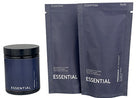


Dagligt Multivitamin
30 dage | 1 tablet dagligt

Energi

Immunitet

Fokus

For alle
-
 Skift eller opsig når som helst, ingen binding
-
 Vi tilpasser din formel baseret på, hvordan du har det
-
 28 bionedbrydelige daglige pakker
-
 Refill-mulighed med minimalt spild
-
 Personlige kost-, livsstilsplaner og mere inkluderet


Din personlige plan, fair pris
Transparent, mængdebaseret prissætning, der belønner dig for at sammensætte en komplet plan.
De fleste kosttilskudsvirksomheder tager den samme pris pr. produkt, uanset om du køber ét eller ti. Det synes vi er urimeligt, emballage-, forsendelse- og håndteringsomkostninger deles på tværs af hele din ordre.
Sådan fungerer det: Jo flere produkter i din personlige plan, jo lavere pris pr. produkt. Fælles omkostninger som daglige pakker, din dispenserboks og forsendelse fordeles på alt i din boks.
Ingen skjulte gebyrer. Ingen oppustede enkeltproduktpriser for at få bundler til at ligne tilbud. Bare ærlig matematik.
Hvordan ser det ud i praksis?
Emballageomkostninger som dine bionedbrydelige poser, dispenserboks og fragt fordeles over alle produkter. Færre produkter = højere pris pr. stk. Flere produkter = lavere pris pr. stk. Simpelt.

Vi står ved vores videnskabelige arbejde, nyd 90 dage risikofrit. Læs mere


 DagligtMultivitamin
En tablet indeholder typisk:
Pr. portion RI*
- C-vitamin- 80 mg - (100 % af den anbefalede daglige dosis*)
- Jern- 14 mg - (100 % af den anbefalede daglige dosis*)
- E-vitamin- 12 mg α-TE - (100 % af den anbefalede daglige dosis*)
- Niacin (vitamin B3)- 16 mg NE - (100 % af den anbefalede daglige dosis*)
- A-vitamin- 800µg RE - (100% RI*)
- Pantothensyre (vitamin B5)- 6 mg - (100 % af den anbefalede daglige dosis*)
- D-vitamin- 5µg - (100% af den anbefalede daglige værdi*)
- B6-vitamin- 1,4 mg - (100 % af den anbefalede daglige dosis*)
- Riboflavin (vitamin B2)- 1,4 mg - (100 % af den anbefalede daglige dosis*)
- Thiamin (vitamin B1)- 1,1 mg - (100 % af den anbefalede daglige dosis*)
- Folsyre (vitamin B9)- 200µg - (100% af den anbefalede daglige værdi*)
- Biotin- 50µg - (100% af den anbefalede daglige værdi*)
- B12-vitamin- 2,5 µg - (100 % af den anbefalede daglige værdi*)
*NRV=Næringsstofreferenceværdi
Ingredienser:
Fyldemiddel: Mikrokrystallinsk cellulose, C-vitaminpræparat (ascorbinsyre, hydroxypropylmethylcellulose), jern som jernfumarat, E-vitaminpræparat (DL-alfa-tocopherolacetat, siliciumdioxid), niacin som nikotinamid, antiklumpningsmiddel: siliciumdioxid, A-vitaminpræparat (maltodextrin, dextrin, modificeret stivelse, retinolacetat, DL-alfa-tocopherol), pantothensyre som D-calciumpantothenat, flydemiddel: magnesiumstearat, D3-vitaminpræparat (maltodextrin, modificeret stivelse, vegetabilsk olie, sukker, E-vitamin, cholecalciferol), B6-vitamin som pyridoxinhydrochlorid, riboflavin, thiamin som hydrochlorid, folsyre, biotin, B12-vitamin som cyanocobalamin.
Velegnet til vegetarer
Allergens
Allergioplysninger:
Selvom der træffes strenge forholdsregler for at forhindre krydskontaminering, er dette produkt fremstillet på et anlæg, der håndterer allergibaserede materialer.
Forsigtighedsregler:
Rådfør dig altid med din læge, før du tager kosttilskud, især hvis du tager medicin eller er under lægeligt tilsyn. Anbefales ikke til gravide eller ammende kvinder. Du bør ikke tage kosttilskud som erstatning for en varieret og afbalanceret kost eller en sund livsstil. Opbevares køligt og tørt, utilgængeligt for børn.
Voksne, tag1 tablet dagligtmed vand og mad.
Overskrid ikke den anbefalede daglige dosis.
Tage1 tablet dagligtmed vand, ideelt set sammen med et måltid for at understøtte bedre absorption og være skånsom mod maven. Undgå at overskride den anbefalede daglige dosis.
Anbefales ikke til børn eller under graviditet eller amning, medmindre det er anbefalet af en sundhedsperson.
We ship with all major carriers, including PostNord, DAO, GLS, and Bring, offering 1–2 business day delivery.
Orders are prepared and sent out within 24–48 hours.
Cost varies between DKK 39-52.00
Free Delivery on orders above DKK 500
*The delivery days count from the moment the carrier has received our package.
Europe
We also deliver throughout Europe using trusted partners like GLS and EcoParcel.
Delivery times vary by destination, between 4-15 business days, but we always send out our packages within 48 hours of receiving your order.
Cost varies by destination between €9-25.
Free Delivery on orders above €60.
*The delivery days count from the moment the carrier has received our package.
International
We currently do not ship outside of the European Union, however if you would like to place a order, contact us at hello@persona-path.com and we will try to assist you.
At PersonaPath, we believe in full transparency and doing things the right way—from how we formulate our supplements to how we treat the planet.
Our mission is to help people live healthier, more balanced lives, while respecting the world we all share.
Our products are manufactured in the UK, Germany, Slovenia and Latvia under strict quality standards and then packaged and prepared locally in Denmark, where we work closely with Fødevarestyrelsen (Danish Veterinary and Food Administration) to ensure everything meets national safety and labelling requirements.
We work exclusively with a BRC AA–certified manufacturer that follows Good Manufacturing Practices (GMP) and full traceability, from raw ingredients to finished product. All of our formulations are developed by a qualified nutritionist and are based strictly on EFSA-approved claims—with no inflated promises, ever.
We're also proud to take an ethical and sustainable approach. We never work with suppliers who test on animals or use harmful harvesting methods.
Sustainability is not a side project—it’s core to how we operate.
✔ All of our packaging is made from biodegradable materials, durable glass or recycled plastic
✔ We offset our shipping-related CO₂ emissions
✔ We’re partnered with Greenspark, supporting projects like:
– Reforestation
– Ocean plastic cleanup
– Carbon removal & kelp planting
– Fresh water access in vulnerable areas
– Supporting honeybee populations
We are proud to offer clean, honest supplements—made with care, backed by science, and delivered with respect for your health and the planet.
Sourcing
Our products are manufactured in the UK, Germany, Slovenia, and Latvia under strict quality standards, then packaged and prepared locally in Denmark.
We’ve also built a transparent ingredient section on our website, where you can explore every detail of what goes into our products — including the exact type of raw material, EFSA-approved health claims, ingredient origin, and documented benefits.
Supporting ingredients are also fully listed and explained — what they are, what they do, and why we include them. You can find this information under Ingredients → Supporting Ingredients, or directly on each product page by clicking on “Ingredients.”
Finally, our packaging materials are sourced from Germany, Poland, the UK, and Denmark, all produced to meet the highest European standards of safety and sustainability.
Donations
Giving Back Together
We’ve partnered with Greenspark to give back where it’s needed most — supporting meaningful environmental and social causes around the world. Each month, we dedicate a portion of our monthly revenue to a new project that creates real impact, from restoring forests and protecting marine ecosystems to supporting local communities.
You can always see the current month’s cause featured at the top of our website or on our social media channels. At the end of each month, we share full transparency — including donation receipts, details about the partner organization, and photos from the project locations — so you can see exactly where your support goes.
We’re proud that our community plays an active role in helping us make a difference. Every purchase contributes to something bigger — together, we’re building a healthier planet and a better future.
Nutritional Information
En tablet indeholder typisk:
Pr. portion RI*
- C-vitamin- 80 mg - (100 % af den anbefalede daglige dosis*)
- Jern- 14 mg - (100 % af den anbefalede daglige dosis*)
- E-vitamin- 12 mg α-TE - (100 % af den anbefalede daglige dosis*)
- Niacin (vitamin B3)- 16 mg NE - (100 % af den anbefalede daglige dosis*)
- A-vitamin- 800µg RE - (100% RI*)
- Pantothensyre (vitamin B5)- 6 mg - (100 % af den anbefalede daglige dosis*)
- D-vitamin- 5µg - (100% af den anbefalede daglige værdi*)
- B6-vitamin- 1,4 mg - (100 % af den anbefalede daglige dosis*)
- Riboflavin (vitamin B2)- 1,4 mg - (100 % af den anbefalede daglige dosis*)
- Thiamin (vitamin B1)- 1,1 mg - (100 % af den anbefalede daglige dosis*)
- Folsyre (vitamin B9)- 200µg - (100% af den anbefalede daglige værdi*)
- Biotin- 50µg - (100% af den anbefalede daglige værdi*)
- B12-vitamin- 2,5 µg - (100 % af den anbefalede daglige værdi*)
*NRV=Næringsstofreferenceværdi
Ingredienser:
Fyldemiddel: Mikrokrystallinsk cellulose, C-vitaminpræparat (ascorbinsyre, hydroxypropylmethylcellulose), jern som jernfumarat, E-vitaminpræparat (DL-alfa-tocopherolacetat, siliciumdioxid), niacin som nikotinamid, antiklumpningsmiddel: siliciumdioxid, A-vitaminpræparat (maltodextrin, dextrin, modificeret stivelse, retinolacetat, DL-alfa-tocopherol), pantothensyre som D-calciumpantothenat, flydemiddel: magnesiumstearat, D3-vitaminpræparat (maltodextrin, modificeret stivelse, vegetabilsk olie, sukker, E-vitamin, cholecalciferol), B6-vitamin som pyridoxinhydrochlorid, riboflavin, thiamin som hydrochlorid, folsyre, biotin, B12-vitamin som cyanocobalamin.
Velegnet til vegetarer
Allergioplysninger:
Selvom der træffes strenge forholdsregler for at forhindre krydskontaminering, er dette produkt fremstillet på et anlæg, der håndterer allergibaserede materialer.
Forsigtighedsregler:
Rådfør dig altid med din læge, før du tager kosttilskud, især hvis du tager medicin eller er under lægeligt tilsyn. Anbefales ikke til gravide eller ammende kvinder. Du bør ikke tage kosttilskud som erstatning for en varieret og afbalanceret kost eller en sund livsstil. Opbevares køligt og tørt, utilgængeligt for børn.
How to Use It
Voksne, tag1 tablet dagligtmed vand og mad.
Overskrid ikke den anbefalede daglige dosis.
Tage1 tablet dagligtmed vand, ideelt set sammen med et måltid for at understøtte bedre absorption og være skånsom mod maven. Undgå at overskride den anbefalede daglige dosis.
Anbefales ikke til børn eller under graviditet eller amning, medmindre det er anbefalet af en sundhedsperson.
- Server med morgenmad eller frokost for at understøtte absorptionen og undgå kvalme
- Vær konsekvent, daglig brug giver de bedste resultater
- Opbevares køligt og tørt for at bevare friskheden
- Hvis du er usikker på, om du har brug for dette, så prøv voresgratis online sundhedsvurderingfor en personlig anbefaling (ingen abonnement nødvendig)
- Husk: kosttilskud fungerer bedst sammen med en varieret kost og en sund livsstil
Shipping
We ship with all major carriers, including PostNord, DAO, GLS, and Bring, offering 1–2 business day delivery.
Orders are prepared and sent out within 24–48 hours.
Cost varies between DKK 39-52.00
Free Delivery on orders above DKK 500
*The delivery days count from the moment the carrier has received our package.
We also deliver throughout Europe using trusted partners like GLS and EcoParcel.
Delivery times vary by destination, between 4-15 business days, but we always send out our packages within 48 hours of receiving your order.
Cost varies by destination between €9-25.
Free Delivery on orders above €60.
*The delivery days count from the moment the carrier has received our package.
We currently do not ship outside of the European Union, however if you would like to place a order, contact us at hello@persona-path.com and we will try to assist you.
Transparency & Sourcing
At PersonaPath, we believe in full transparency and doing things the right way—from how we formulate our supplements to how we treat the planet.
Our mission is to help people live healthier, more balanced lives, while respecting the world we all share.
Our products are manufactured in the UK, Germany, Slovenia and Latvia under strict quality standards and then packaged and prepared locally in Denmark, where we work closely with Fødevarestyrelsen (Danish Veterinary and Food Administration) to ensure everything meets national safety and labelling requirements.
We work exclusively with a BRC AA–certified manufacturer that follows Good Manufacturing Practices (GMP) and full traceability, from raw ingredients to finished product. All of our formulations are developed by a qualified nutritionist and are based strictly on EFSA-approved claims—with no inflated promises, ever.
We're also proud to take an ethical and sustainable approach. We never work with suppliers who test on animals or use harmful harvesting methods.
Sustainability is not a side project—it’s core to how we operate.
✔ All of our packaging is made from biodegradable materials, durable glass or recycled plastic
✔ We offset our shipping-related CO₂ emissions
✔ We’re partnered with Greenspark, supporting projects like:
– Reforestation
– Ocean plastic cleanup
– Carbon removal & kelp planting
– Fresh water access in vulnerable areas
– Supporting honeybee populations
We are proud to offer clean, honest supplements—made with care, backed by science, and delivered with respect for your health and the planet.
Our products are manufactured in the UK, Germany, Slovenia, and Latvia under strict quality standards, then packaged and prepared locally in Denmark.
We’ve also built a transparent ingredient section on our website, where you can explore every detail of what goes into our products — including the exact type of raw material, EFSA-approved health claims, ingredient origin, and documented benefits.
Supporting ingredients are also fully listed and explained — what they are, what they do, and why we include them. You can find this information under Ingredients → Supporting Ingredients, or directly on each product page by clicking on “Ingredients.”
Finally, our packaging materials are sourced from Germany, Poland, the UK, and Denmark, all produced to meet the highest European standards of safety and sustainability.
Giving Back Together
We’ve partnered with Greenspark to give back where it’s needed most — supporting meaningful environmental and social causes around the world. Each month, we dedicate a portion of our monthly revenue to a new project that creates real impact, from restoring forests and protecting marine ecosystems to supporting local communities.
You can always see the current month’s cause featured at the top of our website or on our social media channels. At the end of each month, we share full transparency — including donation receipts, details about the partner organization, and photos from the project locations — so you can see exactly where your support goes.
We’re proud that our community plays an active role in helping us make a difference. Every purchase contributes to something bigger — together, we’re building a healthier planet and a better future.
The Persona
Promise
Discover what makes us different and why our customers trust us.


At Persona we don't use marketing claims.
Every health benefit you see is approved by european authorities and backed by science.
It's how we build trust.
C-vitamin
- C-vitamin bidrager til immunsystemets normale funktion.
- C-vitamin bidrager til et normalt energistofskifte.
- C-vitamin bidrager til reduktion af træthed og udmattelse.
Jern
- Jern bidrager til immunsystemets normale funktion.
- Jern bidrager til et normalt energistofskifte.
- Jern bidrager til reduktion af træthed og udmattelse.
A-vitamin
- A-vitamin bidrager til immunsystemets normale funktion.
D-vitamin
- D-vitamin bidrager til immunsystemets normale funktion.
Folsyre / Folat
- Folat bidrager til immunsystemets normale funktion.
B12-vitamin
- B12-vitamin bidrager til immunsystemets normale funktion.
- B12-vitamin bidrager til et normalt energistofskifte.
- B12-vitamin bidrager til reduktion af træthed og udmattelse.
Niacin (B3-vitamin)
- Niacin bidrager til et normalt energistofskifte.
- Niacin bidrager til reduktion af træthed og udmattelse.
Pantothensyre (B5-vitamin)
- Pantothensyre bidrager til et normalt energistofskifte.
- Pantothensyre bidrager til reduktion af træthed og udmattelse.
B6-vitamin
- B6-vitamin bidrager til et normalt energistofskifte.
- B6-vitamin bidrager til reduktion af træthed og udmattelse.
Riboflavin (B2-vitamin)
- Riboflavin bidrager til et normalt energistofskifte.
- Riboflavin bidrager til reduktion af træthed og udmattelse.
Thiamin (B1-vitamin)
- Thiamin bidrager til et normalt energistofskifte.
Biotin
- Biotin bidrager til et normalt energistofskifte.
Niacin (B3-vitamin)
- Niacin bidrager til en normal psykologisk funktion.*
- Niacin bidrager til nervesystemets normale funktion.*
B6-vitamin (pyridoxin)
- B6-vitamin bidrager til en normal psykologisk funktion.*
- B6-vitamin bidrager til nervesystemets normale funktion.*
Riboflavin (B2-vitamin)
- Riboflavin bidrager til nervesystemets normale funktion.*
Thiamin (B1-vitamin)
- Thiamin bidrager til en normal psykologisk funktion.*
- Thiamin bidrager til nervesystemets normale funktion.*
Folsyre
- Folat bidrager til en normal psykologisk funktion.*
Biotin
- Biotin bidrager til nervesystemets normale funktion.*
B12-vitamin (cobalamin)
- B12-vitamin bidrager til en normal psykologisk funktion.*
- B12-vitamin bidrager til nervesystemets normale funktion.*
- Vitamin C contributes to normal collagen formation for the normal function of skin.
- Niacin contributes to the maintenance of normal skin.
- Vitamin A contributes to the maintenance of normal skin.
- Riboflavin contributes to the maintenance of normal skin.
- Biotin contributes to the maintenance of normal skin.
- Vitamin C contributes to normal collagen formation for the normal function of skin, while niacin, vitamin A, riboflavin and biotin contribute to the maintenance of normal skin.
- Biotin contributes to the maintenance of normal hair.
- Vitamin A contributes to the maintenance of normal mucous membranes.
- Riboflavin contributes to the maintenance of normal mucous membranes.
- Biotin contributes to the maintenance of normal mucous membranes.
- Vitamin A, riboflavin and biotin contribute to the maintenance of normal mucous membranes.
- Vitamin E contributes to the protection of cells from oxidative stress.
Forstå biotilgængelighed
Hvorfor formen af et vitamin betyder lige så meget som vitaminet selv
Restauranteksemplet
Forestil dig at bestille laks på en restaurant. Menukortet siger "laks", men det der serveres kan være perfekt grillet, råt eller stadig pakket ind i plastik. Teknisk set alt sammen laks, men kun én version er egentlig nærende.
Vitaminer fungerer på samme måde. En etiket kan sige "Vitamin C 1000 mg", men det vitamin kan være i en form, din krop næsten ikke optager, eller i en form den udnytter effektivt. Formen afgør, om din krop rent faktisk kan bruge det, du tager.
Hvad er biotilgængelighed?
Biotilgængelighed er den mængde af et næringsstof, der rent faktisk når din blodbane og dine celler.
Hvis du tager 100 mg af et vitamin, men kun 20 mg optages, er biotilgængeligheden 20 %. Resten passerer ubrugt igennem.
Hvad påvirker biotilgængelighed:
- Den kemiske form af vitaminet
- Din individuelle tarmsundhed og genetik
- Hvad du spiser sammen med tilskuddet
Almindelige vitaminformer forklaret
Methylerede vitaminer (aktive former)
Nogle mennesker har svært ved at omdanne standardvitaminer til deres aktive, brugbare former på grund af genetiske variationer. Methylerede vitaminer springer det trin over; de er allerede aktive.
Eksempel: Methylcobalamin (B12) vs Cyanocobalamin
- Methylcobalamin Aktiv form, umiddelbart brugbar
- Cyanocobalamin Syntetisk, kræver omdannelse (som 40-60 % af mennesker har svært ved på grund af MTHFR-genvarianter)
Almindelige former: Methylfolate (5-MTHF), methylcobalamin (B12), P-5-P (B6)
Naturlig vs syntetisk
"Naturlig" betyder ikke automatisk bedre; det afhænger af det specifikke vitamin.
Eksempel: E-vitamin
- Naturlig (d-alpha-tocopherol): Udvundet fra planter, mere biologisk aktiv
- Syntetisk (dl-alpha-tocopherol): Indeholder 8 former, kun én foretrækkes af din krop
Eksempel: C-vitamin
- Ascorbinsyre (syntetisk) er molekylært identisk med naturligt C-vitamin og lige så effektivt
- Liposomal C-vitamin: Indkapslet i fedtbobler for forbedret optagelse og højere blodniveauer
Fedtopløselige vs vandopløselige
Fedtopløselige vitaminer (A, D, E, K) kræver fedt for at blive optaget. At tage dem med mad, der indeholder sunde fedtstoffer, forbedrer optagelsen markant.
Vandopløselige vitaminer (B, C) opløses i vand og optages lettere, men overskud udskilles hurtigt, hvilket gør formler med langsom frigivelse til tider gavnlige.
Hvad "biotilgængelig" faktisk betyder på en etiket
Når vi siger "biotilgængelig form", mener vi:
- Aktive former, der ikke kræver omdannelse (methylerede B-vitaminer)
- Former med dokumenteret optagelse understøttet af videnskabelig forskning
- Forbedrede leveringssystemer (som liposomal teknologi)
Hvad det ikke bør betyde: vagt marketingsprog uden specifikke detaljer.
Advarselstegn at holde øje med:
- Ingen specifik form angivet (bare "Vitamin B12" uden typen)
- "Proprietære blandinger" der skjuler ingrediensmængder
- Påstande uden absorptionsdata
Bundlinjen
Et billigere tilskud med dårlig biotilgængelighed er ikke et godt køb. De bedste kosttilskud handler ikke om at tage mere; de handler om at optage det, du tager.
Hvad du skal kigge efter:
- Specifikke former tydeligt angivet på etiketten
- Videnskabsbaserede former (methylerede, chelaterede, liposomale)
- Gennemsigtighed om doseringer og kilder
Hos Persona vælger vi former baseret på videnskabelig evidens for optagelse, ikke hvad der er billigst at producere. For hvis din krop ikke kan bruge det, hvad er så pointen?
Referencer: EFSA videnskabelige udtalelser om biotilgængelighed; NIH Office of Dietary Supplements; fagfællebedømte studier om vitaminoptagelse og -former (tilgængelige på forespørgsel).
Mere end bare kosttilskud
Biotilgængelige næringsstoffer

Sådan bruges:
- Tag 1 tablet dagligt med vand og mad.
Fordelene ved C-vitamin
Antioxidant
C-vitamin er en kraftfuld antioxidant, der er essentiel for immunfunktionen, kollagendannelse og beskyttelse af celler mod oxidativt stress. Vi bruger C-vitamin udvundet af acerolakirsebær, en helfødekilde der leverer naturligt forekommende bioflavonoider sammen med C-vitaminet, hvilket kan understøtte bedre optagelse sammenlignet med syntetisk ascorbinsyre.
Det vigtigste at vide
- Bidrager til immunsystemets normale funktion (EFSA-godkendt)
- Understøtter normal kollagendannelse for hud, blodkar, knogler, brusk, tandkød og tænder (EFSA-godkendt)
- Bidrager til beskyttelse af celler mod oxidativ stress (EFSA-godkendt)
- Øger jernoptagelsen (EFSA-godkendt)
- Bidrager til at mindske træthed og udmattelse (EFSA-godkendt)
- Understøtter normalt energigivende stofskifte (EFSA-godkendt)
- Udvundet af acerola-kirsebær for forbedret biotilgængelighed
Sådan virker det i kroppen
C-vitamin er vandopløseligt, hvilket betyder, at kroppen ikke lagrer det og er afhængig af regelmæssigt dagligt indtag. Blodniveauerne kan forbedres inden for dage efter start af tilskud, og immunfordele ses generelt ved konsekvent dagligt indtag på 200 mg eller mere.
For kollagenrelaterede fordele (hudens fasthed, sårheling) er konsekvent tilskud over 8 til 12 uger typisk nødvendigt for at se synlige forbedringer, da kollagenomsætningen i huden er en gradvis proces.
Energi og træthed
C-vitamin bidrager til normalt energigivende stofskifte og til reduktion af træthed og udmattelse, begge EFSA-godkendte sundhedsanprisninger. Det spiller en rolle i fedtstofskiftet og produktionen af carnitin, et molekyle der hjælper med at transportere fedtsyrer ind i mitokondrierne til energiproduktion.
For dem, der oplever vedvarende træthed, understøtter tilstrækkeligt C-vitaminindtag kroppens evne til at producere energi effektivt. Det er særligt relevant for rygere, der har 25 % lavere plasma-C-vitaminniveauer og anbefales at indtage yderligere 35 mg/dag (IOM-anbefaling).
Antioxidantbeskyttelse
C-vitamin er en af kroppens primære vandopløselige antioxidanter. Det neutraliserer frie radikaler, beskytter cellulære komponenter mod oxidativ skade og hjælper med at regenerere andre antioxidanter, herunder E-vitamin.
Denne antioxidantfunktion er vigtig for den generelle sundhed, da oxidativ stress er impliceret i aldring, hjerte-kar-sygdomme og forskellige kroniske tilstande. Ved at vælge acerola-kirsebær som vores kilde giver de naturligt forekommende bioflavonoider og plantestoffer yderligere antioxidantstøtte ud over C-vitamin alene. EFSA anerkender, at C-vitamin bidrager til beskyttelse af celler mod oxidativ stress.
Kort fortalt
C-vitamin er en essentiel antioxidant, der understøtter immunfunktion, kollagendannelse, jernoptagelse og energiproduktion. Vi bruger acerola-kirsebær som helføde-kilde, der giver naturligt forekommende bioflavonoider for potentielt forbedret optagelse. Regelmæssigt tilskud reducerer forkølelsens varighed og understøtter kroppens daglige behov.
Som et vandopløseligt vitamin er et konsekvent dagligt indtag vigtigt, da kroppen ikke lagrer C-vitamin. Det er særligt relevant for dem med højere behov, herunder rygere, kvinder med jernabsorptionsproblemer og alle, der ønsker at støtte hudens sundhed og immunforsvarets modstandskraft.
Spørgsmål og svar
Hvorfor acerola-kirsebær i stedet for syntetisk C-vitamin?
Acerola-kirsebær er en af naturens rigeste kilder til C-vitamin og leverer det sammen med bioflavonoider og andre plantestoffer, der kan forbedre optagelsen og give yderligere antioxidantfordele. Det repræsenterer en helføde-tilgang til C-vitamintilskud.
Hvor meget C-vitamin har jeg brug for dagligt?
Det anbefalede daglige indtag for voksne i EU er 80 mg. Til immunstøtte under og efter motion anerkender EFSA fordele ved 200 mg/dag. Den europæiske øvre grænse er 1.000 mg/dag fra tilskud. De fleste har gavn af 200-500 mg/dag.
Kan jeg tage for meget C-vitamin?
Fordi C-vitamin er vandopløseligt, udskilles overskydende mængder i urinen. Dog kan meget høje doser (over 1.000 mg/dag) forårsage fordøjelsesbesvær hos nogle og kan øge risikoen for nyresten hos disponerede personer.
Forebygger C-vitamin virkelig forkølelse?
Forskning viser, at regelmæssigt C-vitamintilskud ikke forebygger forkølelse i den generelle befolkning, men reducerer varigheden (med ca. 8 % hos voksne) og sværhedsgraden. Fordelen er mere udtalt hos dem under fysisk stress.
Er C-vitamin sikkert under graviditet?
Ja, C-vitamin er vigtigt under graviditet for både mor og barn. Det understøtter jernoptagelse, immunfunktion og kollagendannelse. Følg din sundhedsfagliges vejledning om dosering.
Studier
Hořavová H et al. – Ceska a Slovenska farmacie : casopis Ceske farmaceuticke spolecnosti a Slovenske farmaceuticke spolecnosti (2025). [Review]. https://pubmed.ncbi.nlm.nih.gov/41412811/
Ivaskiene T et al. – Frontiers in nutrition (2025). [Review]. https://pubmed.ncbi.nlm.nih.gov/41459089/
Kumar V et al. – Recent advances in food, nutrition & agriculture (2025). [Review]. https://pubmed.ncbi.nlm.nih.gov/39108105/
Rawat et al. — J Med Life (2024). [Systematic review & MA]. General
Bayu P et al. – PloS one (2024). [Meta-analysis]. https://pubmed.ncbi.nlm.nih.gov/38820340/
Oargă Porumb DP et al. – Frontiers in pharmacology (2024). [Review]. https://pubmed.ncbi.nlm.nih.gov/38666029/
Hamie H et al. – International journal of women's dermatology (2024). [Review]. https://pubmed.ncbi.nlm.nih.gov/38873621/
Wylenzek F et al. – Archives of gynecology and obstetrics (2024). [Systematic review]. https://pubmed.ncbi.nlm.nih.gov/38935105/
Xu C et al. – Nutrients (2023). [Meta-analysis]. https://pubmed.ncbi.nlm.nih.gov/37111066/
Zheng SH et al. – Reproductive biology and endocrinology : RB&E (2023). [Meta-analysis]. https://pubmed.ncbi.nlm.nih.gov/37644533/
Berry K et al. – Clinics in plastic surgery (2023). [Review]. https://pubmed.ncbi.nlm.nih.gov/37169404/
Dumoulin M et al. - Journal of Cosmetic Dermatology (2023). [RCT]. Skin Health
Lee et al. — RCT (2023). [RCT]. https://pubmed.ncbi.nlm.nih.gov/37786445/
Ordaz G et al. – Actas urologicas espanolas (2023). [Systematic review]. https://pubmed.ncbi.nlm.nih.gov/36754205/
Skolmowska D et al. – Nutrients (2022). [Systematic review]. https://pubmed.ncbi.nlm.nih.gov/35807904/
Berry K et al. – Facial plastic surgery clinics of North America (2022). [Review]. https://pubmed.ncbi.nlm.nih.gov/35934431/
Wiesner A et al. – Pharmaceuticals (Basel, Switzerland) (2021). [Review]. https://pubmed.ncbi.nlm.nih.gov/33801406/
Lykkesfeldt & Tveden-Nyborg — Nutrients (2019). [Review]. https://pubmed.ncbi.nlm.nih.gov/31405241/
Mousavi S et al. - European Journal of Clinical Nutrition (2019). [Meta-Analysis]. https://pubmed.ncbi.nlm.nih.gov/30738092/
DiBaise M et al. – Nutrition in clinical practice : official publication of the American Society for Parenteral and Enteral Nutrition (2019). [Review]. https://pubmed.ncbi.nlm.nih.gov/31144371/
Liugan M et al. – Nutrients (2019). [Review]. https://pubmed.ncbi.nlm.nih.gov/31487891/
Carr AC & Cook J — Front Physiol (2018). [Review]. https://pubmed.ncbi.nlm.nih.gov/29740326/
Carr & Maggini — Nutrients (2017). [Review]. https://pubmed.ncbi.nlm.nih.gov/29099763/
Pullar et al. — Nutrients (2017). [Review]. https://pubmed.ncbi.nlm.nih.gov/28805671/
Carr AC & Maggini S - Nutrients (2017). [Comprehensive Review]. https://pubmed.ncbi.nlm.nih.gov/29099763/
Skelin M et al. – Clinical therapeutics (2017). [Review]. https://pubmed.ncbi.nlm.nih.gov/28153426/
Carr AC & Maggini S — Nutrients (2017). [Review]. https://pubmed.ncbi.nlm.nih.gov/29099763/
Pullar JM et al. — Nutrients (2017). [Review]. https://pubmed.ncbi.nlm.nih.gov/28805671/
Moser & Chun — Adv Nutr (2016). [Review]. General
Moser MA & Chun OK - Nutrients (2016). [Systematic Review]. https://pubmed.ncbi.nlm.nih.gov/27725322/
Smith et al. — Nutrients (2016). [Review]. General
White DJ et al. - Nutrients (2016). [Meta-Analysis]. https://pubmed.ncbi.nlm.nih.gov/28045446/
Kennedy DO - Nutrients (2016). [Comprehensive Review]. https://pubmed.ncbi.nlm.nih.gov/26828517/
Padayatty SJ & Levine M — Oral Dis (2016). [Review]. https://pubmed.ncbi.nlm.nih.gov/26808119/
Moser MA & Chun OK — Int J Mol Sci (2016). [Review]. https://pubmed.ncbi.nlm.nih.gov/27649222/
Bucher A & White N — Front Immunol (2016). [Review]. https://pubmed.ncbi.nlm.nih.gov/27994589/
Lykkesfeldt J et al. - British Journal of Nutrition (2014). [Review]. https://pubmed.ncbi.nlm.nih.gov/24709223/
Lykkesfeldt J et al. — Adv Nutr (2014). [Review]. https://pubmed.ncbi.nlm.nih.gov/24458010/
Hemilä — Cochrane Review (2013 (updated)). [Meta-analysis (29 RCTs)]. https://www.cochranelibrary.com/cdsr/doi/10.1002/14651858.CD000980.pub4
Hemilä & Chalker — Cochrane (2013). [Cochrane MA (29 RCTs)].
Hemilä & Chalker — Cochrane (2013). [Cochrane systematic review (29 RCTs)]. https://pubmed.ncbi.nlm.nih.gov/23440782/
Hemilä H & Chalker E - Cochrane Database of Systematic Reviews (2013). [Cochrane Review]. https://pubmed.ncbi.nlm.nih.gov/23440782/
Hemila H & Chalker E — Cochrane Database Syst Rev (2013). [Cochrane review]. https://pubmed.ncbi.nlm.nih.gov/23440782/
Michaels JA et al. - Advances in Skin & Wound Care (2012). [Systematic Review]. https://pubmed.ncbi.nlm.nih.gov/22441049/
Stough C et al. - Human Psychopharmacology (2011). [RCT]. https://pubmed.ncbi.nlm.nih.gov/21905094/
Cosgrove MC et al. - American Journal of Clinical Nutrition (2007). [Cohort Study]. https://pubmed.ncbi.nlm.nih.gov/17921406/
Fishman SM et al. – Public health nutrition (2000). [Systematic review]. https://pubmed.ncbi.nlm.nih.gov/10948381/
IOM — Smoker recommendation (Established). [Expert guideline]. General
Antioxidant skin protection (Established). [Mechanistic]. General
Vitamin C absorption — whole food vs synthetic (Established). [Comparative]. General
Natural vs synthetic C — established (Established). [Comparative analysis].
51 studier — C-vitamin
Hořavová H et al. – Ceska a Slovenska farmacie : casopis Ceske farmaceuticke spolecnosti a Slovenske farmaceuticke spolecnosti (2025). [Review]. https://pubmed.ncbi.nlm.nih.gov/41412811/
Ivaskiene T et al. – Frontiers in nutrition (2025). [Review]. https://pubmed.ncbi.nlm.nih.gov/41459089/
Kumar V et al. – Recent advances in food, nutrition & agriculture (2025). [Review]. https://pubmed.ncbi.nlm.nih.gov/39108105/
Rawat et al. — J Med Life (2024). [Systematic review & MA]. General
Bayu P et al. – PloS one (2024). [Meta-analysis]. https://pubmed.ncbi.nlm.nih.gov/38820340/
Oargă Porumb DP et al. – Frontiers in pharmacology (2024). [Review]. https://pubmed.ncbi.nlm.nih.gov/38666029/
Hamie H et al. – International journal of women's dermatology (2024). [Review]. https://pubmed.ncbi.nlm.nih.gov/38873621/
Wylenzek F et al. – Archives of gynecology and obstetrics (2024). [Systematic review]. https://pubmed.ncbi.nlm.nih.gov/38935105/
Xu C et al. – Nutrients (2023). [Meta-analysis]. https://pubmed.ncbi.nlm.nih.gov/37111066/
Zheng SH et al. – Reproductive biology and endocrinology : RB&E (2023). [Meta-analysis]. https://pubmed.ncbi.nlm.nih.gov/37644533/
Berry K et al. – Clinics in plastic surgery (2023). [Review]. https://pubmed.ncbi.nlm.nih.gov/37169404/
Dumoulin M et al. - Journal of Cosmetic Dermatology (2023). [RCT]. Skin Health
Lee et al. — RCT (2023). [RCT]. https://pubmed.ncbi.nlm.nih.gov/37786445/
Ordaz G et al. – Actas urologicas espanolas (2023). [Systematic review]. https://pubmed.ncbi.nlm.nih.gov/36754205/
Skolmowska D et al. – Nutrients (2022). [Systematic review]. https://pubmed.ncbi.nlm.nih.gov/35807904/
Berry K et al. – Facial plastic surgery clinics of North America (2022). [Review]. https://pubmed.ncbi.nlm.nih.gov/35934431/
Wiesner A et al. – Pharmaceuticals (Basel, Switzerland) (2021). [Review]. https://pubmed.ncbi.nlm.nih.gov/33801406/
Lykkesfeldt & Tveden-Nyborg — Nutrients (2019). [Review]. https://pubmed.ncbi.nlm.nih.gov/31405241/
Mousavi S et al. - European Journal of Clinical Nutrition (2019). [Meta-Analysis]. https://pubmed.ncbi.nlm.nih.gov/30738092/
DiBaise M et al. – Nutrition in clinical practice : official publication of the American Society for Parenteral and Enteral Nutrition (2019). [Review]. https://pubmed.ncbi.nlm.nih.gov/31144371/
Liugan M et al. – Nutrients (2019). [Review]. https://pubmed.ncbi.nlm.nih.gov/31487891/
Carr AC & Cook J — Front Physiol (2018). [Review]. https://pubmed.ncbi.nlm.nih.gov/29740326/
Carr & Maggini — Nutrients (2017). [Review]. https://pubmed.ncbi.nlm.nih.gov/29099763/
Pullar et al. — Nutrients (2017). [Review]. https://pubmed.ncbi.nlm.nih.gov/28805671/
Carr AC & Maggini S - Nutrients (2017). [Comprehensive Review]. https://pubmed.ncbi.nlm.nih.gov/29099763/
Skelin M et al. – Clinical therapeutics (2017). [Review]. https://pubmed.ncbi.nlm.nih.gov/28153426/
Carr AC & Maggini S — Nutrients (2017). [Review]. https://pubmed.ncbi.nlm.nih.gov/29099763/
Pullar JM et al. — Nutrients (2017). [Review]. https://pubmed.ncbi.nlm.nih.gov/28805671/
Moser & Chun — Adv Nutr (2016). [Review]. General
Moser MA & Chun OK - Nutrients (2016). [Systematic Review]. https://pubmed.ncbi.nlm.nih.gov/27725322/
Smith et al. — Nutrients (2016). [Review]. General
White DJ et al. - Nutrients (2016). [Meta-Analysis]. https://pubmed.ncbi.nlm.nih.gov/28045446/
Kennedy DO - Nutrients (2016). [Comprehensive Review]. https://pubmed.ncbi.nlm.nih.gov/26828517/
Padayatty SJ & Levine M — Oral Dis (2016). [Review]. https://pubmed.ncbi.nlm.nih.gov/26808119/
Moser MA & Chun OK — Int J Mol Sci (2016). [Review]. https://pubmed.ncbi.nlm.nih.gov/27649222/
Bucher A & White N — Front Immunol (2016). [Review]. https://pubmed.ncbi.nlm.nih.gov/27994589/
Lykkesfeldt J et al. - British Journal of Nutrition (2014). [Review]. https://pubmed.ncbi.nlm.nih.gov/24709223/
Lykkesfeldt J et al. — Adv Nutr (2014). [Review]. https://pubmed.ncbi.nlm.nih.gov/24458010/
Hemilä — Cochrane Review (2013 (updated)). [Meta-analysis (29 RCTs)]. https://www.cochranelibrary.com/cdsr/doi/10.1002/14651858.CD000980.pub4
Hemilä & Chalker — Cochrane (2013). [Cochrane MA (29 RCTs)].
Hemilä & Chalker — Cochrane (2013). [Cochrane systematic review (29 RCTs)]. https://pubmed.ncbi.nlm.nih.gov/23440782/
Hemilä H & Chalker E - Cochrane Database of Systematic Reviews (2013). [Cochrane Review]. https://pubmed.ncbi.nlm.nih.gov/23440782/
Hemila H & Chalker E — Cochrane Database Syst Rev (2013). [Cochrane review]. https://pubmed.ncbi.nlm.nih.gov/23440782/
Michaels JA et al. - Advances in Skin & Wound Care (2012). [Systematic Review]. https://pubmed.ncbi.nlm.nih.gov/22441049/
Stough C et al. - Human Psychopharmacology (2011). [RCT]. https://pubmed.ncbi.nlm.nih.gov/21905094/
Cosgrove MC et al. - American Journal of Clinical Nutrition (2007). [Cohort Study]. https://pubmed.ncbi.nlm.nih.gov/17921406/
Fishman SM et al. – Public health nutrition (2000). [Systematic review]. https://pubmed.ncbi.nlm.nih.gov/10948381/
IOM — Smoker recommendation (Established). [Expert guideline]. General
Antioxidant skin protection (Established). [Mechanistic]. General
Vitamin C absorption — whole food vs synthetic (Established). [Comparative]. General
Natural vs synthetic C — established (Established). [Comparative analysis].
Fordelene ved Jern
Biotilgængelig form
Jern er et essentielt mineral, der spiller en central rolle i ilttransport, energiproduktion og immunfunktion. Det er en nøglekomponent i hæmoglobin, proteinet i de røde blodlegemer, der transporterer ilt fra lungerne til hver eneste celle i kroppen. Jernmangel er en af de mest udbredte næringsmæssige mangler på verdensplan, særligt blandt kvinder i den reproduktive alder.
Det vigtigste at vide
- Bidrager til normal dannelse af røde blodlegemer og hæmoglobin (EFSA-godkendt)
- Understøtter normal ilttransport i kroppen (EFSA-godkendt)
- Bidrager til normalt energigivende stofskifte (EFSA-godkendt)
- Understøtter reduktion af træthed og udmattelse (EFSA-godkendt)
- Bidrager til immunsystemets normale funktion (EFSA-godkendt)
- Understøtter normal kognitiv funktion (EFSA-godkendt)
- Særligt vigtigt for kvinder i den fødedygtige alder
Sådan virker det i kroppen
Jerntilskud tager typisk 4 til 12 uger at genopfylde udtømte lagre, afhængigt af manglens sværhedsgrad og den anvendte dosis. Forbedringer i træthed og energi kan mærkes inden for 2 til 4 uger, mens normalisering af ferritinniveauerne (kroppens jernlagermarkør) ofte tager 3 måneder eller længere.
Jern optages bedst på tom mave, men hvis det giver fordøjelsesbesvær, er det et praktisk alternativ at tage det med en lille mængde mad (helst med C-vitamin, som forbedrer optagelsen). Undgå at tage jern sammen med calcium, te eller kaffe, da disse kan reducere optagelsen.
Hårsundhed
Jernmangel er en af de mest veldokumenterede ernæringsmæssige årsager til hårtab. Hårfolliklerne er blandt kroppens hurtigst delende celler og er følsomme over for ernæringsstatus.
Forskning af Nagendran og Sakkaravarthi (2024) bekræftede, at jernmangel er den mest veletablerede årsag til ernæringsbetinget hårtab, og et ferritinniveau under 30 µg/L blev identificeret som en vigtig tærskel. En bredere gennemgang (Wang et al., 2024) fremhævede jern, zink, D-vitamin og B-vitaminer som de mest kritiske næringsstoffer for hårets sundhed.
Tilskud har vist sig at forbedre hårresultaterne, når jernmangel er til stede. Hvis du oplever hårtab eller øget hårafkast, er det et fornuftigt første skridt at tjekke dine jern- og ferritinniveauer.
Kognitiv funktion
Jern er essentielt for normal kognitiv funktion. Hjernen kræver en konstant tilførsel af ilt, leveret via jernholdigt hæmoglobin, for at fungere optimalt. Jern spiller også en rolle i neurotransmittersyntesen, herunder dopamin, som er vigtig for fokus, motivation og mental klarhed.
Lav jernstatus er blevet forbundet med nedsat koncentration, reduceret hukommelsesevne og langsommere bearbejdningshastighed. Disse kognitive virkninger kan opstå allerede inden anæmi udvikles, hvilket understreger vigtigheden af at opretholde tilstrækkelige jernlagre.
EFSA anerkender, at jern bidrager til normal kognitiv funktion. For kvinder, studerende og alle, der oplever hjernetåge eller koncentrationsbesvær, er det værd at undersøge jernstatus.
Kort fortalt
Jern er essentielt for ilttransport, energiproduktion, immunfunktion og kognitiv sundhed. Jernmangel er en af de mest udbredte ernæringsmangler på verdensplan, særligt blandt kvinder i den reproduktive alder, og kan forårsage træthed, dårlig koncentration og hårtab, selv inden egentlig anæmi udvikles.
Tilskud er effektivt til at genopfylde udtømte lagre, og fordele mærkes typisk inden for 2 til 4 uger, mens fuld genopfyldning tager 3 måneder eller mere. Jern optages bedst med C-vitamin og adskilt fra calcium, te eller kaffe.
Spørgsmål og svar
Hvordan ved jeg, om jeg har brug for jerntilskud?
Almindelige tegn på lavt jernniveau omfatter vedvarende træthed, svaghed, bleg hud, kolde hænder og fødder, skøre negle, hårtab og koncentrationsbesvær. En simpel blodprøve, der måler ferritin (jernlager) og hæmoglobin, kan bekræfte, om tilskud er passende.
Hvilket ferritinniveau indikerer behov for tilskud?
Selvom laboratorier ofte sætter det "normale" interval fra 12 µg/L og opefter, betragter mange klinikere niveauer under 30 µg/L som utilstrækkelige for optimal sundhed, særligt for hår, energi og træningspræstation. Drøft dine resultater med din sundhedsfaglige.
Kan jerntilskud give bivirkninger?
Nogle oplever fordøjelsesbesvær, forstoppelse eller kvalme med jerntilskud. At tage jern med en lille mængde mad eller vælge en skånsom form (som jernbisglycinat) kan hjælpe med at minimere disse virkninger. At starte med en lavere dosis og gradvist øge kan også forbedre tolerancen.
Kan jeg tage for meget jern?
Ja, overdreven jernindtagelse kan være skadeligt. Jern er et af de få mineraler, hvor kroppen ikke har en aktiv udskillelsesmekanisme, så det kan ophobe sig. Tilskud bør styres af blodprøveresultater, og det anbefales ikke at tage højdosis jern uden lægelig overvågning.
Er jern sikkert under graviditet?
Jerntilskud anbefales almindeligvis under graviditet, da jernbehovet stiger markant for at understøtte det voksende barn og det øgede blodvolumen. Uden tilskud kan 28-85 % af gravide kvinder blive jernmangelramte inden tredje trimester (Milman, 2017). Følg altid din sundhedsfagliges vejledning om dosering.
Studier
Lancet Haematology 2025 - expert consensus (2025). [Expert consensus]. https://www.thelancet.com/journals/lanhae/article/PIIS2352-3026(25)00006-0/fulltext
Clemente-Suárez VJ et al. – Nutrients (2025). [Systematic review]. https://pubmed.ncbi.nlm.nih.gov/40077754/
Leavitt A et al. – Journal of drugs in dermatology : JDD (2025). [Review]. https://pubmed.ncbi.nlm.nih.gov/40627570/
Hackl LS et al. – Advances in nutrition (Bethesda, Md.) (2025). [Review]. https://pubmed.ncbi.nlm.nih.gov/40020920/
Fiani D et al. – Neuroscience and biobehavioral reviews (2025). [Systematic review]. https://pubmed.ncbi.nlm.nih.gov/40945632/
Srivastava M et al. – Nutrition and health (2025). [Systematic review]. https://pubmed.ncbi.nlm.nih.gov/39569449/
Aziz Ali S et al. – Systematic reviews (2025). [Systematic review]. https://pubmed.ncbi.nlm.nih.gov/39806515/
Watt A et al. – Family practice (2025). [Systematic review]. https://pubmed.ncbi.nlm.nih.gov/39834271/
Coutiño Díaz M et al. – Current nutrition reports (2025). [Systematic review]. https://pubmed.ncbi.nlm.nih.gov/40560510/
Pengelly M et al. – Journal of sport and health science (2025). [Systematic review]. https://pubmed.ncbi.nlm.nih.gov/39536912/
Wang et al. — Mol Nutr Food Res (2024). [Systematic review (49 articles)].
Nagendran & Sakkaravarthi — CosmoDerma (2024). [Review of controversies]. https://cosmoderma.org/controversies-of-micronutrients-supplementation-in-hair-loss/
Finkelstein JL et al. – The Cochrane database of systematic reviews (2024). [Meta-analysis]. https://pubmed.ncbi.nlm.nih.gov/39145520/
Bösch ES et al. – Nutrients (2024). [Systematic review]. https://pubmed.ncbi.nlm.nih.gov/39599580/
Moumin NA et al. – Nutrients (2024). [Systematic review]. https://pubmed.ncbi.nlm.nih.gov/39125379/
O'Toole F et al. – International journal of gynaecology and obstetrics: the official organ of the International Federation of Gynaecology and Obstetrics (2024). [Review]. https://pubmed.ncbi.nlm.nih.gov/38069617/
Einhorn V et al. – Journal of trace elements in medicine and biology : organ of the Society for Minerals and Trace Elements (GMS) (2024). [Review]. https://pubmed.ncbi.nlm.nih.gov/38640745/
Dewey KG et al. – The American journal of clinical nutrition (2024). [Systematic review]. https://pubmed.ncbi.nlm.nih.gov/39154665/
Khan A et al. – Frontiers in neurology (2024). [Systematic review]. https://pubmed.ncbi.nlm.nih.gov/39839869/
Hansen R et al. – Acta obstetricia et gynecologica Scandinavica (2023). [Meta-analysis]. https://pubmed.ncbi.nlm.nih.gov/37403900/
Gutema BT et al. – PloS one (2023). [Meta-analysis]. https://pubmed.ncbi.nlm.nih.gov/37368919/
Fischer JAJ et al. – Nutrition reviews (2023). [Meta-analysis]. https://pubmed.ncbi.nlm.nih.gov/36728680/
Cui Y et al. – Critical reviews in food science and nutrition (2023). [Meta-analysis]. https://pubmed.ncbi.nlm.nih.gov/34666569/
Fischer JAJ et al. – The Journal of nutrition (2023). [RCT]. https://pubmed.ncbi.nlm.nih.gov/37271416/
Finlayson-Trick E et al. – Microbiology spectrum (2023). [RCT]. https://pubmed.ncbi.nlm.nih.gov/37199608/
Adetola OY et al. – International journal of food sciences and nutrition (2023). [Review]. https://pubmed.ncbi.nlm.nih.gov/36843328/
Kardasis W et al. – Nutrients (2023). [Review]. https://pubmed.ncbi.nlm.nih.gov/38068803/
Gomes F et al. – Maternal & child nutrition (2023). [Meta-analysis]. https://pubmed.ncbi.nlm.nih.gov/37002655/
Riccardi S et al. – Journal of clinical sleep medicine : JCSM : official publication of the American Academy of Sleep Medicine (2023). [Meta-analysis]. https://pubmed.ncbi.nlm.nih.gov/36692194/
Padhan P et al. – International journal of rheumatic diseases (2023). [Meta-analysis]. https://pubmed.ncbi.nlm.nih.gov/37137528/
Zare R et al. – Food & function (2023). [Systematic review]. https://pubmed.ncbi.nlm.nih.gov/37272297/
Mislu E et al. – Frontiers in medicine (2023). [Systematic review]. https://pubmed.ncbi.nlm.nih.gov/38188334/
Safarpour Y et al. – Tremor and other hyperkinetic movements (New York, N.Y.) (2023). [Systematic review]. https://pubmed.ncbi.nlm.nih.gov/37008995/
Crider K et al. – The Cochrane database of systematic reviews (2022). [Meta-analysis]. https://pubmed.ncbi.nlm.nih.gov/36321557/
Zhao X et al. – Nutrients (2022). [Meta-analysis]. https://pubmed.ncbi.nlm.nih.gov/35276902/
Bumrungpert A et al. – Nutrients (2022). [RCT]. https://pubmed.ncbi.nlm.nih.gov/35276810/
Uyoga MA et al. – The Journal of nutrition (2022). [RCT]. https://pubmed.ncbi.nlm.nih.gov/34958374/
Piskin E et al. – ACS omega (2022). [Review]. https://pubmed.ncbi.nlm.nih.gov/35755397/
Manapurath RM et al. – Pediatrics (2022). [Meta-analysis]. https://pubmed.ncbi.nlm.nih.gov/35921671/
Dugan C et al. – Journal of cachexia, sarcopenia and muscle (2022). [Meta-analysis]. https://pubmed.ncbi.nlm.nih.gov/36321348/
Keats EC et al. – Nutrition reviews (2022). [Meta-analysis]. https://pubmed.ncbi.nlm.nih.gov/33846729/
Beliveau V et al. – NeuroImage. Clinical (2022). [Meta-analysis]. https://pubmed.ncbi.nlm.nih.gov/35500370/
Tamblyn JA et al. — Fertil Steril (2022). [SR + meta-analysis]. https://pubmed.ncbi.nlm.nih.gov/35637024/
GBD 2021 - DALYs and sex disparities (2021). [Global burden analysis]. https://www.thelancet.com/journals/lancet/article/PIIS0140-6736(23)01338-0/fulltext
Pasricha SR et al. - The Lancet (2021). [Comprehensive Review]. https://pubmed.ncbi.nlm.nih.gov/33285139/
Evang EC et al. – European journal of nutrition (2021). [RCT]. https://pubmed.ncbi.nlm.nih.gov/33355689/
Damian MT et al. – Life (Basel, Switzerland) (2021). [Review]. https://pubmed.ncbi.nlm.nih.gov/34575136/
Gupta R et al. – Sleep medicine reviews (2021). [Meta-analysis]. https://pubmed.ncbi.nlm.nih.gov/33836477/
Malden S et al. – Obesity reviews : an official journal of the International Association for the Study of Obesity (2021). [Meta-analysis]. https://pubmed.ncbi.nlm.nih.gov/32808447/
Larsuphrom P et al. – Nutrients (2021). [Systematic review]. https://pubmed.ncbi.nlm.nih.gov/33513924/
Rashid S et al. — Eur J Haematol (2021). [Review]. https://pubmed.ncbi.nlm.nih.gov/33341967/
Garcia-Casal MN et al. — Cochrane Database Syst Rev (2021). [Cochrane review]. https://pubmed.ncbi.nlm.nih.gov/34028001/
Pasricha SR et al. — Lancet (2021). [Seminar]. https://pubmed.ncbi.nlm.nih.gov/33285139/
Snook J et al. — Gut (2021). [Clinical guideline (BSG)]. https://pubmed.ncbi.nlm.nih.gov/34497146/
Stoffel et al. — Lancet Haematol (2020). [RCT (crossover)]. https://pubmed.ncbi.nlm.nih.gov/32014411/
Oh C et al. – Nutrients (2020). [Meta-analysis]. https://pubmed.ncbi.nlm.nih.gov/32075071/
Ota E et al. – The Cochrane database of systematic reviews (2020). [Meta-analysis]. https://pubmed.ncbi.nlm.nih.gov/33336827/
Mutwiri LN et al. – Advances in nutrition (Bethesda, Md.) (2020). [Systematic review]. https://pubmed.ncbi.nlm.nih.gov/32330226/
Pachikian B et al. – Blood transfusion = Trasfusione del sangue (2020). [RCT]. https://pubmed.ncbi.nlm.nih.gov/32931412/
McCann S et al. – Nutrients (2020). [Systematic review]. https://pubmed.ncbi.nlm.nih.gov/32635675/
McCormick R et al. – Sports medicine (Auckland, N.Z.) (2020). [Review]. https://pubmed.ncbi.nlm.nih.gov/33057935/
Semenova EA et al. – European journal of applied physiology (2020). [Meta-analysis]. https://pubmed.ncbi.nlm.nih.gov/31970519/
Stoffel NU et al. — Blood (2020). [RCT crossover]. https://pubmed.ncbi.nlm.nih.gov/32614951/
Pavord S et al. — Br J Haematol (2020). [Clinical guideline (BSH)]. https://pubmed.ncbi.nlm.nih.gov/31578718/
Fernández-Gaxiola AC et al. – The Cochrane database of systematic reviews (2019). [Meta-analysis]. https://pubmed.ncbi.nlm.nih.gov/30699468/
Rosen GM et al. – The Journal of pediatrics (2019). [RCT]. https://pubmed.ncbi.nlm.nih.gov/30732996/
Miles LF et al. – The Cochrane database of systematic reviews (2019). [Meta-analysis]. https://pubmed.ncbi.nlm.nih.gov/31860749/
Trotti LM et al. – The Cochrane database of systematic reviews (2019). [Meta-analysis]. https://pubmed.ncbi.nlm.nih.gov/30609006/
Avni T et al. – European journal of internal medicine (2019). [Meta-analysis]. https://pubmed.ncbi.nlm.nih.gov/30798983/
Houston et al. — Am J Clin Nutr (2018). [Systematic review & MA (18 RCTs)]. https://pubmed.ncbi.nlm.nih.gov/29868911/
Houston BL et al. - Transfusion Medicine Reviews (2018). [Meta-Analysis]. https://pubmed.ncbi.nlm.nih.gov/29195073/
Name JJ et al. – Current pediatric reviews (2018). [RCT]. https://pubmed.ncbi.nlm.nih.gov/30280670/
Houston BL et al. — Transfus Med Rev (2018). [SR + meta-analysis]. https://pubmed.ncbi.nlm.nih.gov/29195725/
Soppi E — Vox Sang (2018). [Review]. https://pubmed.ncbi.nlm.nih.gov/30182500/
Milman 2017 - pregnancy iron depletion (2017). [Review]. https://pubmed.ncbi.nlm.nih.gov/28189173/
Percy et al. — BMJ (2017). [Systematic review & MA (18 RCTs)]. https://pubmed.ncbi.nlm.nih.gov/28347943/
Monacelli F et al. – Nutrients (2017). [Review]. https://pubmed.ncbi.nlm.nih.gov/28654021/
Fewtrell M et al. – Journal of pediatric gastroenterology and nutrition (2017). [Review]. https://pubmed.ncbi.nlm.nih.gov/28027215/
Bjørklund G et al. – Journal of trace elements in medicine and biology : organ of the Society for Minerals and Trace Elements (GMS) (2017). [Review]. https://pubmed.ncbi.nlm.nih.gov/28347462/
Bechoff A et al. – Annals of the New York Academy of Sciences (2017). [Review]. https://pubmed.ncbi.nlm.nih.gov/28009050/
Fisher AL & Nemeth E — Am J Physiol Cell Physiol (2017). [Review]. https://pubmed.ncbi.nlm.nih.gov/28747356/
Percy L et al. — Lancet (2017). [Review]. https://pubmed.ncbi.nlm.nih.gov/27727564/
Low et al. — Cochrane (2016). [Cochrane systematic review]. https://pubmed.ncbi.nlm.nih.gov/27074700/
Low MSY et al. - Cochrane Database of Systematic Reviews (2016). [Cochrane Review]. https://pubmed.ncbi.nlm.nih.gov/27087396/
Avenell A et al. – The Cochrane database of systematic reviews (2016). [Meta-analysis]. https://pubmed.ncbi.nlm.nih.gov/27898998/
Bonovas S et al. – Medicine (2016). [Meta-analysis]. https://pubmed.ncbi.nlm.nih.gov/26765407/
Devakumar D et al. – BMC medicine (2016). [Meta-analysis]. https://pubmed.ncbi.nlm.nih.gov/27306908/
Low MS et al. — Cochrane Database Syst Rev (2016). [Cochrane review]. https://pubmed.ncbi.nlm.nih.gov/27087396/
Auerbach M & Adamson JW — Am J Hematol (2016). [Review]. https://pubmed.ncbi.nlm.nih.gov/26461309/
Tolkien et al. — PLoS One (2015). [Meta-analysis (43 RCTs)]. https://pubmed.ncbi.nlm.nih.gov/26444285/
Peña-Rosas JP et al. - Cochrane Database of Systematic Reviews (2015). [Cochrane Review]. https://pubmed.ncbi.nlm.nih.gov/26198451/
Tolkien Z et al. – PloS one (2015). [Meta-analysis]. https://pubmed.ncbi.nlm.nih.gov/25700159/
Malkud S – Journal of clinical and diagnostic research : JCDR (2015). [Review]. https://pubmed.ncbi.nlm.nih.gov/26500992/
Camaschella C — N Engl J Med (2015). [Review]. https://pubmed.ncbi.nlm.nih.gov/25946282/
Moretti D et al. — J Nutr (2015). [RCT crossover]. https://pubmed.ncbi.nlm.nih.gov/26338891/
Cantor AG et al. — Ann Intern Med (2015). [Systematic review (USPSTF)]. https://pubmed.ncbi.nlm.nih.gov/26168905/
Tolkien Z et al. — PLoS One (2015). [SR + meta-analysis]. https://pubmed.ncbi.nlm.nih.gov/25700159/
Peña-Rosas JP et al. — Cochrane Database Syst Rev (2015). [Cochrane review]. https://pubmed.ncbi.nlm.nih.gov/26198451/
Lomagno KA et al. – Nutrients (2014). [Systematic review]. https://pubmed.ncbi.nlm.nih.gov/25405366/
Prado EL et al. – Nutrition reviews (2014). [Review]. https://pubmed.ncbi.nlm.nih.gov/24684384/
Grover C et al. – Indian journal of dermatology, venereology and leprology (2013). [Review]. https://pubmed.ncbi.nlm.nih.gov/23974577/
Cancelo-Hidalgo MJ et al. — Curr Med Res Opin (2013). [SR + meta-analysis]. https://pubmed.ncbi.nlm.nih.gov/23339459/
Haider BA et al. — BMJ (2013). [SR + meta-analysis]. https://pubmed.ncbi.nlm.nih.gov/23794316/
Olivares M et al. – Biometals : an international journal on the role of metal ions in biology, biochemistry, and medicine (2012). [Review]. https://pubmed.ncbi.nlm.nih.gov/22297381/
Ferrer I et al. – Journal of neural transmission (Vienna, Austria : 1996) (2011). [Review]. https://pubmed.ncbi.nlm.nih.gov/20862500/
Geisser P & Burckhardt S — Pharmaceutics (2011). [Review]. https://pubmed.ncbi.nlm.nih.gov/24390536/
Milman N — Ann Hematol (2011). [Review]. https://pubmed.ncbi.nlm.nih.gov/21409374/
Falkingham M et al. – Nutrition journal (2010). [Meta-analysis]. https://pubmed.ncbi.nlm.nih.gov/20100340/
Szajewska H et al. – The American journal of clinical nutrition (2010). [Systematic review]. https://pubmed.ncbi.nlm.nih.gov/20410098/
Shrivastava SB – Indian journal of dermatology, venereology and leprology (2009). [Review]. https://pubmed.ncbi.nlm.nih.gov/19172026/
Nair KM et al. – The Indian journal of medical research (2009). [Review]. https://pubmed.ncbi.nlm.nih.gov/20090120/
Hordinsky MK – Seminars in cutaneous medicine and surgery (2006). [Review]. https://pubmed.ncbi.nlm.nih.gov/16616303/
Trost LB et al. – Journal of the American Academy of Dermatology (2006). [Review]. https://pubmed.ncbi.nlm.nih.gov/16635664/
Hurrell RF et al. – International journal for vitamin and nutrition research. Internationale Zeitschrift fur Vitamin- und Ernahrungsforschung. Journal international de vitaminologie et de nutrition (2004). [Review]. https://pubmed.ncbi.nlm.nih.gov/15743016/
López MA et al. – International journal of food sciences and nutrition (2004). [Review]. https://pubmed.ncbi.nlm.nih.gov/16019304/
Teucher B et al. – International journal for vitamin and nutrition research. Internationale Zeitschrift fur Vitamin- und Ernahrungsforschung. Journal international de vitaminologie et de nutrition (2004). [Review]. https://pubmed.ncbi.nlm.nih.gov/15743017/
Kordas K et al. – The Journal of nutrition (2004). [Review]. https://pubmed.ncbi.nlm.nih.gov/15173386/
Hunt — J Nutr (2003). [Review]. https://pubmed.ncbi.nlm.nih.gov/12936958/
Swanson CA – Alcohol (Fayetteville, N.Y.) (2003). [Review]. https://pubmed.ncbi.nlm.nih.gov/12957292/
Iron: tolerable upper intake levels. (2002). [Review]. https://pubmed.ncbi.nlm.nih.gov/12455226/
Ohta H et al. – The Tohoku journal of experimental medicine (2002). [Review]. https://pubmed.ncbi.nlm.nih.gov/12498324/
Haas & Brownlie — J Nutr (2001). [Review]. https://pubmed.ncbi.nlm.nih.gov/11160594/
Jeppsen RB – Archivos latinoamericanos de nutricion (2001). [Review]. https://pubmed.ncbi.nlm.nih.gov/11688078/
Zijp IM et al. – Critical reviews in food science and nutrition (2000). [Review]. https://pubmed.ncbi.nlm.nih.gov/11029010/
Schümann K et al. – Journal of trace elements in medicine and biology : organ of the Society for Minerals and Trace Elements (GMS) (1998). [Review]. https://pubmed.ncbi.nlm.nih.gov/9857325/
Lönnerdal B – Physiological reviews (1997). [Review]. https://pubmed.ncbi.nlm.nih.gov/9234961/
Rushton DH – Dermatologic clinics (1993). [Review]. https://pubmed.ncbi.nlm.nih.gov/8435917/
Gregory JF – Nutrition reviews (1993). [Review]. https://pubmed.ncbi.nlm.nih.gov/8302486/
Monsen ER – Journal of the American Dietetic Association (1988). [Review]. https://pubmed.ncbi.nlm.nih.gov/3290310/
Solomons NW – The Journal of nutrition (1986). [Review]. https://pubmed.ncbi.nlm.nih.gov/3522825/
130 studier — Jern
Lancet Haematology 2025 - expert consensus (2025). [Expert consensus]. https://www.thelancet.com/journals/lanhae/article/PIIS2352-3026(25)00006-0/fulltext
Clemente-Suárez VJ et al. – Nutrients (2025). [Systematic review]. https://pubmed.ncbi.nlm.nih.gov/40077754/
Leavitt A et al. – Journal of drugs in dermatology : JDD (2025). [Review]. https://pubmed.ncbi.nlm.nih.gov/40627570/
Hackl LS et al. – Advances in nutrition (Bethesda, Md.) (2025). [Review]. https://pubmed.ncbi.nlm.nih.gov/40020920/
Fiani D et al. – Neuroscience and biobehavioral reviews (2025). [Systematic review]. https://pubmed.ncbi.nlm.nih.gov/40945632/
Srivastava M et al. – Nutrition and health (2025). [Systematic review]. https://pubmed.ncbi.nlm.nih.gov/39569449/
Aziz Ali S et al. – Systematic reviews (2025). [Systematic review]. https://pubmed.ncbi.nlm.nih.gov/39806515/
Watt A et al. – Family practice (2025). [Systematic review]. https://pubmed.ncbi.nlm.nih.gov/39834271/
Coutiño Díaz M et al. – Current nutrition reports (2025). [Systematic review]. https://pubmed.ncbi.nlm.nih.gov/40560510/
Pengelly M et al. – Journal of sport and health science (2025). [Systematic review]. https://pubmed.ncbi.nlm.nih.gov/39536912/
Wang et al. — Mol Nutr Food Res (2024). [Systematic review (49 articles)].
Nagendran & Sakkaravarthi — CosmoDerma (2024). [Review of controversies]. https://cosmoderma.org/controversies-of-micronutrients-supplementation-in-hair-loss/
Finkelstein JL et al. – The Cochrane database of systematic reviews (2024). [Meta-analysis]. https://pubmed.ncbi.nlm.nih.gov/39145520/
Bösch ES et al. – Nutrients (2024). [Systematic review]. https://pubmed.ncbi.nlm.nih.gov/39599580/
Moumin NA et al. – Nutrients (2024). [Systematic review]. https://pubmed.ncbi.nlm.nih.gov/39125379/
O'Toole F et al. – International journal of gynaecology and obstetrics: the official organ of the International Federation of Gynaecology and Obstetrics (2024). [Review]. https://pubmed.ncbi.nlm.nih.gov/38069617/
Einhorn V et al. – Journal of trace elements in medicine and biology : organ of the Society for Minerals and Trace Elements (GMS) (2024). [Review]. https://pubmed.ncbi.nlm.nih.gov/38640745/
Dewey KG et al. – The American journal of clinical nutrition (2024). [Systematic review]. https://pubmed.ncbi.nlm.nih.gov/39154665/
Khan A et al. – Frontiers in neurology (2024). [Systematic review]. https://pubmed.ncbi.nlm.nih.gov/39839869/
Hansen R et al. – Acta obstetricia et gynecologica Scandinavica (2023). [Meta-analysis]. https://pubmed.ncbi.nlm.nih.gov/37403900/
Gutema BT et al. – PloS one (2023). [Meta-analysis]. https://pubmed.ncbi.nlm.nih.gov/37368919/
Fischer JAJ et al. – Nutrition reviews (2023). [Meta-analysis]. https://pubmed.ncbi.nlm.nih.gov/36728680/
Cui Y et al. – Critical reviews in food science and nutrition (2023). [Meta-analysis]. https://pubmed.ncbi.nlm.nih.gov/34666569/
Fischer JAJ et al. – The Journal of nutrition (2023). [RCT]. https://pubmed.ncbi.nlm.nih.gov/37271416/
Finlayson-Trick E et al. – Microbiology spectrum (2023). [RCT]. https://pubmed.ncbi.nlm.nih.gov/37199608/
Adetola OY et al. – International journal of food sciences and nutrition (2023). [Review]. https://pubmed.ncbi.nlm.nih.gov/36843328/
Kardasis W et al. – Nutrients (2023). [Review]. https://pubmed.ncbi.nlm.nih.gov/38068803/
Gomes F et al. – Maternal & child nutrition (2023). [Meta-analysis]. https://pubmed.ncbi.nlm.nih.gov/37002655/
Riccardi S et al. – Journal of clinical sleep medicine : JCSM : official publication of the American Academy of Sleep Medicine (2023). [Meta-analysis]. https://pubmed.ncbi.nlm.nih.gov/36692194/
Padhan P et al. – International journal of rheumatic diseases (2023). [Meta-analysis]. https://pubmed.ncbi.nlm.nih.gov/37137528/
Zare R et al. – Food & function (2023). [Systematic review]. https://pubmed.ncbi.nlm.nih.gov/37272297/
Mislu E et al. – Frontiers in medicine (2023). [Systematic review]. https://pubmed.ncbi.nlm.nih.gov/38188334/
Safarpour Y et al. – Tremor and other hyperkinetic movements (New York, N.Y.) (2023). [Systematic review]. https://pubmed.ncbi.nlm.nih.gov/37008995/
Crider K et al. – The Cochrane database of systematic reviews (2022). [Meta-analysis]. https://pubmed.ncbi.nlm.nih.gov/36321557/
Zhao X et al. – Nutrients (2022). [Meta-analysis]. https://pubmed.ncbi.nlm.nih.gov/35276902/
Bumrungpert A et al. – Nutrients (2022). [RCT]. https://pubmed.ncbi.nlm.nih.gov/35276810/
Uyoga MA et al. – The Journal of nutrition (2022). [RCT]. https://pubmed.ncbi.nlm.nih.gov/34958374/
Piskin E et al. – ACS omega (2022). [Review]. https://pubmed.ncbi.nlm.nih.gov/35755397/
Manapurath RM et al. – Pediatrics (2022). [Meta-analysis]. https://pubmed.ncbi.nlm.nih.gov/35921671/
Dugan C et al. – Journal of cachexia, sarcopenia and muscle (2022). [Meta-analysis]. https://pubmed.ncbi.nlm.nih.gov/36321348/
Keats EC et al. – Nutrition reviews (2022). [Meta-analysis]. https://pubmed.ncbi.nlm.nih.gov/33846729/
Beliveau V et al. – NeuroImage. Clinical (2022). [Meta-analysis]. https://pubmed.ncbi.nlm.nih.gov/35500370/
Tamblyn JA et al. — Fertil Steril (2022). [SR + meta-analysis]. https://pubmed.ncbi.nlm.nih.gov/35637024/
GBD 2021 - DALYs and sex disparities (2021). [Global burden analysis]. https://www.thelancet.com/journals/lancet/article/PIIS0140-6736(23)01338-0/fulltext
Pasricha SR et al. - The Lancet (2021). [Comprehensive Review]. https://pubmed.ncbi.nlm.nih.gov/33285139/
Evang EC et al. – European journal of nutrition (2021). [RCT]. https://pubmed.ncbi.nlm.nih.gov/33355689/
Damian MT et al. – Life (Basel, Switzerland) (2021). [Review]. https://pubmed.ncbi.nlm.nih.gov/34575136/
Gupta R et al. – Sleep medicine reviews (2021). [Meta-analysis]. https://pubmed.ncbi.nlm.nih.gov/33836477/
Malden S et al. – Obesity reviews : an official journal of the International Association for the Study of Obesity (2021). [Meta-analysis]. https://pubmed.ncbi.nlm.nih.gov/32808447/
Larsuphrom P et al. – Nutrients (2021). [Systematic review]. https://pubmed.ncbi.nlm.nih.gov/33513924/
Rashid S et al. — Eur J Haematol (2021). [Review]. https://pubmed.ncbi.nlm.nih.gov/33341967/
Garcia-Casal MN et al. — Cochrane Database Syst Rev (2021). [Cochrane review]. https://pubmed.ncbi.nlm.nih.gov/34028001/
Pasricha SR et al. — Lancet (2021). [Seminar]. https://pubmed.ncbi.nlm.nih.gov/33285139/
Snook J et al. — Gut (2021). [Clinical guideline (BSG)]. https://pubmed.ncbi.nlm.nih.gov/34497146/
Stoffel et al. — Lancet Haematol (2020). [RCT (crossover)]. https://pubmed.ncbi.nlm.nih.gov/32014411/
Oh C et al. – Nutrients (2020). [Meta-analysis]. https://pubmed.ncbi.nlm.nih.gov/32075071/
Ota E et al. – The Cochrane database of systematic reviews (2020). [Meta-analysis]. https://pubmed.ncbi.nlm.nih.gov/33336827/
Mutwiri LN et al. – Advances in nutrition (Bethesda, Md.) (2020). [Systematic review]. https://pubmed.ncbi.nlm.nih.gov/32330226/
Pachikian B et al. – Blood transfusion = Trasfusione del sangue (2020). [RCT]. https://pubmed.ncbi.nlm.nih.gov/32931412/
McCann S et al. – Nutrients (2020). [Systematic review]. https://pubmed.ncbi.nlm.nih.gov/32635675/
McCormick R et al. – Sports medicine (Auckland, N.Z.) (2020). [Review]. https://pubmed.ncbi.nlm.nih.gov/33057935/
Semenova EA et al. – European journal of applied physiology (2020). [Meta-analysis]. https://pubmed.ncbi.nlm.nih.gov/31970519/
Stoffel NU et al. — Blood (2020). [RCT crossover]. https://pubmed.ncbi.nlm.nih.gov/32614951/
Pavord S et al. — Br J Haematol (2020). [Clinical guideline (BSH)]. https://pubmed.ncbi.nlm.nih.gov/31578718/
Fernández-Gaxiola AC et al. – The Cochrane database of systematic reviews (2019). [Meta-analysis]. https://pubmed.ncbi.nlm.nih.gov/30699468/
Rosen GM et al. – The Journal of pediatrics (2019). [RCT]. https://pubmed.ncbi.nlm.nih.gov/30732996/
Miles LF et al. – The Cochrane database of systematic reviews (2019). [Meta-analysis]. https://pubmed.ncbi.nlm.nih.gov/31860749/
Trotti LM et al. – The Cochrane database of systematic reviews (2019). [Meta-analysis]. https://pubmed.ncbi.nlm.nih.gov/30609006/
Avni T et al. – European journal of internal medicine (2019). [Meta-analysis]. https://pubmed.ncbi.nlm.nih.gov/30798983/
Houston et al. — Am J Clin Nutr (2018). [Systematic review & MA (18 RCTs)]. https://pubmed.ncbi.nlm.nih.gov/29868911/
Houston BL et al. - Transfusion Medicine Reviews (2018). [Meta-Analysis]. https://pubmed.ncbi.nlm.nih.gov/29195073/
Name JJ et al. – Current pediatric reviews (2018). [RCT]. https://pubmed.ncbi.nlm.nih.gov/30280670/
Houston BL et al. — Transfus Med Rev (2018). [SR + meta-analysis]. https://pubmed.ncbi.nlm.nih.gov/29195725/
Soppi E — Vox Sang (2018). [Review]. https://pubmed.ncbi.nlm.nih.gov/30182500/
Milman 2017 - pregnancy iron depletion (2017). [Review]. https://pubmed.ncbi.nlm.nih.gov/28189173/
Percy et al. — BMJ (2017). [Systematic review & MA (18 RCTs)]. https://pubmed.ncbi.nlm.nih.gov/28347943/
Monacelli F et al. – Nutrients (2017). [Review]. https://pubmed.ncbi.nlm.nih.gov/28654021/
Fewtrell M et al. – Journal of pediatric gastroenterology and nutrition (2017). [Review]. https://pubmed.ncbi.nlm.nih.gov/28027215/
Bjørklund G et al. – Journal of trace elements in medicine and biology : organ of the Society for Minerals and Trace Elements (GMS) (2017). [Review]. https://pubmed.ncbi.nlm.nih.gov/28347462/
Bechoff A et al. – Annals of the New York Academy of Sciences (2017). [Review]. https://pubmed.ncbi.nlm.nih.gov/28009050/
Fisher AL & Nemeth E — Am J Physiol Cell Physiol (2017). [Review]. https://pubmed.ncbi.nlm.nih.gov/28747356/
Percy L et al. — Lancet (2017). [Review]. https://pubmed.ncbi.nlm.nih.gov/27727564/
Low et al. — Cochrane (2016). [Cochrane systematic review]. https://pubmed.ncbi.nlm.nih.gov/27074700/
Low MSY et al. - Cochrane Database of Systematic Reviews (2016). [Cochrane Review]. https://pubmed.ncbi.nlm.nih.gov/27087396/
Avenell A et al. – The Cochrane database of systematic reviews (2016). [Meta-analysis]. https://pubmed.ncbi.nlm.nih.gov/27898998/
Bonovas S et al. – Medicine (2016). [Meta-analysis]. https://pubmed.ncbi.nlm.nih.gov/26765407/
Devakumar D et al. – BMC medicine (2016). [Meta-analysis]. https://pubmed.ncbi.nlm.nih.gov/27306908/
Low MS et al. — Cochrane Database Syst Rev (2016). [Cochrane review]. https://pubmed.ncbi.nlm.nih.gov/27087396/
Auerbach M & Adamson JW — Am J Hematol (2016). [Review]. https://pubmed.ncbi.nlm.nih.gov/26461309/
Tolkien et al. — PLoS One (2015). [Meta-analysis (43 RCTs)]. https://pubmed.ncbi.nlm.nih.gov/26444285/
Peña-Rosas JP et al. - Cochrane Database of Systematic Reviews (2015). [Cochrane Review]. https://pubmed.ncbi.nlm.nih.gov/26198451/
Tolkien Z et al. – PloS one (2015). [Meta-analysis]. https://pubmed.ncbi.nlm.nih.gov/25700159/
Malkud S – Journal of clinical and diagnostic research : JCDR (2015). [Review]. https://pubmed.ncbi.nlm.nih.gov/26500992/
Camaschella C — N Engl J Med (2015). [Review]. https://pubmed.ncbi.nlm.nih.gov/25946282/
Moretti D et al. — J Nutr (2015). [RCT crossover]. https://pubmed.ncbi.nlm.nih.gov/26338891/
Cantor AG et al. — Ann Intern Med (2015). [Systematic review (USPSTF)]. https://pubmed.ncbi.nlm.nih.gov/26168905/
Tolkien Z et al. — PLoS One (2015). [SR + meta-analysis]. https://pubmed.ncbi.nlm.nih.gov/25700159/
Peña-Rosas JP et al. — Cochrane Database Syst Rev (2015). [Cochrane review]. https://pubmed.ncbi.nlm.nih.gov/26198451/
Lomagno KA et al. – Nutrients (2014). [Systematic review]. https://pubmed.ncbi.nlm.nih.gov/25405366/
Prado EL et al. – Nutrition reviews (2014). [Review]. https://pubmed.ncbi.nlm.nih.gov/24684384/
Grover C et al. – Indian journal of dermatology, venereology and leprology (2013). [Review]. https://pubmed.ncbi.nlm.nih.gov/23974577/
Cancelo-Hidalgo MJ et al. — Curr Med Res Opin (2013). [SR + meta-analysis]. https://pubmed.ncbi.nlm.nih.gov/23339459/
Haider BA et al. — BMJ (2013). [SR + meta-analysis]. https://pubmed.ncbi.nlm.nih.gov/23794316/
Olivares M et al. – Biometals : an international journal on the role of metal ions in biology, biochemistry, and medicine (2012). [Review]. https://pubmed.ncbi.nlm.nih.gov/22297381/
Ferrer I et al. – Journal of neural transmission (Vienna, Austria : 1996) (2011). [Review]. https://pubmed.ncbi.nlm.nih.gov/20862500/
Geisser P & Burckhardt S — Pharmaceutics (2011). [Review]. https://pubmed.ncbi.nlm.nih.gov/24390536/
Milman N — Ann Hematol (2011). [Review]. https://pubmed.ncbi.nlm.nih.gov/21409374/
Falkingham M et al. – Nutrition journal (2010). [Meta-analysis]. https://pubmed.ncbi.nlm.nih.gov/20100340/
Szajewska H et al. – The American journal of clinical nutrition (2010). [Systematic review]. https://pubmed.ncbi.nlm.nih.gov/20410098/
Shrivastava SB – Indian journal of dermatology, venereology and leprology (2009). [Review]. https://pubmed.ncbi.nlm.nih.gov/19172026/
Nair KM et al. – The Indian journal of medical research (2009). [Review]. https://pubmed.ncbi.nlm.nih.gov/20090120/
Hordinsky MK – Seminars in cutaneous medicine and surgery (2006). [Review]. https://pubmed.ncbi.nlm.nih.gov/16616303/
Trost LB et al. – Journal of the American Academy of Dermatology (2006). [Review]. https://pubmed.ncbi.nlm.nih.gov/16635664/
Hurrell RF et al. – International journal for vitamin and nutrition research. Internationale Zeitschrift fur Vitamin- und Ernahrungsforschung. Journal international de vitaminologie et de nutrition (2004). [Review]. https://pubmed.ncbi.nlm.nih.gov/15743016/
López MA et al. – International journal of food sciences and nutrition (2004). [Review]. https://pubmed.ncbi.nlm.nih.gov/16019304/
Teucher B et al. – International journal for vitamin and nutrition research. Internationale Zeitschrift fur Vitamin- und Ernahrungsforschung. Journal international de vitaminologie et de nutrition (2004). [Review]. https://pubmed.ncbi.nlm.nih.gov/15743017/
Kordas K et al. – The Journal of nutrition (2004). [Review]. https://pubmed.ncbi.nlm.nih.gov/15173386/
Hunt — J Nutr (2003). [Review]. https://pubmed.ncbi.nlm.nih.gov/12936958/
Swanson CA – Alcohol (Fayetteville, N.Y.) (2003). [Review]. https://pubmed.ncbi.nlm.nih.gov/12957292/
Iron: tolerable upper intake levels. (2002). [Review]. https://pubmed.ncbi.nlm.nih.gov/12455226/
Ohta H et al. – The Tohoku journal of experimental medicine (2002). [Review]. https://pubmed.ncbi.nlm.nih.gov/12498324/
Haas & Brownlie — J Nutr (2001). [Review]. https://pubmed.ncbi.nlm.nih.gov/11160594/
Jeppsen RB – Archivos latinoamericanos de nutricion (2001). [Review]. https://pubmed.ncbi.nlm.nih.gov/11688078/
Zijp IM et al. – Critical reviews in food science and nutrition (2000). [Review]. https://pubmed.ncbi.nlm.nih.gov/11029010/
Schümann K et al. – Journal of trace elements in medicine and biology : organ of the Society for Minerals and Trace Elements (GMS) (1998). [Review]. https://pubmed.ncbi.nlm.nih.gov/9857325/
Lönnerdal B – Physiological reviews (1997). [Review]. https://pubmed.ncbi.nlm.nih.gov/9234961/
Rushton DH – Dermatologic clinics (1993). [Review]. https://pubmed.ncbi.nlm.nih.gov/8435917/
Gregory JF – Nutrition reviews (1993). [Review]. https://pubmed.ncbi.nlm.nih.gov/8302486/
Monsen ER – Journal of the American Dietetic Association (1988). [Review]. https://pubmed.ncbi.nlm.nih.gov/3290310/
Solomons NW – The Journal of nutrition (1986). [Review]. https://pubmed.ncbi.nlm.nih.gov/3522825/

Fordelene ved E-vitamin
Biotilgængelig form
E-vitamin er en fedtopløselig antioxidant, der beskytter cellemembraner mod oxidativ skade. Det spiller en vigtig rolle i immunfunktion, hudsundhed og cellebeskyttelse. Som en central forsvarer af kroppens lipidstrukturer arbejder E-vitamin sammen med C-vitamin for at give omfattende antioxidantbeskyttelse.
Det vigtigste at vide
- Bidrager til beskyttelse af celler mod oxidativ stress (EFSA-godkendt)
- Fedtopløselig antioxidant, der beskytter cellemembraner
- Virker synergistisk med C-vitamin for omfattende antioxidantdækning
- Kan reducere CRP (inflammationsmarkør) hos dem med forhøjede niveauer
- Understøtter hudens sundhed og barrierefunktion
- Ingen øget dødelighedsrisiko ved standard tilskudsniveauer
Sådan virker det i kroppen
E-vitamin er fedtopløseligt og lagres i kropsfedt og leveren, hvilket betyder, at det tager tid at opbygge optimale niveauer. Blodniveauerne stiger typisk inden for 2 til 4 uger efter tilskud, mens antiinflammatoriske fordele (CRP-reduktion) var mere udtalte ved længere tilskudsperioder.
For hudrelaterede fordele anbefales konsekvent tilskud over 8 til 12 uger. E-vitamin optages bedst, når det tages sammen med et fedtholdigt måltid.
Hormonel sundhed og PCOS
Ny forskning tyder på, at E-vitamin kan have fordele for kvinder med polycystisk ovariesyndrom (PCOS). Et studie af Karandish et al. (2022, Scientific Reports) fandt, at E-vitamin alene eller i kombination med omega-3 og magnesium reducerede triglycerider, VLDL, LDL, hs-CRP og hirsutisme hos kvinder med PCOS.
Disse fund tyder på, at E-vitamin kan understøtte metaboliske og hormonelle parametre ved PCOS, selvom der er behov for mere forskning. Det virker bedst som en del af en helhedsorienteret tilgang sammen med livsstilsændringer, kost og passende lægelig behandling.
Støtte i overgangsalderen
En gennemgang fra 2023 (Barcikowska et al., Nutrients) fandt, at E-vitamin kan påvirke flere aspekter af overgangsalderens sundhed, herunder hedeture, vaskulær sundhed, lipidprofiler og vaginale forandringer. Gennemgangen foreslog E-vitamin som en mulig mulighed, når hormonbehandling (HRT) er kontraindiceret.
Selvom E-vitamin ikke er en erstatning for HRT, når det er klinisk indiceret, kan det tilbyde blid støtte til visse overgangsaldersymptomer som en del af en bredere tilgang til velbefindende under denne overgang. Individuelle reaktioner varierer, og lægelig vejledning bør søges ved betydelige symptomer.
Kort fortalt
E-vitamin er en fedtopløselig antioxidant, der beskytter cellemembraner mod oxidativ skade og virker synergistisk med C-vitamin. Det er vigtigt for cellulær beskyttelse, hudens sundhed og kan understøtte antiinflammatoriske processer, hormonbalance og komfort i overgangsalderen.
Forskning bekræfter ingen dødelighedsrisiko ved standarddoser og meningsfuld CRP-reduktion hos dem med forhøjet inflammation. E-vitamin tages bedst sammen med fedtholdigt mad, og fordelene udvikles over 4 til 12 ugers konsekvent brug.
Spørgsmål og svar
Hvor meget E-vitamin har jeg brug for?
Det anbefalede daglige indtag for voksne i EU er 12 mg (ca. 18 IE) alfa-tokoferol. Den europæiske øvre grænse for tilskud er 300 mg om dagen. De fleste tilskud giver 100-400 IE om dagen.
Kan jeg få nok E-vitamin fra kosten?
En kost rig på nødder, frø og sunde olier kan give tilstrækkeligt E-vitamin til mange mennesker. Dog kan personer med fedtfattig kost, absorptionsproblemer eller øget behov for antioxidanter have gavn af tilskud.
Er der risiko ved at tage for meget?
Ved standard tilskudsniveauer er E-vitamin sikkert og tåles godt. Meget høje doser (over 800 IE/dag) har været debatteret i forskningen, men en metaanalyse fra 2014 fandt ingen øget dødelighed ved doser op til 800 IE/dag.
Skal jeg tage naturligt eller syntetisk E-vitamin?
Naturligt E-vitamin (d-alfa-tokoferol) har højere biotilgængelighed end syntetisk (dl-alfa-tokoferol). Når du læser etiketter, skal du kigge efter "d-" præfikset, som angiver den naturlige form.
Er E-vitamin sikkert under graviditet?
E-vitamin er vigtigt under graviditet for dets antioxidante egenskaber. Standard anbefalede mængder anses for sikre. Rådfør dig med din sundhedsfaglige for individuel vejledning.
Studier
Amin AM et al. – Nutrition research (New York, N.Y.) (2026). [Systematic review]. https://pubmed.ncbi.nlm.nih.gov/41418497/
Ismail YA et al. – BMC neurology (2025). [Systematic review]. https://pubmed.ncbi.nlm.nih.gov/39939901/
Yousefi-Nodeh H et al. – Health care for women international (2024). [RCT]. https://pubmed.ncbi.nlm.nih.gov/36053717/
Malandris K et al. – Journal of gastroenterology and hepatology (2024). [Systematic review]. https://pubmed.ncbi.nlm.nih.gov/38627972/
Chee NM et al. – Journal of gastroenterology and hepatology (2024). [Systematic review]. https://pubmed.ncbi.nlm.nih.gov/39150005/
Wen H et al. – The Cochrane database of systematic reviews (2024). [Systematic review]. https://pubmed.ncbi.nlm.nih.gov/39412049/
Wang Y et al. – Drugs (2024). [Systematic review]. https://pubmed.ncbi.nlm.nih.gov/38478331/
Shan et al. — Nutrients (MDPI) (2023). [Umbrella review (32 MAs, 64 outcomes)]. https://www.mdpi.com/2072-6643/15/15/3301
Barcikowska et al. — Nutrients (2023). [Systematic review (16 studies)].
Linus Pauling Institute / NIH - Micronutrient Information Center (2023). [Expert Review]. Safety/Dosing
Vogli S et al. – Nutrients (2023). [Meta-analysis]. https://pubmed.ncbi.nlm.nih.gov/37686767/
Ghasemi S et al. – BMC oral health (2023). [Meta-analysis]. https://pubmed.ncbi.nlm.nih.gov/38042793/
Ni C et al. – Molecular nutrition & food research (2023). [Meta-analysis]. https://pubmed.ncbi.nlm.nih.gov/37726247/
Wang MY et al. – Journal of digestive diseases (2023). [Meta-analysis]. https://pubmed.ncbi.nlm.nih.gov/37503812/
Gu Y et al. – Expert review of gastroenterology & hepatology (2023). [Systematic review]. https://pubmed.ncbi.nlm.nih.gov/36689199/
Karandish et al. — Sci Rep (2022). [Meta-analysis (10 RCTs)].
Salmani et al. — Clin Nutr ESPEN (2022). [Systematic review & MA].
Ahmad et al. — Sci Rep (2022). [Systematic review & MA (12 RCTs)].
Feduniw S et al. – Nutrients (2022). [Systematic review]. https://pubmed.ncbi.nlm.nih.gov/36615817/
Poonyam P et al. – Asian Pacific journal of cancer prevention : APJCP (2022). [Meta-analysis]. https://pubmed.ncbi.nlm.nih.gov/36172650/
Wang J et al. – Oxidative medicine and cellular longevity (2021). [Meta-analysis]. https://pubmed.ncbi.nlm.nih.gov/34616506/
Ashley S et al. – Nutritional neuroscience (2021). [Meta-analysis]. https://pubmed.ncbi.nlm.nih.gov/31661399/
Vadarlis A et al. – Journal of gastroenterology and hepatology (2021). [Meta-analysis]. https://pubmed.ncbi.nlm.nih.gov/32810309/
Lin M et al. – Clinics and research in hepatology and gastroenterology (2021). [Meta-analysis]. https://pubmed.ncbi.nlm.nih.gov/33272889/
Asbaghi et al. — Scientific Reports (Nature) (2020). [Meta-analysis (26 RCTs)]. https://www.nature.com/articles/s41598-020-73741-6
Asbaghi O et al. - Clinical Nutrition ESPEN (2020). [Meta-Analysis]. https://pubmed.ncbi.nlm.nih.gov/32085897/
Ataei-Almanghadim K et al. – Complementary therapies in medicine (2020). [RCT]. https://pubmed.ncbi.nlm.nih.gov/31987231/
Lewis et al. — Cochrane (2019). [Cochrane systematic review]. https://pubmed.ncbi.nlm.nih.gov/31528965/
Jayedi A et al. – Advances in nutrition (Bethesda, Md.) (2018). [Meta-analysis]. https://pubmed.ncbi.nlm.nih.gov/30239557/
Shatzel JJ et al. – Journal of thrombosis and haemostasis : JTH (2017). [Review]. https://pubmed.ncbi.nlm.nih.gov/28182323/
Farina N et al. – The Cochrane database of systematic reviews (2017). [Meta-analysis]. https://pubmed.ncbi.nlm.nih.gov/28128435/
Farina N et al. – The Cochrane database of systematic reviews (2017). [Systematic review]. https://pubmed.ncbi.nlm.nih.gov/28418065/
Xu W et al. – Journal of neurology, neurosurgery, and psychiatry (2015). [Meta-analysis]. https://pubmed.ncbi.nlm.nih.gov/26294005/
Abner et al. — Cardiovascular Drugs & Therapy (2014). [Meta-analysis (18 RCTs)]. https://link.springer.com/article/10.1007/s10557-014-6560-7
Rizvi et al. — Int J Prev Med (2014). [Review]. https://pubmed.ncbi.nlm.nih.gov/25489440/
Dysken ME et al. - JAMA (TEAM-AD) (2014). [RCT]. https://pubmed.ncbi.nlm.nih.gov/24381967/
Traber MG - Free Radical Biology and Medicine (2014). [Expert Review]. https://pubmed.ncbi.nlm.nih.gov/24746618/
Gutarra-Vilchez RB et al. – The Cochrane database of systematic reviews (2014). [Meta-analysis]. https://pubmed.ncbi.nlm.nih.gov/25310622/
Lopes da Silva S et al. – Alzheimer's & dementia : the journal of the Alzheimer's Association (2014). [Meta-analysis]. https://pubmed.ncbi.nlm.nih.gov/24144963/
Showell MG et al. – The Cochrane database of systematic reviews (2013). [Systematic review]. https://pubmed.ncbi.nlm.nih.gov/23913583/
Farina N et al. – The Cochrane database of systematic reviews (2012). [Meta-analysis]. https://pubmed.ncbi.nlm.nih.gov/23152215/
Biglia N et al. – Climacteric : the journal of the International Menopause Society (2009). [RCT]. https://pubmed.ncbi.nlm.nih.gov/19415540/
Isaac MG et al. – The Cochrane database of systematic reviews (2008). [Meta-analysis]. https://pubmed.ncbi.nlm.nih.gov/18646084/
Bordeleau L et al. – Clinical therapeutics (2007). [Systematic review]. https://pubmed.ncbi.nlm.nih.gov/17472816/
Ziaei S et al. – Gynecologic and obstetric investigation (2007). [RCT]. https://pubmed.ncbi.nlm.nih.gov/17664882/
Lee et al. — JAMA Cardiol (2005). [Meta-analysis (19 RCTs)]. https://pubmed.ncbi.nlm.nih.gov/15537682/
Miller ER et al. - Annals of Internal Medicine (2005). [Meta-Analysis]. https://pubmed.ncbi.nlm.nih.gov/15668483/
Chertow B – MedGenMed : Medscape general medicine (2004). [Review]. https://pubmed.ncbi.nlm.nih.gov/15647709/
Heck AM et al. – American journal of health-system pharmacy : AJHP : official journal of the American Society of Health-System Pharmacists (2000). [Review]. https://pubmed.ncbi.nlm.nih.gov/10902065/
Tabet N et al. – The Cochrane database of systematic reviews (2000). [Systematic review]. https://pubmed.ncbi.nlm.nih.gov/11034775/
50 studier — E-vitamin
Amin AM et al. – Nutrition research (New York, N.Y.) (2026). [Systematic review]. https://pubmed.ncbi.nlm.nih.gov/41418497/
Ismail YA et al. – BMC neurology (2025). [Systematic review]. https://pubmed.ncbi.nlm.nih.gov/39939901/
Yousefi-Nodeh H et al. – Health care for women international (2024). [RCT]. https://pubmed.ncbi.nlm.nih.gov/36053717/
Malandris K et al. – Journal of gastroenterology and hepatology (2024). [Systematic review]. https://pubmed.ncbi.nlm.nih.gov/38627972/
Chee NM et al. – Journal of gastroenterology and hepatology (2024). [Systematic review]. https://pubmed.ncbi.nlm.nih.gov/39150005/
Wen H et al. – The Cochrane database of systematic reviews (2024). [Systematic review]. https://pubmed.ncbi.nlm.nih.gov/39412049/
Wang Y et al. – Drugs (2024). [Systematic review]. https://pubmed.ncbi.nlm.nih.gov/38478331/
Shan et al. — Nutrients (MDPI) (2023). [Umbrella review (32 MAs, 64 outcomes)]. https://www.mdpi.com/2072-6643/15/15/3301
Barcikowska et al. — Nutrients (2023). [Systematic review (16 studies)].
Linus Pauling Institute / NIH - Micronutrient Information Center (2023). [Expert Review]. Safety/Dosing
Vogli S et al. – Nutrients (2023). [Meta-analysis]. https://pubmed.ncbi.nlm.nih.gov/37686767/
Ghasemi S et al. – BMC oral health (2023). [Meta-analysis]. https://pubmed.ncbi.nlm.nih.gov/38042793/
Ni C et al. – Molecular nutrition & food research (2023). [Meta-analysis]. https://pubmed.ncbi.nlm.nih.gov/37726247/
Wang MY et al. – Journal of digestive diseases (2023). [Meta-analysis]. https://pubmed.ncbi.nlm.nih.gov/37503812/
Gu Y et al. – Expert review of gastroenterology & hepatology (2023). [Systematic review]. https://pubmed.ncbi.nlm.nih.gov/36689199/
Karandish et al. — Sci Rep (2022). [Meta-analysis (10 RCTs)].
Salmani et al. — Clin Nutr ESPEN (2022). [Systematic review & MA].
Ahmad et al. — Sci Rep (2022). [Systematic review & MA (12 RCTs)].
Feduniw S et al. – Nutrients (2022). [Systematic review]. https://pubmed.ncbi.nlm.nih.gov/36615817/
Poonyam P et al. – Asian Pacific journal of cancer prevention : APJCP (2022). [Meta-analysis]. https://pubmed.ncbi.nlm.nih.gov/36172650/
Wang J et al. – Oxidative medicine and cellular longevity (2021). [Meta-analysis]. https://pubmed.ncbi.nlm.nih.gov/34616506/
Ashley S et al. – Nutritional neuroscience (2021). [Meta-analysis]. https://pubmed.ncbi.nlm.nih.gov/31661399/
Vadarlis A et al. – Journal of gastroenterology and hepatology (2021). [Meta-analysis]. https://pubmed.ncbi.nlm.nih.gov/32810309/
Lin M et al. – Clinics and research in hepatology and gastroenterology (2021). [Meta-analysis]. https://pubmed.ncbi.nlm.nih.gov/33272889/
Asbaghi et al. — Scientific Reports (Nature) (2020). [Meta-analysis (26 RCTs)]. https://www.nature.com/articles/s41598-020-73741-6
Asbaghi O et al. - Clinical Nutrition ESPEN (2020). [Meta-Analysis]. https://pubmed.ncbi.nlm.nih.gov/32085897/
Ataei-Almanghadim K et al. – Complementary therapies in medicine (2020). [RCT]. https://pubmed.ncbi.nlm.nih.gov/31987231/
Lewis et al. — Cochrane (2019). [Cochrane systematic review]. https://pubmed.ncbi.nlm.nih.gov/31528965/
Jayedi A et al. – Advances in nutrition (Bethesda, Md.) (2018). [Meta-analysis]. https://pubmed.ncbi.nlm.nih.gov/30239557/
Shatzel JJ et al. – Journal of thrombosis and haemostasis : JTH (2017). [Review]. https://pubmed.ncbi.nlm.nih.gov/28182323/
Farina N et al. – The Cochrane database of systematic reviews (2017). [Meta-analysis]. https://pubmed.ncbi.nlm.nih.gov/28128435/
Farina N et al. – The Cochrane database of systematic reviews (2017). [Systematic review]. https://pubmed.ncbi.nlm.nih.gov/28418065/
Xu W et al. – Journal of neurology, neurosurgery, and psychiatry (2015). [Meta-analysis]. https://pubmed.ncbi.nlm.nih.gov/26294005/
Abner et al. — Cardiovascular Drugs & Therapy (2014). [Meta-analysis (18 RCTs)]. https://link.springer.com/article/10.1007/s10557-014-6560-7
Rizvi et al. — Int J Prev Med (2014). [Review]. https://pubmed.ncbi.nlm.nih.gov/25489440/
Dysken ME et al. - JAMA (TEAM-AD) (2014). [RCT]. https://pubmed.ncbi.nlm.nih.gov/24381967/
Traber MG - Free Radical Biology and Medicine (2014). [Expert Review]. https://pubmed.ncbi.nlm.nih.gov/24746618/
Gutarra-Vilchez RB et al. – The Cochrane database of systematic reviews (2014). [Meta-analysis]. https://pubmed.ncbi.nlm.nih.gov/25310622/
Lopes da Silva S et al. – Alzheimer's & dementia : the journal of the Alzheimer's Association (2014). [Meta-analysis]. https://pubmed.ncbi.nlm.nih.gov/24144963/
Showell MG et al. – The Cochrane database of systematic reviews (2013). [Systematic review]. https://pubmed.ncbi.nlm.nih.gov/23913583/
Farina N et al. – The Cochrane database of systematic reviews (2012). [Meta-analysis]. https://pubmed.ncbi.nlm.nih.gov/23152215/
Biglia N et al. – Climacteric : the journal of the International Menopause Society (2009). [RCT]. https://pubmed.ncbi.nlm.nih.gov/19415540/
Isaac MG et al. – The Cochrane database of systematic reviews (2008). [Meta-analysis]. https://pubmed.ncbi.nlm.nih.gov/18646084/
Bordeleau L et al. – Clinical therapeutics (2007). [Systematic review]. https://pubmed.ncbi.nlm.nih.gov/17472816/
Ziaei S et al. – Gynecologic and obstetric investigation (2007). [RCT]. https://pubmed.ncbi.nlm.nih.gov/17664882/
Lee et al. — JAMA Cardiol (2005). [Meta-analysis (19 RCTs)]. https://pubmed.ncbi.nlm.nih.gov/15537682/
Miller ER et al. - Annals of Internal Medicine (2005). [Meta-Analysis]. https://pubmed.ncbi.nlm.nih.gov/15668483/
Chertow B – MedGenMed : Medscape general medicine (2004). [Review]. https://pubmed.ncbi.nlm.nih.gov/15647709/
Heck AM et al. – American journal of health-system pharmacy : AJHP : official journal of the American Society of Health-System Pharmacists (2000). [Review]. https://pubmed.ncbi.nlm.nih.gov/10902065/
Tabet N et al. – The Cochrane database of systematic reviews (2000). [Systematic review]. https://pubmed.ncbi.nlm.nih.gov/11034775/
Fordelene ved Niacin
Stabil form
Niacin (vitamin B3) er et essentielt vandopløseligt vitamin, der spiller en central rolle i energimetabolismen. Det er en forløber for NAD og NADP, to coenzymer der er involveret i over 400 enzymatiske reaktioner i kroppen. Niacin understøtter energiproduktion, DNA-reparation, hudsundhed og nervesystemets funktion.
Det vigtigste at vide
- Bidrager til normalt energigivende stofskifte (EFSA-godkendt)
- Understøtter reduktion af træthed og udmattelse (EFSA-godkendt)
- Bidrager til vedligeholdelse af normal hud og slimhinder (EFSA-godkendt)
- Støtter normal psykologisk funktion (EFSA-godkendt)
- Bidrager til nervesystemets normale funktion (EFSA-godkendt)
- NAD/NADP coenzymer involveret i over 400 enzymatiske reaktioner
Sådan virker det i kroppen
Niacin er vandopløseligt og optages hurtigt. Blodniveauerne reagerer inden for dage. Bemærk: nikotinsyre (en form for niacin) kan ved højere doser forårsage en harmløs "flush" (varme, rødme i huden). Nikotinamid giver ikke denne virkning.
DNA-reparation og cellulær sundhed
NAD spiller en rolle i DNA-reparation gennem enzymer kaldet PARPs (poly ADP-ribose-polymeraser) og sirtuiner. Disse veje anerkendes i stigende grad som vigtige for cellulær vedligeholdelse og lang levetid. Tilstrækkeligt niacinindtag understøtter kroppens evne til at reparere DNA-skader fra normale stofskifteprocesser og miljøpåvirkninger.
Kardiovaskulær støtte
Højdosis nikotinsyre er blevet brugt klinisk til at understøtte sunde kolesterolniveauer. Dette er dog en farmaceutisk anvendelse ved doser langt over ernæringsmæssige tilskud og bør kun bruges under lægelig opsyn. Ved ernæringsmæssige doser understøtter niacin den generelle kardiovaskulære sundhed gennem sin rolle i energistofskifte og cellulær funktion.
Kort fortalt
Niacin (B3-vitamin) er et alsidigt vitamin, hvis coenzymformer (NAD, NADP) er involveret i over 400 reaktioner. Det understøtter energistofskifte, hudsundhed, nervesystemets funktion og DNA-reparation. EFSA anerkender flere sundhedsanprisninger, herunder bidrag til energistofskifte, reduktion af træthed, vedligeholdelse af hud og psykologisk funktion.
Spørgsmål og svar
Hvad er "niacin-flush"?
Nikotinsyre kan forårsage en harmløs, midlertidig varme og rødme i huden. Dette kaldes niacin-flush og er ikke farligt. Nikotinamid (niacinamid) giver ikke denne virkning.
Hvor meget niacin har jeg brug for?
Det anbefalede daglige indtag for voksne er 13-16 mg NE (niacinækvivalenter). Den europæiske øvre grænse for nikotinsyre er 10 mg/dag; for nikotinamid er den 900 mg/dag.
Er niacin sikkert under graviditet?
Ja, niacin er essentielt under graviditet. Det anbefalede indtag er lidt højere under graviditet.
Studier
Højfeldt G, Michaud J, Damgaard A et al. (2026). Nicotinamide and Pyridoxine Supplementation Enhances Muscle Stem Cell Activity and Muscle Regeneration in Humans: A Randomized Placebo-Controlled Clinical Trial of High Force Eccentric Contraction Recovery in Healthy Young Men. Adv Sci (Weinh). https://pubmed.ncbi.nlm.nih.gov/41874466/
Berven H, Svensen M, Eikeland H et al. (2026). The NAD-brain pharmacokinetic study of NAD augmentation in blood and brain using oral precursor supplementation. iScience. https://pubmed.ncbi.nlm.nih.gov/41858901/
Li Y, Bao T, Gao L et al. (2026). Aging Triggers an Intestinal Energy Crisis and HDL3 Deficiency Disrupting Gut-Liver Axis Homeostasis. Aging Cell. https://pubmed.ncbi.nlm.nih.gov/41851037/
Sayles NM, Casalena G, Zhao D et al. (2026). Pregnancy precipitates metabolic imbalance and accelerates death in an animal model of mitochondrial cardiomyopathy. Mol Metab. https://pubmed.ncbi.nlm.nih.gov/41850395/
Qian X, Xu L, Zheng Y et al. (2026). Senescence-associated metabolic alterations aggravate calcific aortic valve disease. Eur Heart J. https://pubmed.ncbi.nlm.nih.gov/41841768/
Zhang F, Zhang H, Wang P et al. (2026). The NAD salvage pathway enzyme NMNAT-C sustains dark-phase NAD+ homeostasis in cyanobacteria. Plant Physiol. https://pubmed.ncbi.nlm.nih.gov/41838801/
Bai Y, Zhou Y, Wang G et al. (2026). Niacin Mitigates Cyclophosphamide-Induced Immunosuppression by Maintaining Intestinal Homeostasis and Regulating the HCAR2/NLRP3 and PTGS2/PGE2 Signaling Pathways. Nutrients. https://pubmed.ncbi.nlm.nih.gov/41829914/
Granvillano G, Mercogliano M, Vecchietti A et al. (2026). An Umbrella Review on the Prevention of Skin Diseases: Do Specific Nutrients Play a Protective Role?. Prev Nutr Food Sci [Review]. https://pubmed.ncbi.nlm.nih.gov/41815197/
Carpenter BJ, Lecacheur M, Mangold YN et al. (2026). NAD(+) controls circadian rhythmicity during cardiac aging. Commun Biol. https://pubmed.ncbi.nlm.nih.gov/41813966/
Pei Z, Liang F, Wang X et al. (2026). NAD⁺ as a central metabolic hub Regulating the hallmarks of aging: Mechanisms and therapeutic implications. Mech Ageing Dev. https://pubmed.ncbi.nlm.nih.gov/41812700/
Huang J, Qin Q, Li X et al. (2026). Bacteroides-associated NAD⁺ depletion correlates with exacerbated radiation-induced colorectal injury and impaired mucosal proliferative capacity. Gut Microbes. https://pubmed.ncbi.nlm.nih.gov/41807298/
Zhou H, Zhao X, Li Y et al. (2026). Nicotinamide mononucleotide supplementation modulates gut microbiota and metabolites to mitigate Alzheimer's disease pathology in APP/PS1 mice. J Alzheimers Dis. https://pubmed.ncbi.nlm.nih.gov/41805251/
Zhou E, Zhao H, Yu Y et al. (2026). Combined exposure of cold and hypoxia: a driver for hypertension and the underlying role of the microbiota-gut-brain axis. J Hypertens. https://pubmed.ncbi.nlm.nih.gov/41800819/
Huang Y, Zhao E, Zhao G et al. (2026). H3K18 lactylation-mediated SPHK1-SIRT1 feedback loop accelerates pyroptosis of tubular epithelial cells in sepsis-associated acute kidney injury. Theranostics. https://pubmed.ncbi.nlm.nih.gov/41799201/
Dong M, Zhang Q, Wang Y et al. (2026). Restructuring tilth layers suppresses cotton Verticillium wilt through the niacinamide-mediated enrichment of beneficial Pseudomonas. Microbiol Res. https://pubmed.ncbi.nlm.nih.gov/41793890/
Saida M, Saeki N, Sakai H et al. (2026). β-Nicotinamide mononucleotide preserves muscle strength in septic male mice. Sci Rep. https://pubmed.ncbi.nlm.nih.gov/41792260/
Kim JH, Park SJ, Lee JA et al. (2026). PRPS1 (p.V42L) Mutation in Arts Syndrome Induces Aberrant Neural Stem Cell Development and Neuronal Senescence-Like Phenotype: Rescue by Nicotinamide Mononucleotide Supplementation. Int J Stem Cells. https://pubmed.ncbi.nlm.nih.gov/41787648/
Zhou Y, Wu X, Xu X et al. (2026). Sirt1-eIF2α axis drives pro-inflammatory macrophage activation through ER stress aggravating liver IRI in aged mice. Biochem Biophys Res Commun. https://pubmed.ncbi.nlm.nih.gov/41775225/
Zhang D, Li Z, Meng X et al. (2026). Nicotinamide Mononucleotide Decreases Secretion of Proinflammatory Cytokines via the NAD (+) /SIRT1/p65 Axis. ACS Omega. https://pubmed.ncbi.nlm.nih.gov/41768621/
Jin X, Luo X, Shen W et al. (2026). Nicotinamide Riboside Alleviates Heat Stress-Induced Intestinal Dysfunction by Enhancing Antioxidant Capacity, Restoring Immune Homeostasis, and Modulating Gut Microbiota in a Boar Model. Mol Nutr Food Res. https://pubmed.ncbi.nlm.nih.gov/41761881/
20 studier — Niacin
Højfeldt G, Michaud J, Damgaard A et al. (2026). Nicotinamide and Pyridoxine Supplementation Enhances Muscle Stem Cell Activity and Muscle Regeneration in Humans: A Randomized Placebo-Controlled Clinical Trial of High Force Eccentric Contraction Recovery in Healthy Young Men. Adv Sci (Weinh). https://pubmed.ncbi.nlm.nih.gov/41874466/
Berven H, Svensen M, Eikeland H et al. (2026). The NAD-brain pharmacokinetic study of NAD augmentation in blood and brain using oral precursor supplementation. iScience. https://pubmed.ncbi.nlm.nih.gov/41858901/
Li Y, Bao T, Gao L et al. (2026). Aging Triggers an Intestinal Energy Crisis and HDL3 Deficiency Disrupting Gut-Liver Axis Homeostasis. Aging Cell. https://pubmed.ncbi.nlm.nih.gov/41851037/
Sayles NM, Casalena G, Zhao D et al. (2026). Pregnancy precipitates metabolic imbalance and accelerates death in an animal model of mitochondrial cardiomyopathy. Mol Metab. https://pubmed.ncbi.nlm.nih.gov/41850395/
Qian X, Xu L, Zheng Y et al. (2026). Senescence-associated metabolic alterations aggravate calcific aortic valve disease. Eur Heart J. https://pubmed.ncbi.nlm.nih.gov/41841768/
Zhang F, Zhang H, Wang P et al. (2026). The NAD salvage pathway enzyme NMNAT-C sustains dark-phase NAD+ homeostasis in cyanobacteria. Plant Physiol. https://pubmed.ncbi.nlm.nih.gov/41838801/
Bai Y, Zhou Y, Wang G et al. (2026). Niacin Mitigates Cyclophosphamide-Induced Immunosuppression by Maintaining Intestinal Homeostasis and Regulating the HCAR2/NLRP3 and PTGS2/PGE2 Signaling Pathways. Nutrients. https://pubmed.ncbi.nlm.nih.gov/41829914/
Granvillano G, Mercogliano M, Vecchietti A et al. (2026). An Umbrella Review on the Prevention of Skin Diseases: Do Specific Nutrients Play a Protective Role?. Prev Nutr Food Sci [Review]. https://pubmed.ncbi.nlm.nih.gov/41815197/
Carpenter BJ, Lecacheur M, Mangold YN et al. (2026). NAD(+) controls circadian rhythmicity during cardiac aging. Commun Biol. https://pubmed.ncbi.nlm.nih.gov/41813966/
Pei Z, Liang F, Wang X et al. (2026). NAD⁺ as a central metabolic hub Regulating the hallmarks of aging: Mechanisms and therapeutic implications. Mech Ageing Dev. https://pubmed.ncbi.nlm.nih.gov/41812700/
Huang J, Qin Q, Li X et al. (2026). Bacteroides-associated NAD⁺ depletion correlates with exacerbated radiation-induced colorectal injury and impaired mucosal proliferative capacity. Gut Microbes. https://pubmed.ncbi.nlm.nih.gov/41807298/
Zhou H, Zhao X, Li Y et al. (2026). Nicotinamide mononucleotide supplementation modulates gut microbiota and metabolites to mitigate Alzheimer's disease pathology in APP/PS1 mice. J Alzheimers Dis. https://pubmed.ncbi.nlm.nih.gov/41805251/
Zhou E, Zhao H, Yu Y et al. (2026). Combined exposure of cold and hypoxia: a driver for hypertension and the underlying role of the microbiota-gut-brain axis. J Hypertens. https://pubmed.ncbi.nlm.nih.gov/41800819/
Huang Y, Zhao E, Zhao G et al. (2026). H3K18 lactylation-mediated SPHK1-SIRT1 feedback loop accelerates pyroptosis of tubular epithelial cells in sepsis-associated acute kidney injury. Theranostics. https://pubmed.ncbi.nlm.nih.gov/41799201/
Dong M, Zhang Q, Wang Y et al. (2026). Restructuring tilth layers suppresses cotton Verticillium wilt through the niacinamide-mediated enrichment of beneficial Pseudomonas. Microbiol Res. https://pubmed.ncbi.nlm.nih.gov/41793890/
Saida M, Saeki N, Sakai H et al. (2026). β-Nicotinamide mononucleotide preserves muscle strength in septic male mice. Sci Rep. https://pubmed.ncbi.nlm.nih.gov/41792260/
Kim JH, Park SJ, Lee JA et al. (2026). PRPS1 (p.V42L) Mutation in Arts Syndrome Induces Aberrant Neural Stem Cell Development and Neuronal Senescence-Like Phenotype: Rescue by Nicotinamide Mononucleotide Supplementation. Int J Stem Cells. https://pubmed.ncbi.nlm.nih.gov/41787648/
Zhou Y, Wu X, Xu X et al. (2026). Sirt1-eIF2α axis drives pro-inflammatory macrophage activation through ER stress aggravating liver IRI in aged mice. Biochem Biophys Res Commun. https://pubmed.ncbi.nlm.nih.gov/41775225/
Zhang D, Li Z, Meng X et al. (2026). Nicotinamide Mononucleotide Decreases Secretion of Proinflammatory Cytokines via the NAD (+) /SIRT1/p65 Axis. ACS Omega. https://pubmed.ncbi.nlm.nih.gov/41768621/
Jin X, Luo X, Shen W et al. (2026). Nicotinamide Riboside Alleviates Heat Stress-Induced Intestinal Dysfunction by Enhancing Antioxidant Capacity, Restoring Immune Homeostasis, and Modulating Gut Microbiota in a Boar Model. Mol Nutr Food Res. https://pubmed.ncbi.nlm.nih.gov/41761881/
Fordelene ved A-vitamin
Aktiv form
A-vitamin er et fedtopløseligt vitamin, der er essentielt for synet, immunfunktionen, hudens sundhed og celledifferentiering. Det findes i to former: præformeret A-vitamin (retinol, der findes i animalske produkter) og provitamin A (betacaroten, der findes i farverige frugter og grøntsager). Tilstrækkeligt A-vitamin understøtter kroppens naturlige forsvarssystemer og vedligeholdelsen af sund hud og slimhinder.
Det vigtigste at vide
- Bidrager til vedligeholdelse af normalt syn (EFSA-godkendt)
- Understøtter immunsystemets normale funktion (EFSA-godkendt)
- Bidrager til vedligeholdelse af normal hud (EFSA-godkendt)
- Understøtter vedligeholdelse af normale slimhinder (EFSA-godkendt)
- Har en rolle i cellespecialiseringsprocessen (EFSA-godkendt)
- Bidrager til normalt jernstofskifte (EFSA-godkendt)
Sådan virker det i kroppen
A-vitamin er fedtopløseligt og lagres i leveren, så kroppen opretholder reserver. At korrigere en mangel tager typisk 2 til 4 uger med passende tilskud. Synsrelaterede forbedringer (nattesyn) kan ske relativt hurtigt, når niveauerne er genoprettet.
Fordi A-vitamin lagres i kroppen, er der en større risiko for overskud sammenlignet med vandopløselige vitaminer. Derfor er afbalanceret, moderat tilskud vigtigt, og meget højdosis A-vitamin bør kun tages under lægelig overvågning.
Støtte til skjoldbruskkirtlen
Forskning har undersøgt forholdet mellem A-vitamin og skjoldbruskkirtelfunktionen. Et studie af Farhangi et al. (2012, Journal of the American College of Nutrition) fandt, at 25.000 IE retinol dagligt i 4 måneder normaliserede TSH-niveauerne og øgede frit T3 hos deltagerne.
Selvom dette var en specifik klinisk intervention og ikke en generel tilskudsanbefaling, fremhæver det A-vitamins rolle i at understøtte skjoldbruskkirtelhormonernes stofskifte. At sikre tilstrækkeligt A-vitaminindtag kan understøtte normal skjoldbruskkirtelfunktion, særligt i kombination med selen og jod.
Jernstofskifte
A-vitamin bidrager til normalt jernstofskifte, en EFSA-godkendt sundhedsanprisning. Det hjælper med at mobilisere jern fra lagre og understøtter dets inkorporering i hæmoglobin. Denne sammenhæng betyder, at A-vitaminmangel kan forværre jernmangelanæmi, selv når jernindtaget er tilstrækkeligt.
For kvinder i den fødedygtige alder, der har højere risiko for både A-vitamin- og jernmangel, understøtter tilstrækkeligt indtag af begge næringsstoffer optimal dannelse af røde blodlegemer og energiniveauer.
Kort fortalt
A-vitamin er essentielt for syn, immunfunktion, hudsundhed og celledifferentiering. Det findes som præformeret retinol (fra animalske fødevarer) og provitamin A-betacaroten (fra farverige grøntsager). EFSA anerkender flere sundhedsanprisninger, herunder bidrag til normalt syn, immunfunktion, vedligeholdelse af hud og jernstofskifte.
Afbalanceret tilskud er afgørende for A-vitamin, da kroppen lagrer det i leveren, og overskydende præformeret retinol kan være skadeligt. Den europæiske øvre grænse er 3.000 µg RAE om dagen. For de fleste giver moderat tilskud sammen med en varieret kost den bedste støtte.
Spørgsmål og svar
Hvor meget A-vitamin har jeg brug for?
Den anbefalede daglige dosis for kvinder over 19 er 700 µg RAE. Den europæiske øvre grænse for præformeret retinol er 3.000 µg RAE om dagen. Betacaroten fra kosten har ingen fastsat øvre grænse, da kroppen selv regulerer omdannelsen.
Er A-vitamin sikkert under graviditet?
Tilstrækkeligt A-vitamin er vigtigt under graviditet for fosterets udvikling. Dog har overdreven præformeret retinol (over 3.000 µg RAE) under graviditet været forbundet med fosterskader. Gravide kvinder bør undgå højdosis A-vitamintilskud og leverprodukter og følge deres sundhedsfagliges vejledning.
Hvad er forskellen på retinol og betacaroten?
Retinol er præformeret A-vitamin (aktivt, fra animalske kilder), som kroppen bruger direkte. Betacaroten er et provitamin (fra plantekilder), som kroppen omdanner til retinol efter behov. Betacaroten er sikrere ved højere indtag, fordi kroppen kun omdanner det, den har brug for.
Kan jeg tage for meget A-vitamin?
Ja, overdreven indtagelse af præformeret retinol kan forårsage levertoksicitet, hovedpine og andre symptomer. Hold dig inden for anbefalede grænser og undgå at kombinere flere tilskud, der indeholder A-vitamin, uden at tjekke det samlede indtag.
Er der nogen interaktioner med medicin?
A-vitamin kan interagere med retinoidmedicin (brugt til hudtilstande), visse antibiotika og blodfortyndende medicin. Rådfør dig med din sundhedsfaglige, hvis du tager fast medicin.
Studier
Sianipar EA et al. – Drug design, development and therapy (2026). [Systematic review]. https://pubmed.ncbi.nlm.nih.gov/41710586/
NIH ODS — Vitamin A Health Professional Fact Sheet (2025). [Regulatory / Reference]. https://ods.od.nih.gov/factsheets/VitaminA-HealthProfessional/
Azhar M et al. – Neonatology (2025). [Meta-analysis]. https://pubmed.ncbi.nlm.nih.gov/39591949/
Santo ACSDE et al. – Nutrition (Burbank, Los Angeles County, Calif.) (2024). [Systematic review]. https://pubmed.ncbi.nlm.nih.gov/38696907/
Lau M et al. – Archives of dermatological research (2024). [Systematic review]. https://pubmed.ncbi.nlm.nih.gov/38758222/
Chaudhary V et al. – Biological trace element research (2024). [Systematic review]. https://pubmed.ncbi.nlm.nih.gov/38109004/
Kurokawa I et al. – Dermatology and therapy (2023). [Review]. https://pubmed.ncbi.nlm.nih.gov/37338719/
Imdad A et al. - Cochrane Database of Systematic Reviews (2022). [Cochrane Review]. https://pubmed.ncbi.nlm.nih.gov/35266555/
Vlieg-Boerstra B et al. – Allergy (2022). [Meta-analysis]. https://pubmed.ncbi.nlm.nih.gov/34626488/
Miller LJ et al. – Clinical nutrition (Edinburgh, Scotland) (2022). [Systematic review]. https://pubmed.ncbi.nlm.nih.gov/36067585/
Imdad A et al. – The Cochrane database of systematic reviews (2022). [Meta-analysis]. https://pubmed.ncbi.nlm.nih.gov/35294044/
Szymański Ł et al. – Cells (2020). [Review]. https://pubmed.ncbi.nlm.nih.gov/33322246/
Bastos Maia et al. — Nutrients (2019). [Systematic review]. https://pubmed.ncbi.nlm.nih.gov/31405217/
Church JA et al. – The Lancet. Infectious diseases (2019). [Meta-analysis]. https://pubmed.ncbi.nlm.nih.gov/30712836/
Zinder R et al. – Nutrition in clinical practice : official publication of the American Society for Parenteral and Enteral Nutrition (2019). [Review]. https://pubmed.ncbi.nlm.nih.gov/31697447/
Bohn T et al. – The Proceedings of the Nutrition Society (2019). [Review]. https://pubmed.ncbi.nlm.nih.gov/30747092/
Huang et al. — J Am Acad Dermatol (2018). [Review]. https://pubmed.ncbi.nlm.nih.gov/29217280/
Huang Z et al. - Nutrients (2018). [Review]. https://pubmed.ncbi.nlm.nih.gov/30400586/
Yakoob MY et al. – Journal of epidemiology and global health (2018). [Meta-analysis]. https://pubmed.ncbi.nlm.nih.gov/30859783/
Bello S et al. – The Cochrane database of systematic reviews (2016). [Systematic review]. https://pubmed.ncbi.nlm.nih.gov/27580345/
McCauley et al. — Cochrane Review (2015). [Cochrane systematic review].
EFSA NDA Panel — EFSA Journal (2015). [Regulatory / Scientific Opinion]. Regulatory / Foundational
EFSA Panel - EFSA Journal (2015). [Scientific Opinion]. Safety
Bello S et al. – The Cochrane database of systematic reviews (2014). [Systematic review]. https://pubmed.ncbi.nlm.nih.gov/24436005/
Bjelakovic et al. — PLOS ONE (Cochrane-based) (2013). [Meta-analysis / Meta-regression (53 RCTs)]. https://pmc.ncbi.nlm.nih.gov/articles/PMC3765487/
Gilbert — Surv Ophthalmol (2013). [Review]. General
Gilbert C - Community Eye Health (2013). [Review]. https://pubmed.ncbi.nlm.nih.gov/24782580/
Farhangi et al. — J Am Coll Nutr (2012). [RCT].
Rutkowski M et al. – International journal of occupational medicine and environmental health (2012). [Review]. https://pubmed.ncbi.nlm.nih.gov/22528540/
Hovdenak N et al. – European journal of obstetrics, gynecology, and reproductive biology (2012). [Review]. https://pubmed.ncbi.nlm.nih.gov/22771225/
Clagett-Dame & Knutson — Nutrients (2011). [Comprehensive review].
Clagett-Dame M & Knutson D - Critical Reviews in Food Science and Nutrition (2011). [Review]. https://pubmed.ncbi.nlm.nih.gov/21711128/
Mayo-Wilson E et al. – BMJ (Clinical research ed.) (2011). [Meta-analysis]. https://pubmed.ncbi.nlm.nih.gov/21868478/
Bello S et al. – The Cochrane database of systematic reviews (2011). [Meta-analysis]. https://pubmed.ncbi.nlm.nih.gov/21491401/
Sommer A - Journal of Nutrition (2008). [Landmark Review]. https://pubmed.ncbi.nlm.nih.gov/18203906/
Huiming Y et al. – The Cochrane database of systematic reviews (2005). [Meta-analysis]. https://pubmed.ncbi.nlm.nih.gov/16235283/
Genaro Pde S et al. – Nutrition reviews (2004). [Review]. https://pubmed.ncbi.nlm.nih.gov/15080368/
Brown N et al. – Acta paediatrica (Oslo, Norway : 1992) (2004). [Meta-analysis]. https://pubmed.ncbi.nlm.nih.gov/15513568/
Solomons NW et al. – Asia Pacific journal of clinical nutrition (2003). [Review]. https://pubmed.ncbi.nlm.nih.gov/14506004/
D'Souza RM et al. – Journal of tropical pediatrics (2002). [Systematic review]. https://pubmed.ncbi.nlm.nih.gov/12022432/
D'Souza RM et al. – Journal of tropical pediatrics (2002). [Systematic review]. https://pubmed.ncbi.nlm.nih.gov/12521271/
West et al. — BMJ (Nepal NNIPS-2 trial) (1999). [Cluster RCT (double-blind)]. https://pubmed.ncbi.nlm.nih.gov/10037611/
Wiegand UW et al. – International journal for vitamin and nutrition research. Internationale Zeitschrift fur Vitamin- und Ernahrungsforschung. Journal international de vitaminologie et de nutrition (1998). [Review]. https://pubmed.ncbi.nlm.nih.gov/9857270/
Ward BJ – Drugs & aging (1996). [Review]. https://pubmed.ncbi.nlm.nih.gov/8818585/
van Dam MA – The Nurse practitioner (1989). [Review]. https://pubmed.ncbi.nlm.nih.gov/2671824/
45 studier — A-vitamin
Sianipar EA et al. – Drug design, development and therapy (2026). [Systematic review]. https://pubmed.ncbi.nlm.nih.gov/41710586/
NIH ODS — Vitamin A Health Professional Fact Sheet (2025). [Regulatory / Reference]. https://ods.od.nih.gov/factsheets/VitaminA-HealthProfessional/
Azhar M et al. – Neonatology (2025). [Meta-analysis]. https://pubmed.ncbi.nlm.nih.gov/39591949/
Santo ACSDE et al. – Nutrition (Burbank, Los Angeles County, Calif.) (2024). [Systematic review]. https://pubmed.ncbi.nlm.nih.gov/38696907/
Lau M et al. – Archives of dermatological research (2024). [Systematic review]. https://pubmed.ncbi.nlm.nih.gov/38758222/
Chaudhary V et al. – Biological trace element research (2024). [Systematic review]. https://pubmed.ncbi.nlm.nih.gov/38109004/
Kurokawa I et al. – Dermatology and therapy (2023). [Review]. https://pubmed.ncbi.nlm.nih.gov/37338719/
Imdad A et al. - Cochrane Database of Systematic Reviews (2022). [Cochrane Review]. https://pubmed.ncbi.nlm.nih.gov/35266555/
Vlieg-Boerstra B et al. – Allergy (2022). [Meta-analysis]. https://pubmed.ncbi.nlm.nih.gov/34626488/
Miller LJ et al. – Clinical nutrition (Edinburgh, Scotland) (2022). [Systematic review]. https://pubmed.ncbi.nlm.nih.gov/36067585/
Imdad A et al. – The Cochrane database of systematic reviews (2022). [Meta-analysis]. https://pubmed.ncbi.nlm.nih.gov/35294044/
Szymański Ł et al. – Cells (2020). [Review]. https://pubmed.ncbi.nlm.nih.gov/33322246/
Bastos Maia et al. — Nutrients (2019). [Systematic review]. https://pubmed.ncbi.nlm.nih.gov/31405217/
Church JA et al. – The Lancet. Infectious diseases (2019). [Meta-analysis]. https://pubmed.ncbi.nlm.nih.gov/30712836/
Zinder R et al. – Nutrition in clinical practice : official publication of the American Society for Parenteral and Enteral Nutrition (2019). [Review]. https://pubmed.ncbi.nlm.nih.gov/31697447/
Bohn T et al. – The Proceedings of the Nutrition Society (2019). [Review]. https://pubmed.ncbi.nlm.nih.gov/30747092/
Huang et al. — J Am Acad Dermatol (2018). [Review]. https://pubmed.ncbi.nlm.nih.gov/29217280/
Huang Z et al. - Nutrients (2018). [Review]. https://pubmed.ncbi.nlm.nih.gov/30400586/
Yakoob MY et al. – Journal of epidemiology and global health (2018). [Meta-analysis]. https://pubmed.ncbi.nlm.nih.gov/30859783/
Bello S et al. – The Cochrane database of systematic reviews (2016). [Systematic review]. https://pubmed.ncbi.nlm.nih.gov/27580345/
McCauley et al. — Cochrane Review (2015). [Cochrane systematic review].
EFSA NDA Panel — EFSA Journal (2015). [Regulatory / Scientific Opinion]. Regulatory / Foundational
EFSA Panel - EFSA Journal (2015). [Scientific Opinion]. Safety
Bello S et al. – The Cochrane database of systematic reviews (2014). [Systematic review]. https://pubmed.ncbi.nlm.nih.gov/24436005/
Bjelakovic et al. — PLOS ONE (Cochrane-based) (2013). [Meta-analysis / Meta-regression (53 RCTs)]. https://pmc.ncbi.nlm.nih.gov/articles/PMC3765487/
Gilbert — Surv Ophthalmol (2013). [Review]. General
Gilbert C - Community Eye Health (2013). [Review]. https://pubmed.ncbi.nlm.nih.gov/24782580/
Farhangi et al. — J Am Coll Nutr (2012). [RCT].
Rutkowski M et al. – International journal of occupational medicine and environmental health (2012). [Review]. https://pubmed.ncbi.nlm.nih.gov/22528540/
Hovdenak N et al. – European journal of obstetrics, gynecology, and reproductive biology (2012). [Review]. https://pubmed.ncbi.nlm.nih.gov/22771225/
Clagett-Dame & Knutson — Nutrients (2011). [Comprehensive review].
Clagett-Dame M & Knutson D - Critical Reviews in Food Science and Nutrition (2011). [Review]. https://pubmed.ncbi.nlm.nih.gov/21711128/
Mayo-Wilson E et al. – BMJ (Clinical research ed.) (2011). [Meta-analysis]. https://pubmed.ncbi.nlm.nih.gov/21868478/
Bello S et al. – The Cochrane database of systematic reviews (2011). [Meta-analysis]. https://pubmed.ncbi.nlm.nih.gov/21491401/
Sommer A - Journal of Nutrition (2008). [Landmark Review]. https://pubmed.ncbi.nlm.nih.gov/18203906/
Huiming Y et al. – The Cochrane database of systematic reviews (2005). [Meta-analysis]. https://pubmed.ncbi.nlm.nih.gov/16235283/
Genaro Pde S et al. – Nutrition reviews (2004). [Review]. https://pubmed.ncbi.nlm.nih.gov/15080368/
Brown N et al. – Acta paediatrica (Oslo, Norway : 1992) (2004). [Meta-analysis]. https://pubmed.ncbi.nlm.nih.gov/15513568/
Solomons NW et al. – Asia Pacific journal of clinical nutrition (2003). [Review]. https://pubmed.ncbi.nlm.nih.gov/14506004/
D'Souza RM et al. – Journal of tropical pediatrics (2002). [Systematic review]. https://pubmed.ncbi.nlm.nih.gov/12022432/
D'Souza RM et al. – Journal of tropical pediatrics (2002). [Systematic review]. https://pubmed.ncbi.nlm.nih.gov/12521271/
West et al. — BMJ (Nepal NNIPS-2 trial) (1999). [Cluster RCT (double-blind)]. https://pubmed.ncbi.nlm.nih.gov/10037611/
Wiegand UW et al. – International journal for vitamin and nutrition research. Internationale Zeitschrift fur Vitamin- und Ernahrungsforschung. Journal international de vitaminologie et de nutrition (1998). [Review]. https://pubmed.ncbi.nlm.nih.gov/9857270/
Ward BJ – Drugs & aging (1996). [Review]. https://pubmed.ncbi.nlm.nih.gov/8818585/
van Dam MA – The Nurse practitioner (1989). [Review]. https://pubmed.ncbi.nlm.nih.gov/2671824/
Fordelene ved Vitamin B5
Biotilgængelig form
Pantothensyre (vitamin B5) er et essentielt vandopløseligt vitamin, der findes i stort set alle fødevarer, hvilket afspejles i dets navn (fra det græske "pantos", der betyder "overalt"). Det er en komponent i coenzym A (CoA), et af de vigtigste molekyler i stofskiftet, og er essentielt for energiproduktion, hormonsyntese og dannelse af fedtsyrer.
Det vigtigste at vide
- Bidrager til normalt energigivende stofskifte (EFSA-godkendt)
- Understøtter normal mental ydeevne (EFSA-godkendt)
- Bidrager til normal syntese af steroidhormoner, D-vitamin og neurotransmittere (EFSA-godkendt)
- Understøtter reduktion af træthed og udmattelse (EFSA-godkendt)
- Komponent i coenzym A, involveret i 70+ metaboliske veje
- Findes i stort set alle fødevarer ("pantos" = overalt)
Sådan virker det i kroppen
Pantotensyre er vandopløseligt og optages godt. Da det er så udbredt i fødevarer, er isoleret mangel meget sjælden. Blodniveauerne reagerer hurtigt på tilskud. Der er ingen fastsat europæisk øvre grænse på grund af dets fremragende sikkerhedsprofil.
Hud og sårheling
Pantotensyre (og dets derivat dexpanthenol/panthenol) er bredt anvendt i hudpleje- og sårhelingsprodukter. Det understøtter hudcellernes regenerering og dannelse af nyt væv. Selvom dette primært er en topisk anvendelse, understøtter indre tilskud kroppens samlede kapacitet for vævsreparation.
Stresstilpasning
Fordi pantotensyre er nødvendig for syntesen af kortisol og andre stresshormoner, understøtter det kroppens evne til at reagere på og komme sig efter stress. Tilstrækkeligt pantotensyre sikrer, at binyrerne, der producerer stresshormoner, har de råmaterialer, de har brug for til optimal funktion.
Kort fortalt
Pantotensyre (B5-vitamin) er en essentiel komponent i coenzym A og understøtter energiproduktion, hormonsyntese, mental ydeevne og reduktion af træthed. Det findes i stort set alle fødevarer og tåles godt uden nogen fastsat øvre grænse. EFSA anerkender dets bidrag til energistofskifte, mental ydeevne, steroidhormonsyntese og reduktion af træthed.
Spørgsmål og svar
Hvor meget pantotensyre har jeg brug for?
Det tilstrækkelige indtag for voksne er 5 mg om dagen. Der er ingen fastsat øvre grænse. Tilskud giver typisk 5-10 mg om dagen inden for B-kompleks-formuleringer.
Er pantotensyre det samme som panthenol i hudpleje?
Panthenol (dexpanthenol) er et derivat af pantotensyre, der bruges topisk i hudpleje. Når det påføres huden, omdannes det til pantotensyre og understøtter hudens fugtighed og reparation.
Er det sikkert under graviditet?
Ja, pantotensyre anses for sikkert under graviditet. Tilstrækkeligt indtag understøtter både moderens og fosterets sundhed.
Studier
Goluch Z, Haraf G, Okruszek A et al. (2026). Impact of various types of heat treatment on the content of selected B vitamin and their profile in goose breast meat. Poult Sci. https://pubmed.ncbi.nlm.nih.gov/41850071/
Kumari G, Pal AC, Singh P et al. (2026). Continuous In Vitro Propagation of the Human Pathogen Babesia microti in Human Erythrocytes. bioRxiv. https://pubmed.ncbi.nlm.nih.gov/41847018/
González-Mercado VJ, Jean Lim S, Kumar Singh P et al. (2026). Dietary Quality and Microbiome Profiles among Rectal Cancer Patients: A Cross-Sectional Pilot Study. P R Health Sci J. https://pubmed.ncbi.nlm.nih.gov/41842880/
Bartella L, Mazzotti F, Santoro I et al. (2026). HPLC-Orbitrap-MS for the Determination of B-Vitamins in Fruit Juices and Food Supplements. J Mass Spectrom. https://pubmed.ncbi.nlm.nih.gov/41833989/
Wang H, Zhao Y, Dang D et al. (2026). Structure-function relationship of Konjac glucomannan with varying acetylation degrees in modulating gut microbiota and alleviating prediabetes. Carbohydr Polym. https://pubmed.ncbi.nlm.nih.gov/41832011/
Liu X, Jin R, Domingo R et al. (2026). The Plasmodium falciparum PPCS is a unique heteromeric complex with prokaryote-like activity and is a target of pantothenate analogs. Sci Adv. https://pubmed.ncbi.nlm.nih.gov/41824577/
Liu S, Wang M, Wang W (2026). [Analysis of urine biomarkers in urothelial carcinoma based on untargeted metabolomics]. Se Pu. https://pubmed.ncbi.nlm.nih.gov/41814906/
Zhang Y, Zhou T, Luo Z et al. (2026). Comparative Study of B Vitamins in Multiple Tissues of Oilseed Crops and Leafty Vegetables Reveal Sesame as a Valuable Resource in Vitamin B(3), B(6) and B(12). Antioxidants (Basel). https://pubmed.ncbi.nlm.nih.gov/41750605/
Detopoulou P, Yannakoulia M, Fragopoulou E et al. (2026). Validation of the food compass score through 24 h recalls and measurement of erythrocyte fatty acids in a mediterranean population. Eur J Nutr. https://pubmed.ncbi.nlm.nih.gov/41739225/
López-Sánchez M, Mendoza-Mota H, De-la-Cruz-Martínez L et al. (2026). Optimization of Indole- and Pyrazole-fused Glycyrrhetinic Acid Derivatives as Potent PTP1B Inhibitors: In Silico, In Vitro, In Vivo, and Metabolomic Studies. ACS Bio Med Chem Au. https://pubmed.ncbi.nlm.nih.gov/41726330/
Ramírez JCL, Vega-Cárdenas M, Vargas-Morales JM et al. (2026). Dietary Profile, Soluble Receptor for Advanced Glycation End Products (sRAGE) and Interleukin-6 in Individuals With Obesity and Periodontitis. Oral Dis. https://pubmed.ncbi.nlm.nih.gov/41725044/
Kheirouri S, Alizadeh M (2026). Pantothenic Acid and Parkinson Disease: A Systematic Review of Metabolomics Analysis Studies. Nutr Rev. https://pubmed.ncbi.nlm.nih.gov/41712554/
Puyana Rodríguez JM, Mata NV, Juliá Palacios N et al. (2026). Pantothenic Acid and Folate in Transport and Golgi Organization 2 (TANGO2) Deficiency: A Sibling Experience. Pediatr Neurol. https://pubmed.ncbi.nlm.nih.gov/41707637/
Ghosh SK, Bandyopadhyay D, Panja S (2026). B vitamins in dermatology. Clin Dermatol. https://pubmed.ncbi.nlm.nih.gov/41692080/
Krishnan M, Rushing BR, Howard AG et al. (2026). Integration of metabolomic and genetic data reveals novel variants underpinning the human metabolome: the Coronary Artery Risk Development in Young Adults (CARDIA) study. medRxiv. https://pubmed.ncbi.nlm.nih.gov/41646814/
Guo YY, Xue KJ, Wang L et al. (2026). Alterations in Gut Microbiota and Metabolic Profiles in Relapsed or Refractory Lymphoma. Microbiologyopen. https://pubmed.ncbi.nlm.nih.gov/41626654/
Han Y, Ou Q, Su Z et al. (2026). Competing endogenous RNAs (ceRNAs) orchestrate a gene regulatory network in the Aedes aegypti midgut in response to blood feeding. Insect Sci. https://pubmed.ncbi.nlm.nih.gov/41614448/
Li XK, Zhang N, Li HP et al. (2026). Metabolic engineering of Yarrowia lipolytica targeting bottlenecks to boost D-Pantothenic acid biosynthesis. Bioresour Bioprocess. https://pubmed.ncbi.nlm.nih.gov/41588274/
Banaszak M, Kosewski G, Górna I et al. (2025). Evaluation of Serum Antioxidant Activity in Type 2 Diabetes and Prediabetes: Links with Nutritional and Anthropometric Factors-Preliminary Studies. Curr Issues Mol Biol. https://pubmed.ncbi.nlm.nih.gov/41614781/
Yu J, Ao Y, Chen H et al. (2025). Effects of Dietary Supplementation with Dihydromyricetin on Hindgut Microbiota and Metabolite Profiles in Dairy Cows. Microorganisms. https://pubmed.ncbi.nlm.nih.gov/41597540/
20 studier — Vitamin B5
Goluch Z, Haraf G, Okruszek A et al. (2026). Impact of various types of heat treatment on the content of selected B vitamin and their profile in goose breast meat. Poult Sci. https://pubmed.ncbi.nlm.nih.gov/41850071/
Kumari G, Pal AC, Singh P et al. (2026). Continuous In Vitro Propagation of the Human Pathogen Babesia microti in Human Erythrocytes. bioRxiv. https://pubmed.ncbi.nlm.nih.gov/41847018/
González-Mercado VJ, Jean Lim S, Kumar Singh P et al. (2026). Dietary Quality and Microbiome Profiles among Rectal Cancer Patients: A Cross-Sectional Pilot Study. P R Health Sci J. https://pubmed.ncbi.nlm.nih.gov/41842880/
Bartella L, Mazzotti F, Santoro I et al. (2026). HPLC-Orbitrap-MS for the Determination of B-Vitamins in Fruit Juices and Food Supplements. J Mass Spectrom. https://pubmed.ncbi.nlm.nih.gov/41833989/
Wang H, Zhao Y, Dang D et al. (2026). Structure-function relationship of Konjac glucomannan with varying acetylation degrees in modulating gut microbiota and alleviating prediabetes. Carbohydr Polym. https://pubmed.ncbi.nlm.nih.gov/41832011/
Liu X, Jin R, Domingo R et al. (2026). The Plasmodium falciparum PPCS is a unique heteromeric complex with prokaryote-like activity and is a target of pantothenate analogs. Sci Adv. https://pubmed.ncbi.nlm.nih.gov/41824577/
Liu S, Wang M, Wang W (2026). [Analysis of urine biomarkers in urothelial carcinoma based on untargeted metabolomics]. Se Pu. https://pubmed.ncbi.nlm.nih.gov/41814906/
Zhang Y, Zhou T, Luo Z et al. (2026). Comparative Study of B Vitamins in Multiple Tissues of Oilseed Crops and Leafty Vegetables Reveal Sesame as a Valuable Resource in Vitamin B(3), B(6) and B(12). Antioxidants (Basel). https://pubmed.ncbi.nlm.nih.gov/41750605/
Detopoulou P, Yannakoulia M, Fragopoulou E et al. (2026). Validation of the food compass score through 24 h recalls and measurement of erythrocyte fatty acids in a mediterranean population. Eur J Nutr. https://pubmed.ncbi.nlm.nih.gov/41739225/
López-Sánchez M, Mendoza-Mota H, De-la-Cruz-Martínez L et al. (2026). Optimization of Indole- and Pyrazole-fused Glycyrrhetinic Acid Derivatives as Potent PTP1B Inhibitors: In Silico, In Vitro, In Vivo, and Metabolomic Studies. ACS Bio Med Chem Au. https://pubmed.ncbi.nlm.nih.gov/41726330/
Ramírez JCL, Vega-Cárdenas M, Vargas-Morales JM et al. (2026). Dietary Profile, Soluble Receptor for Advanced Glycation End Products (sRAGE) and Interleukin-6 in Individuals With Obesity and Periodontitis. Oral Dis. https://pubmed.ncbi.nlm.nih.gov/41725044/
Kheirouri S, Alizadeh M (2026). Pantothenic Acid and Parkinson Disease: A Systematic Review of Metabolomics Analysis Studies. Nutr Rev. https://pubmed.ncbi.nlm.nih.gov/41712554/
Puyana Rodríguez JM, Mata NV, Juliá Palacios N et al. (2026). Pantothenic Acid and Folate in Transport and Golgi Organization 2 (TANGO2) Deficiency: A Sibling Experience. Pediatr Neurol. https://pubmed.ncbi.nlm.nih.gov/41707637/
Ghosh SK, Bandyopadhyay D, Panja S (2026). B vitamins in dermatology. Clin Dermatol. https://pubmed.ncbi.nlm.nih.gov/41692080/
Krishnan M, Rushing BR, Howard AG et al. (2026). Integration of metabolomic and genetic data reveals novel variants underpinning the human metabolome: the Coronary Artery Risk Development in Young Adults (CARDIA) study. medRxiv. https://pubmed.ncbi.nlm.nih.gov/41646814/
Guo YY, Xue KJ, Wang L et al. (2026). Alterations in Gut Microbiota and Metabolic Profiles in Relapsed or Refractory Lymphoma. Microbiologyopen. https://pubmed.ncbi.nlm.nih.gov/41626654/
Han Y, Ou Q, Su Z et al. (2026). Competing endogenous RNAs (ceRNAs) orchestrate a gene regulatory network in the Aedes aegypti midgut in response to blood feeding. Insect Sci. https://pubmed.ncbi.nlm.nih.gov/41614448/
Li XK, Zhang N, Li HP et al. (2026). Metabolic engineering of Yarrowia lipolytica targeting bottlenecks to boost D-Pantothenic acid biosynthesis. Bioresour Bioprocess. https://pubmed.ncbi.nlm.nih.gov/41588274/
Banaszak M, Kosewski G, Górna I et al. (2025). Evaluation of Serum Antioxidant Activity in Type 2 Diabetes and Prediabetes: Links with Nutritional and Anthropometric Factors-Preliminary Studies. Curr Issues Mol Biol. https://pubmed.ncbi.nlm.nih.gov/41614781/
Yu J, Ao Y, Chen H et al. (2025). Effects of Dietary Supplementation with Dihydromyricetin on Hindgut Microbiota and Metabolite Profiles in Dairy Cows. Microorganisms. https://pubmed.ncbi.nlm.nih.gov/41597540/
Fordelene ved D3-vitamin
Bioaktiv form
D3-vitamin (cholecalciferol) kaldes ofte "solskinsvitaminet", fordi vores kroppe producerer det, når huden udsættes for sollys. Det spiller en grundlæggende rolle i calciumoptagelse, knoglesundhed, immunfunktion og humørregulering. For os, der bor i Skandinavien og Nordeuropa, hvor sollyset er begrænset i store dele af året, anbefales supplementering bredt af nordiske sundhedsmyndigheder.
Det vigtigste at vide
- Bidrager til normal optagelse af calcium og fosfor (EFSA-godkendt)
- Understøtter vedligeholdelse af normale knogler og tænder (EFSA-godkendt)
- Bidrager til immunsystemets normale funktion (EFSA-godkendt)
- Understøtter vedligeholdelse af normal muskelfunktion (EFSA-godkendt)
- Har en rolle i celledelingsprocessen (EFSA-godkendt)
- Særligt vigtigt i nordiske lande, hvor sollyset er begrænset okt.-mar.
Sådan virker det i kroppen
D3-vitamintilskud tager typisk 4 til 12 uger at hæve blodniveauerne mærkbart, afhængigt af dit udgangspunkt og din dosering. Sundhedsstyrelsen anbefaler at måle 25(OH)D-niveauer for at vurdere status. Et niveau over 50 nmol/L anses generelt for tilstrækkeligt, selvom nogle forskere foreslår 75 nmol/L som optimalt.
Fordi D-vitamin er fedtopløseligt, optages det bedst, når det tages sammen med et måltid, der indeholder noget fedt. I modsætning til vandopløselige vitaminer lagres D-vitamin i kroppens fedt, så konsekvent dagligt tilskud er mere effektivt end lejlighedsvise store doser.
Humør og sæsontrivsel
Mange i de nordlige lande oplever ændringer i humøret i de mørkere måneder. Forskning tyder på, at D-vitamin spiller en rolle i serotoninproduktionen, og lave D-vitaminniveauer er blevet forbundet med nedtrykthed og sæsonbetonede humørmønstre.
Selvom D-vitamintilskud alene ikke er en behandling for humørsygdomme, kan opretholdelse af tilstrækkelige niveauer hjælpe med at understøtte det følelsesmæssige velbefindende, særligt under den lange skandinaviske vinter. Studier blandt danske og nordiske befolkninger har bekræftet, at sæsonbetinget D-vitaminmangel er udbredt, og niveauerne når deres lavpunkt i marts (dansk sæsonstudie, 2019).
Graviditet og tidlig udvikling
D-vitamin er særligt vigtigt under graviditet. Det understøtter den sunde udvikling af barnets knogler, tænder og immunsystem. Sundhedsstyrelsen anbefaler, at alle gravide kvinder tager D-vitamintilskud.
Tilstrækkelig D-vitaminstatus hos moderen er blevet forbundet med sundere graviditetsudfald. EFSA anerkender, at D-vitamin er nødvendigt for normal vækst og udvikling af knogler hos børn og bidrager til immunsystemets normale funktion hos både mor og barn.
Kort fortalt
D3-vitamin (cholecalciferol) er essentielt for calciumoptagelse, knoglesundhed, immunfunktion og vedligeholdelse af muskler. At bo i Danmark og Skandinavien betyder, at vores kroppe ikke kan producere nok D-vitamin fra sollys i ca. halvdelen af året, hvilket gør tilskud til et velbegrundet valg.
Nordiske sundhedsmyndigheder, herunder den danske Fødevarestyrelse, anbefaler D-vitamintilskud i vintermånederne. Konsekvent dagligt tilskud af D3-formen er den mest effektive tilgang til at opretholde tilstrækkelige niveauer og understøtte den generelle sundhed hele året.
Spørgsmål og svar
Hvor meget D3-vitamin skal jeg tage?
De Nordiske Næringsstofanbefalinger foreslår 10 µg (400 IE) dagligt for de fleste voksne, med højere doser for dem med risiko for mangel. Din sundhedsfaglige kan rådgive om den rette dosis baseret på dine blodværdier og individuelle omstændigheder.
Kan jeg få nok D-vitamin fra kosten alene?
Det er vanskeligt at få tilstrækkeligt D-vitamin fra kosten alene. De rigeste fødekilder omfatter fed fisk (laks, makrel, sild), æggeblommer og berigede fødevarer. De fleste i Norden har gavn af tilskud, særligt i vintermånederne.
Kan man tage for meget D-vitamin?
D-vitaminforgiftning er sjælden, men mulig ved meget høje tilskud over længere perioder. Det er bedst at holde sig inden for anbefalede retningslinjer og få tjekket sine niveauer, hvis man tager højere doser. Den europæiske øvre grænse for voksne er 100 µg (4.000 IE) om dagen.
Bør jeg tage D-vitamin sammen med mad?
Ja, D3-vitamin er fedtopløseligt og optages bedst sammen med et måltid, der indeholder noget fedt. Selv en lille mængde fedt (som det der findes i nødder, avocado eller olivenolie) kan forbedre optagelsen.
Er D3-vitamin sikkert under graviditet?
Ja, D-vitamintilskud anbefales under graviditet. Sundhedsstyrelsen anbefaler, at alle gravide kvinder tager tilskud. Rådfør dig med din sundhedsfaglige for individuel doseringsvejledning.
Studier
Wu B et al. – Medicine (2026). [Meta-analysis]. https://pubmed.ncbi.nlm.nih.gov/41496027/
Cristófalo MM et al. – Nutrition reviews (2026). [Systematic review]. https://pubmed.ncbi.nlm.nih.gov/40973701/
Jolliffe et al. — Lancet Diabetes Endocrinol (2025). [Meta-analysis (46 RCTs)]. https://www.thelancet.com/journals/landia/article/PIIS2213-8587(24)00348-6/fulltext
Chinese obesity cohort - metabolic sex differences (2025). [Cross-sectional]. https://pmc.ncbi.nlm.nih.gov/articles/PMC11770149/
Postmenopausal Ca+VD bone density MA (2025). [Meta-analysis (11 RCTs)]. https://pmc.ncbi.nlm.nih.gov/articles/PMC12506016/
Combined exercise + Ca/VD postmenopausal MA (2025). [Meta-analysis (13 RCTs)]. https://www.mdpi.com/2072-6643/17/24/3866
Wang et al. — Front Nutr (2025). [Meta-analysis (RCTs)]. https://pmc.ncbi.nlm.nih.gov/articles/PMC12352333/
Michaelsen MP et al. – Nutrients (2025). [Meta-analysis]. https://pubmed.ncbi.nlm.nih.gov/40431450/
Deng F et al. – Frontiers in nutrition (2025). [Systematic review]. https://pubmed.ncbi.nlm.nih.gov/41346675/
Zakerinasab F et al. – Frontiers in medicine (2025). [Systematic review]. https://pubmed.ncbi.nlm.nih.gov/41210876/
Octavia L et al. – Frontiers in medicine (2025). [Systematic review]. https://pubmed.ncbi.nlm.nih.gov/41608419/
Morin SN et al. – JAMA (2025). [Review]. https://pubmed.ncbi.nlm.nih.gov/40587168/
Jiao Y et al. – Archivos espanoles de urologia (2025). [Systematic review]. https://pubmed.ncbi.nlm.nih.gov/40776878/
Alghadir AH et al. – BMC musculoskeletal disorders (2025). [RCT]. https://pubmed.ncbi.nlm.nih.gov/40259289/
D'Elia S et al. – International journal of molecular sciences (2025). [Review]. https://pubmed.ncbi.nlm.nih.gov/41516172/
Khan S et al. – Nature reviews. Endocrinology (2025). [Review]. https://pubmed.ncbi.nlm.nih.gov/39905273/
Li S et al. – Frontiers in immunology (2025). [Review]. https://pubmed.ncbi.nlm.nih.gov/41383597/
Dominguez LJ et al. – Nutrients (2025). [Review]. https://pubmed.ncbi.nlm.nih.gov/40431395/
Khan AA et al. – Metabolism: clinical and experimental (2025). [Study]. https://pubmed.ncbi.nlm.nih.gov/40581321/
Allahyari P et al. – Journal of basic and clinical physiology and pharmacology (2025). [Systematic review]. https://pubmed.ncbi.nlm.nih.gov/39915258/
Dumbre D et al. – Public health nursing (Boston, Mass.) (2025). [Systematic review]. https://pubmed.ncbi.nlm.nih.gov/39777920/
Vitturi BK et al. – Journal of neurology (2025). [Systematic review]. https://pubmed.ncbi.nlm.nih.gov/40664781/
Wimalawansa SJ – Nutrition reviews (2025). [Systematic review]. https://pubmed.ncbi.nlm.nih.gov/39928411/
Yang WC et al. – Nutrition reviews (2025). [Systematic review]. https://pubmed.ncbi.nlm.nih.gov/38950419/
Abdul-Jabbar S et al. – Nutrition reviews (2025). [Systematic review]. https://pubmed.ncbi.nlm.nih.gov/39432764/
Yan Y et al. – International journal of molecular sciences (2025). [Review]. https://pubmed.ncbi.nlm.nih.gov/40806182/
Singh S et al. – Perspectives in clinical research (2025). [Review]. https://pubmed.ncbi.nlm.nih.gov/40322473/
Wang XL et al. – Clinical and translational gastroenterology (2025). [Systematic review]. https://pubmed.ncbi.nlm.nih.gov/40758155/
Optimal methods of vitamin D supplementation — Nutr J (2024). [Dose-response meta-analysis]. https://pmc.ncbi.nlm.nih.gov/articles/PMC11323636/
Finnish military RCT — Open Forum Infect Dis (2024). [RCT]. https://academic.oup.com/ofid/article/11/9/ofae482/7742488
VITAL Trial — URI in older adults (2024). [RCT (subset analysis)]. https://pmc.ncbi.nlm.nih.gov/articles/PMC11093666/
Older adults ARI meta-analysis — PLOS ONE (2024). [Meta-analysis (12 RCTs)]. https://journals.plos.org/plosone/article?id=10.1371/journal.pone.0303495
Yemen cross-sectional - sex prevalence (2024). [Cross-sectional]. https://pmc.ncbi.nlm.nih.gov/articles/PMC11551573/
Brazil seasonal study - young adults (2024). [Cross-sectional]. https://pmc.ncbi.nlm.nih.gov/articles/PMC11398253/
VD+K co-supplementation postmenopausal review (2024). [Narrative review of RCTs]. https://www.mdpi.com/2072-6643/16/14/2356
Lerchbaum et al. — Nutrients (2024). [RCT (double-blind)]. https://www.mdpi.com/2072-6643/17/7/1246
Han et al. — Front Nutr (2024). [Systematic review & MA (10 RCTs)]. https://pubmed.ncbi.nlm.nih.gov/38860160/
Endocrine Society Clinical Practice Guideline (2024). [Clinical guideline]. https://pubmed.ncbi.nlm.nih.gov/38828931/
Sobczak & Pawliczak — Nutrients (2024). [Meta-analysis (13 RCTs)]. https://pubmed.ncbi.nlm.nih.gov/38794642/
Afraie et al. — J Diabetes Res (2024). [Systematic review & MA (RCTs)]. https://onlinelibrary.wiley.com/doi/10.1155/2024/9960656
Sartini M et al. – Nutrients (2024). [Meta-analysis]. https://pubmed.ncbi.nlm.nih.gov/38474807/
Jones A et al. – Dementia and geriatric cognitive disorders (2024). [Meta-analysis]. https://pubmed.ncbi.nlm.nih.gov/38346414/
Cochrane KM et al. – Nutrition reviews (2024). [Systematic review]. https://pubmed.ncbi.nlm.nih.gov/37769789/
Wang CH et al. – Nutrition journal (2024). [Systematic review]. https://pubmed.ncbi.nlm.nih.gov/39143549/
Pludowski P et al. – Nutrients (2024). [Review]. https://pubmed.ncbi.nlm.nih.gov/38337676/
Xu H et al. – Menopause (New York, N.Y.) (2024). [Systematic review]. https://pubmed.ncbi.nlm.nih.gov/38669625/
Hemachandra C et al. – BMJ sexual & reproductive health (2024). [Systematic review]. https://pubmed.ncbi.nlm.nih.gov/38336466/
Bischoff-Ferrari HA et al. – The journal of nutrition, health & aging (2024). [RCT]. https://pubmed.ncbi.nlm.nih.gov/38552276/
Savolainen L et al. – Nutrients (2024). [RCT]. https://pubmed.ncbi.nlm.nih.gov/39408324/
Rasmussen RS et al. – The aging male : the official journal of the International Society for the Study of the Aging Male (2024). [RCT]. https://pubmed.ncbi.nlm.nih.gov/39289825/
Midttun M et al. – Journal of cachexia, sarcopenia and muscle (2024). [RCT]. https://pubmed.ncbi.nlm.nih.gov/38890228/
Aaseth JO et al. – Nutrients (2024). [Review]. https://pubmed.ncbi.nlm.nih.gov/39125301/
Bleizgys A – Nutrients (2024). [Review]. https://pubmed.ncbi.nlm.nih.gov/38542745/
Naowar M et al. – Nutrients (2024). [Review]. https://pubmed.ncbi.nlm.nih.gov/39203767/
Xiang L et al. – African journal of reproductive health (2024). [Meta-analysis]. https://pubmed.ncbi.nlm.nih.gov/38425153/
Avelino CMSF et al. – Revista brasileira de ginecologia e obstetricia : revista da Federacao Brasileira das Sociedades de Ginecologia e Obstetricia (2024). [Meta-analysis]. https://pubmed.ncbi.nlm.nih.gov/38994457/
Walford H et al. – Clinical endocrinology (2024). [Systematic review]. https://pubmed.ncbi.nlm.nih.gov/39155620/
Rojas-Carabali W et al. – Autoimmunity reviews (2024). [Meta-analysis]. https://pubmed.ncbi.nlm.nih.gov/38052262/
Balasooriya NN et al. – Multiple sclerosis and related disorders (2024). [Meta-analysis]. https://pubmed.ncbi.nlm.nih.gov/39180838/
Al-Saoodi H et al. – Nutrition reviews (2024). [Meta-analysis]. https://pubmed.ncbi.nlm.nih.gov/37437898/
Low CE et al. – Frontiers in immunology (2024). [Systematic review]. https://pubmed.ncbi.nlm.nih.gov/39717776/
Palacios C et al. – The Cochrane database of systematic reviews (2024). [Systematic review]. https://pubmed.ncbi.nlm.nih.gov/39077939/
Xiong A et al. – Frontiers in endocrinology (2024). [Meta-analysis]. https://pubmed.ncbi.nlm.nih.gov/38362274/
Ottaiano A et al. – Journal of translational medicine (2024). [Meta-analysis]. https://pubmed.ncbi.nlm.nih.gov/38291479/
Wang J et al. – Gynecological endocrinology : the official journal of the International Society of Gynecological Endocrinology (2024). [Meta-analysis]. https://pubmed.ncbi.nlm.nih.gov/39340384/
Chan DSM et al. – International journal of cancer (2024). [Systematic review]. https://pubmed.ncbi.nlm.nih.gov/38692645/
Shah VP et al. — J Clin Endocrinol Metab (2024). [Systematic review]. https://pubmed.ncbi.nlm.nih.gov/38828942/
Vassilopoulou E et al. — Allergy (2024). [Review]. https://pubmed.ncbi.nlm.nih.gov/38783644/
Nordic Nutrition Recommendations (2023). [Expert guidelines]. https://pub.norden.org/nord2023-003/vitamin-d-.html
Nordic scoping review — PMC10710863 (2023). [Scoping review]. https://pmc.ncbi.nlm.nih.gov/articles/PMC10710863/
Nutrients 2023 — Cardiovascular meta-analysis (2023). [Meta-analysis (80 RCTs)]. https://pmc.ncbi.nlm.nih.gov/articles/PMC10146299/
Danish Health Authority guidelines (2023). [Government guideline]. General
Biomedicines 2023 - comprehensive sex review (2023). [Review]. https://pmc.ncbi.nlm.nih.gov/articles/PMC10340654/
Frontiers - VD in menopausal women health (2023). [Review]. https://www.frontiersin.org/journals/physiology/articles/10.3389/fphys.2023.1211896/full
Yang et al. — Front Endocrinol (2023). [Systematic review & MA]. https://doi.org/10.3389/fendo.2023.1148556
Bi et al. — Br J Psychiatry (2023). [Meta-analysis (29 RCTs)]. https://pubmed.ncbi.nlm.nih.gov/36609353/
Williamson A et al. – The Cochrane database of systematic reviews (2023). [Meta-analysis]. https://pubmed.ncbi.nlm.nih.gov/36744416/
Manoj P et al. – International journal of older people nursing (2023). [Meta-analysis]. https://pubmed.ncbi.nlm.nih.gov/35842938/
Kuznia S et al. – Ageing research reviews (2023). [Meta-analysis]. https://pubmed.ncbi.nlm.nih.gov/37004841/
Kazemian E et al. – Nutrition reviews (2023). [Meta-analysis]. https://pubmed.ncbi.nlm.nih.gov/36308775/
Zittermann A et al. – European journal of nutrition (2023). [Meta-analysis]. https://pubmed.ncbi.nlm.nih.gov/36853379/
Thompson B et al. – BMJ (Clinical research ed.) (2023). [RCT]. https://pubmed.ncbi.nlm.nih.gov/37380191/
Mohebbi R et al. – Osteoporosis international : a journal established as result of cooperation between the European Foundation for Osteoporosis and the National Osteoporosis Foundation of the USA (2023). [Meta-analysis]. https://pubmed.ncbi.nlm.nih.gov/36749350/
Long G et al. – Journal of orthopaedic surgery and research (2023). [Meta-analysis]. https://pubmed.ncbi.nlm.nih.gov/37543616/
Alblooshi S et al. – Australasian psychiatry : bulletin of Royal Australian and New Zealand College of Psychiatrists (2023). [Systematic review]. https://pubmed.ncbi.nlm.nih.gov/36961547/
Reis AR et al. – Nutrition (Burbank, Los Angeles County, Calif.) (2023). [Systematic review]. https://pubmed.ncbi.nlm.nih.gov/37544189/
Matias P et al. – Clinical kidney journal (2023). [Review]. https://pubmed.ncbi.nlm.nih.gov/37915933/
Jagim AR et al. – Journal of the International Society of Sports Nutrition (2023). [Review]. https://pubmed.ncbi.nlm.nih.gov/36862943/
Yang M et al. – Frontiers in endocrinology (2023). [Meta-analysis]. https://pubmed.ncbi.nlm.nih.gov/37593349/
Moslehi N et al. – Nutrition reviews (2023). [Systematic review]. https://pubmed.ncbi.nlm.nih.gov/36099162/
Wimalawansa SJ – Nutrients (2023). [Systematic review]. https://pubmed.ncbi.nlm.nih.gov/37686873/
Herrmann M – Clinical chemistry and laboratory medicine (2023). [Review]. https://pubmed.ncbi.nlm.nih.gov/36639845/
Arayici ME et al. – Nutrients (2023). [Meta-analysis]. https://pubmed.ncbi.nlm.nih.gov/37375626/
Wu C et al. – International journal of clinical practice (2023). [Meta-analysis]. https://pubmed.ncbi.nlm.nih.gov/36713951/
Ma Y et al. – Chinese medical journal (2023). [Systematic review]. https://pubmed.ncbi.nlm.nih.gov/37027286/
Hernández-Alonso P et al. – Critical reviews in food science and nutrition (2023). [Systematic review]. https://pubmed.ncbi.nlm.nih.gov/34224246/
Giustina A et al. — Rev Endocr Metab Disord (2023). [Review]. https://pubmed.ncbi.nlm.nih.gov/37665480/
British Journal of Nutrition - VD sex differences (2022). [Review]. https://pubmed.ncbi.nlm.nih.gov/35232526/
Szarpak L et al. – Cardiology journal (2022). [Meta-analysis]. https://pubmed.ncbi.nlm.nih.gov/34642923/
Kazemain E et al. – Advances in nutrition (Bethesda, Md.) (2022). [Meta-analysis]. https://pubmed.ncbi.nlm.nih.gov/34718374/
Hahn J et al. – BMJ (Clinical research ed.) (2022). [RCT]. https://pubmed.ncbi.nlm.nih.gov/35082139/
Harju T et al. – European journal of nutrition (2022). [Meta-analysis]. https://pubmed.ncbi.nlm.nih.gov/35882673/
Gu Y et al. – Frontiers in endocrinology (2022). [Systematic review]. https://pubmed.ncbi.nlm.nih.gov/35498415/
Gwinnutt JM et al. – RMD open (2022). [Meta-analysis]. https://pubmed.ncbi.nlm.nih.gov/35654458/
Jiao H et al. – International journal of environmental research and public health (2022). [Systematic review]. https://pubmed.ncbi.nlm.nih.gov/36231195/
Zhao R et al. – Food & function (2022). [Meta-analysis]. https://pubmed.ncbi.nlm.nih.gov/34859252/
Irwinda R et al. – Women's health (London, England) (2022). [Meta-analysis]. https://pubmed.ncbi.nlm.nih.gov/35796578/
Morales-Suárez-Varela M et al. – Nutrients (2022). [Meta-analysis]. https://pubmed.ncbi.nlm.nih.gov/36235776/
Henn M et al. – Nutrients (2022). [Review]. https://pubmed.ncbi.nlm.nih.gov/36364774/
Lopez-Caleya JF et al. – Cancer causes & control : CCC (2022). [Meta-analysis]. https://pubmed.ncbi.nlm.nih.gov/34708323/
Emmanouilidou G et al. – Pharmacology & therapeutics (2022). [Meta-analysis]. https://pubmed.ncbi.nlm.nih.gov/35926664/
Lo ACQ et al. – Clinical nutrition (Edinburgh, Scotland) (2022). [Meta-analysis]. https://pubmed.ncbi.nlm.nih.gov/36085062/
Zeng Q et al. – European journal of medical research (2022). [Meta-analysis]. https://pubmed.ncbi.nlm.nih.gov/35526059/
Cashman KD et al. — Am J Clin Nutr (2022). [Dose-response analysis]. https://pubmed.ncbi.nlm.nih.gov/35134825/
Hahn J et al. — BMJ (2022). [RCT (VITAL sub-study)]. https://pubmed.ncbi.nlm.nih.gov/35082139/
LeBoff MS et al. — N Engl J Med (2022). [RCT (VITAL sub-study)]. https://pubmed.ncbi.nlm.nih.gov/35939577/
Datta et al. — Copenhagen study (2021). [Cross-sectional]. https://pubmed.ncbi.nlm.nih.gov/34718967/
Li B et al. – Brazilian journal of otorhinolaryngology (2021). [Meta-analysis]. https://pubmed.ncbi.nlm.nih.gov/31653607/
Rizzoli R – Aging clinical and experimental research (2021). [Review]. https://pubmed.ncbi.nlm.nih.gov/32857334/
D'Andrea S et al. – Endocrine (2021). [Meta-analysis]. https://pubmed.ncbi.nlm.nih.gov/32880851/
Zhang GQ et al. – PLoS medicine (2021). [Systematic review]. https://pubmed.ncbi.nlm.nih.gov/34339416/
Petroni ML et al. – Nutrients (2021). [Review]. https://pubmed.ncbi.nlm.nih.gov/34444908/
Zhang J et al. – Gynecological endocrinology : the official journal of the International Society of Gynecological Endocrinology (2021). [Meta-analysis]. https://pubmed.ncbi.nlm.nih.gov/33988478/
Zhao JF et al. – Annals of palliative medicine (2021). [Meta-analysis]. https://pubmed.ncbi.nlm.nih.gov/33545754/
Máčová L et al. – Nutrients (2021). [Review]. https://pubmed.ncbi.nlm.nih.gov/34064098/
Gnagnarella P et al. – Critical reviews in oncology/hematology (2021). [Meta-analysis]. https://pubmed.ncbi.nlm.nih.gov/33387627/
Milajerdi A et al. – Clinical nutrition (Edinburgh, Scotland) (2021). [Meta-analysis]. https://pubmed.ncbi.nlm.nih.gov/33933723/
Wang M et al. – Clinical nutrition (Edinburgh, Scotland) (2021). [Meta-analysis]. https://pubmed.ncbi.nlm.nih.gov/33386179/
Kron-Rodrigues MR et al. – Revista brasileira de ginecologia e obstetricia : revista da Federacao Brasileira das Sociedades de Ginecologia e Obstetricia (2021). [Meta-analysis]. https://pubmed.ncbi.nlm.nih.gov/34670305/
Jolliffe DA et al. — Lancet Diabetes Endocrinol (2021). [SR + meta-analysis of IPD]. https://pubmed.ncbi.nlm.nih.gov/33798465/
Pérez-López FR et al. – Current opinion in obstetrics & gynecology (2020). [Review]. https://pubmed.ncbi.nlm.nih.gov/32487800/
Kemmler W et al. – Calcified tissue international (2020). [Meta-analysis]. https://pubmed.ncbi.nlm.nih.gov/32785775/
O'Bryan KR et al. – British journal of sports medicine (2020). [Meta-analysis]. https://pubmed.ncbi.nlm.nih.gov/30824459/
Gallo S et al. – Journal of the Academy of Nutrition and Dietetics (2020). [Meta-analysis]. https://pubmed.ncbi.nlm.nih.gov/31669079/
Hansen AL et al. – Nutrients (2020). [RCT]. https://pubmed.ncbi.nlm.nih.gov/33114392/
Charoenngam N et al. – Nutrients (2020). [Review]. https://pubmed.ncbi.nlm.nih.gov/32679784/
Huang D et al. – Clinical nutrition (Edinburgh, Scotland) (2020). [Meta-analysis]. https://pubmed.ncbi.nlm.nih.gov/31784301/
Maretzke F et al. – Nutrients (2020). [Systematic review]. https://pubmed.ncbi.nlm.nih.gov/32244496/
Tredinnick AR et al. – Advances in nutrition (Bethesda, Md.) (2020). [Systematic review]. https://pubmed.ncbi.nlm.nih.gov/32504530/
Venter C et al. — Pediatr Allergy Immunol (2020). [Review]. https://pubmed.ncbi.nlm.nih.gov/32524677/
Pereira M et al. — J Steroid Biochem Mol Biol (2020). [Review]. https://pubmed.ncbi.nlm.nih.gov/32502602/
Charoenngam N & Holick MF — Nutrients (2020). [Review]. https://pubmed.ncbi.nlm.nih.gov/32679784/
Danish seasonal study — PMC6265892 (2019). [Observational cohort]. https://pmc.ncbi.nlm.nih.gov/articles/PMC6265892/
Manson et al. — VITAL Trial, NEJM (2019). [RCT (double-blind, placebo-controlled)]. https://pubmed.ncbi.nlm.nih.gov/30415629/
Lips et al. — Eur J Endocrinol (2019). [Expert consensus]. General
Mo M et al. – European journal of clinical nutrition (2019). [Meta-analysis]. https://pubmed.ncbi.nlm.nih.gov/30872787/
Li W et al. – The Journal of asthma : official journal of the Association for the Care of Asthma (2019). [Meta-analysis]. https://pubmed.ncbi.nlm.nih.gov/30395756/
Yao P et al. – JAMA network open (2019). [Meta-analysis]. https://pubmed.ncbi.nlm.nih.gov/31860103/
Mishali M et al. – Nutrition reviews (2019). [Meta-analysis]. https://pubmed.ncbi.nlm.nih.gov/31222370/
Hosseini Marnani E et al. – Andrologia (2019). [Meta-analysis]. https://pubmed.ncbi.nlm.nih.gov/31332821/
Lerchbaum E et al. – European journal of nutrition (2019). [RCT]. https://pubmed.ncbi.nlm.nih.gov/30460609/
Reddy P et al. – American journal of therapeutics (2019). [Review]. https://pubmed.ncbi.nlm.nih.gov/28471760/
Hakami Y et al. – Frontiers of hormone research (2019). [Review]. https://pubmed.ncbi.nlm.nih.gov/30641528/
Mendes MM et al. – The Journal of steroid biochemistry and molecular biology (2019). [Review]. https://pubmed.ncbi.nlm.nih.gov/30610914/
Aron-Wisnewsky J et al. – Current opinion in clinical nutrition and metabolic care (2019). [Review]. https://pubmed.ncbi.nlm.nih.gov/31589176/
Manson JE et al. — N Engl J Med (2019). [Large RCT (VITAL)]. https://pubmed.ncbi.nlm.nih.gov/30415629/
Pilz S et al. — Autoimmun Rev (2019). [Review]. https://pubmed.ncbi.nlm.nih.gov/30572023/
Bouillon R et al. — Endocr Rev (2019). [Expert review]. https://pubmed.ncbi.nlm.nih.gov/30321335/
Swedish primary care — PMC6245030 (2018). [Cross-sectional]. https://pmc.ncbi.nlm.nih.gov/articles/PMC6245030/
Bolland et al. — Lancet Diabetes Endocrinol (2018). [Meta-analysis (81 RCTs)]. https://pubmed.ncbi.nlm.nih.gov/30293909/
Pilz et al. — Eur J Clin Nutr (2018). [Narrative review]. https://pubmed.ncbi.nlm.nih.gov/29995840/
Dai Q et al. – The American journal of clinical nutrition (2018). [RCT]. https://pubmed.ncbi.nlm.nih.gov/30541089/
Uwitonze AM et al. – The Journal of the American Osteopathic Association (2018). [Review]. https://pubmed.ncbi.nlm.nih.gov/29480918/
Bolland MJ et al. — Lancet Diabetes Endocrinol (2018). [SR + meta-analysis + TSA]. https://pubmed.ncbi.nlm.nih.gov/30293909/
Scragg R — Nutrients (2018). [Review]. https://pubmed.ncbi.nlm.nih.gov/29301351/
Autier et al. — Lancet Diabetes Endocrinol (2017). [Systematic review & MA]. https://pubmed.ncbi.nlm.nih.gov/28202713/
Martineau et al. — BMJ (2017). [Meta-analysis (25 RCTs)]. https://pubmed.ncbi.nlm.nih.gov/28202713/
Zhao JG et al. – JAMA (2017). [Meta-analysis]. https://pubmed.ncbi.nlm.nih.gov/29279934/
van Ballegooijen AJ et al. – Current nutrition reports (2017). [Review]. https://pubmed.ncbi.nlm.nih.gov/28944098/
Autier P et al. — Lancet Diabetes Endocrinol (2017). [Review]. https://pubmed.ncbi.nlm.nih.gov/28202713/
Cashman et al. — AJCN (2016). [Dose-response meta-analysis]. https://pubmed.ncbi.nlm.nih.gov/27604772/
Verdoia et al. - coronary artery disease (2015). [Cross-sectional]. https://pubmed.ncbi.nlm.nih.gov/25676930/
Ma C et al. – Genetics and molecular research : GMR (2014). [Meta-analysis]. https://pubmed.ncbi.nlm.nih.gov/25299093/
Swiss MONICA study - cardiovascular (2013). [Prospective cohort]. https://pubmed.ncbi.nlm.nih.gov/23450844/
Wijnia JW et al. – Alcoholism, clinical and experimental research (2013). [Review]. https://pubmed.ncbi.nlm.nih.gov/23240627/
Zofková I et al. – Clinical chemistry and laboratory medicine (2013). [Review]. https://pubmed.ncbi.nlm.nih.gov/23509220/
Wacker M & Holick MF — Dermatoendocrinol (2013). [Review]. https://pubmed.ncbi.nlm.nih.gov/24494042/
Pludowski P et al. — Autoimmun Rev (2013). [Review]. https://pubmed.ncbi.nlm.nih.gov/23567066/
Aranow C — J Investig Med (2011). [Review]. https://pubmed.ncbi.nlm.nih.gov/21527855/
Bischoff-Ferrari HA et al. — BMJ (2009). [SR + meta-analysis]. https://pubmed.ncbi.nlm.nih.gov/19797342/
Tang BM et al. – Lancet (London, England) (2007). [Meta-analysis]. https://pubmed.ncbi.nlm.nih.gov/17720017/
Cranney A et al. – Evidence report/technology assessment (2007). [Systematic review]. https://pubmed.ncbi.nlm.nih.gov/18088161/
Holick MF — N Engl J Med (2007). [Seminal review]. https://pubmed.ncbi.nlm.nih.gov/17634462/
Jackson RD et al. – The New England journal of medicine (2006). [RCT]. https://pubmed.ncbi.nlm.nih.gov/16481635/
Wallin R et al. – Medicinal research reviews (2001). [Review]. https://pubmed.ncbi.nlm.nih.gov/11410932/
Durlach J et al. – Magnesium research (1994). [Review]. https://pubmed.ncbi.nlm.nih.gov/7786695/
Ruff RL et al. – Neurologic clinics (1988). [Review]. https://pubmed.ncbi.nlm.nih.gov/3065602/
Hathcock JN – Federation proceedings (1985). [Review]. https://pubmed.ncbi.nlm.nih.gov/3881283/
Breslau NA et al. – Metabolism: clinical and experimental (1979). [Review]. https://pubmed.ncbi.nlm.nih.gov/390300/
189 studier — D3-vitamin
Wu B et al. – Medicine (2026). [Meta-analysis]. https://pubmed.ncbi.nlm.nih.gov/41496027/
Cristófalo MM et al. – Nutrition reviews (2026). [Systematic review]. https://pubmed.ncbi.nlm.nih.gov/40973701/
Jolliffe et al. — Lancet Diabetes Endocrinol (2025). [Meta-analysis (46 RCTs)]. https://www.thelancet.com/journals/landia/article/PIIS2213-8587(24)00348-6/fulltext
Chinese obesity cohort - metabolic sex differences (2025). [Cross-sectional]. https://pmc.ncbi.nlm.nih.gov/articles/PMC11770149/
Postmenopausal Ca+VD bone density MA (2025). [Meta-analysis (11 RCTs)]. https://pmc.ncbi.nlm.nih.gov/articles/PMC12506016/
Combined exercise + Ca/VD postmenopausal MA (2025). [Meta-analysis (13 RCTs)]. https://www.mdpi.com/2072-6643/17/24/3866
Wang et al. — Front Nutr (2025). [Meta-analysis (RCTs)]. https://pmc.ncbi.nlm.nih.gov/articles/PMC12352333/
Michaelsen MP et al. – Nutrients (2025). [Meta-analysis]. https://pubmed.ncbi.nlm.nih.gov/40431450/
Deng F et al. – Frontiers in nutrition (2025). [Systematic review]. https://pubmed.ncbi.nlm.nih.gov/41346675/
Zakerinasab F et al. – Frontiers in medicine (2025). [Systematic review]. https://pubmed.ncbi.nlm.nih.gov/41210876/
Octavia L et al. – Frontiers in medicine (2025). [Systematic review]. https://pubmed.ncbi.nlm.nih.gov/41608419/
Morin SN et al. – JAMA (2025). [Review]. https://pubmed.ncbi.nlm.nih.gov/40587168/
Jiao Y et al. – Archivos espanoles de urologia (2025). [Systematic review]. https://pubmed.ncbi.nlm.nih.gov/40776878/
Alghadir AH et al. – BMC musculoskeletal disorders (2025). [RCT]. https://pubmed.ncbi.nlm.nih.gov/40259289/
D'Elia S et al. – International journal of molecular sciences (2025). [Review]. https://pubmed.ncbi.nlm.nih.gov/41516172/
Khan S et al. – Nature reviews. Endocrinology (2025). [Review]. https://pubmed.ncbi.nlm.nih.gov/39905273/
Li S et al. – Frontiers in immunology (2025). [Review]. https://pubmed.ncbi.nlm.nih.gov/41383597/
Dominguez LJ et al. – Nutrients (2025). [Review]. https://pubmed.ncbi.nlm.nih.gov/40431395/
Khan AA et al. – Metabolism: clinical and experimental (2025). [Study]. https://pubmed.ncbi.nlm.nih.gov/40581321/
Allahyari P et al. – Journal of basic and clinical physiology and pharmacology (2025). [Systematic review]. https://pubmed.ncbi.nlm.nih.gov/39915258/
Dumbre D et al. – Public health nursing (Boston, Mass.) (2025). [Systematic review]. https://pubmed.ncbi.nlm.nih.gov/39777920/
Vitturi BK et al. – Journal of neurology (2025). [Systematic review]. https://pubmed.ncbi.nlm.nih.gov/40664781/
Wimalawansa SJ – Nutrition reviews (2025). [Systematic review]. https://pubmed.ncbi.nlm.nih.gov/39928411/
Yang WC et al. – Nutrition reviews (2025). [Systematic review]. https://pubmed.ncbi.nlm.nih.gov/38950419/
Abdul-Jabbar S et al. – Nutrition reviews (2025). [Systematic review]. https://pubmed.ncbi.nlm.nih.gov/39432764/
Yan Y et al. – International journal of molecular sciences (2025). [Review]. https://pubmed.ncbi.nlm.nih.gov/40806182/
Singh S et al. – Perspectives in clinical research (2025). [Review]. https://pubmed.ncbi.nlm.nih.gov/40322473/
Wang XL et al. – Clinical and translational gastroenterology (2025). [Systematic review]. https://pubmed.ncbi.nlm.nih.gov/40758155/
Optimal methods of vitamin D supplementation — Nutr J (2024). [Dose-response meta-analysis]. https://pmc.ncbi.nlm.nih.gov/articles/PMC11323636/
Finnish military RCT — Open Forum Infect Dis (2024). [RCT]. https://academic.oup.com/ofid/article/11/9/ofae482/7742488
VITAL Trial — URI in older adults (2024). [RCT (subset analysis)]. https://pmc.ncbi.nlm.nih.gov/articles/PMC11093666/
Older adults ARI meta-analysis — PLOS ONE (2024). [Meta-analysis (12 RCTs)]. https://journals.plos.org/plosone/article?id=10.1371/journal.pone.0303495
Yemen cross-sectional - sex prevalence (2024). [Cross-sectional]. https://pmc.ncbi.nlm.nih.gov/articles/PMC11551573/
Brazil seasonal study - young adults (2024). [Cross-sectional]. https://pmc.ncbi.nlm.nih.gov/articles/PMC11398253/
VD+K co-supplementation postmenopausal review (2024). [Narrative review of RCTs]. https://www.mdpi.com/2072-6643/16/14/2356
Lerchbaum et al. — Nutrients (2024). [RCT (double-blind)]. https://www.mdpi.com/2072-6643/17/7/1246
Han et al. — Front Nutr (2024). [Systematic review & MA (10 RCTs)]. https://pubmed.ncbi.nlm.nih.gov/38860160/
Endocrine Society Clinical Practice Guideline (2024). [Clinical guideline]. https://pubmed.ncbi.nlm.nih.gov/38828931/
Sobczak & Pawliczak — Nutrients (2024). [Meta-analysis (13 RCTs)]. https://pubmed.ncbi.nlm.nih.gov/38794642/
Afraie et al. — J Diabetes Res (2024). [Systematic review & MA (RCTs)]. https://onlinelibrary.wiley.com/doi/10.1155/2024/9960656
Sartini M et al. – Nutrients (2024). [Meta-analysis]. https://pubmed.ncbi.nlm.nih.gov/38474807/
Jones A et al. – Dementia and geriatric cognitive disorders (2024). [Meta-analysis]. https://pubmed.ncbi.nlm.nih.gov/38346414/
Cochrane KM et al. – Nutrition reviews (2024). [Systematic review]. https://pubmed.ncbi.nlm.nih.gov/37769789/
Wang CH et al. – Nutrition journal (2024). [Systematic review]. https://pubmed.ncbi.nlm.nih.gov/39143549/
Pludowski P et al. – Nutrients (2024). [Review]. https://pubmed.ncbi.nlm.nih.gov/38337676/
Xu H et al. – Menopause (New York, N.Y.) (2024). [Systematic review]. https://pubmed.ncbi.nlm.nih.gov/38669625/
Hemachandra C et al. – BMJ sexual & reproductive health (2024). [Systematic review]. https://pubmed.ncbi.nlm.nih.gov/38336466/
Bischoff-Ferrari HA et al. – The journal of nutrition, health & aging (2024). [RCT]. https://pubmed.ncbi.nlm.nih.gov/38552276/
Savolainen L et al. – Nutrients (2024). [RCT]. https://pubmed.ncbi.nlm.nih.gov/39408324/
Rasmussen RS et al. – The aging male : the official journal of the International Society for the Study of the Aging Male (2024). [RCT]. https://pubmed.ncbi.nlm.nih.gov/39289825/
Midttun M et al. – Journal of cachexia, sarcopenia and muscle (2024). [RCT]. https://pubmed.ncbi.nlm.nih.gov/38890228/
Aaseth JO et al. – Nutrients (2024). [Review]. https://pubmed.ncbi.nlm.nih.gov/39125301/
Bleizgys A – Nutrients (2024). [Review]. https://pubmed.ncbi.nlm.nih.gov/38542745/
Naowar M et al. – Nutrients (2024). [Review]. https://pubmed.ncbi.nlm.nih.gov/39203767/
Xiang L et al. – African journal of reproductive health (2024). [Meta-analysis]. https://pubmed.ncbi.nlm.nih.gov/38425153/
Avelino CMSF et al. – Revista brasileira de ginecologia e obstetricia : revista da Federacao Brasileira das Sociedades de Ginecologia e Obstetricia (2024). [Meta-analysis]. https://pubmed.ncbi.nlm.nih.gov/38994457/
Walford H et al. – Clinical endocrinology (2024). [Systematic review]. https://pubmed.ncbi.nlm.nih.gov/39155620/
Rojas-Carabali W et al. – Autoimmunity reviews (2024). [Meta-analysis]. https://pubmed.ncbi.nlm.nih.gov/38052262/
Balasooriya NN et al. – Multiple sclerosis and related disorders (2024). [Meta-analysis]. https://pubmed.ncbi.nlm.nih.gov/39180838/
Al-Saoodi H et al. – Nutrition reviews (2024). [Meta-analysis]. https://pubmed.ncbi.nlm.nih.gov/37437898/
Low CE et al. – Frontiers in immunology (2024). [Systematic review]. https://pubmed.ncbi.nlm.nih.gov/39717776/
Palacios C et al. – The Cochrane database of systematic reviews (2024). [Systematic review]. https://pubmed.ncbi.nlm.nih.gov/39077939/
Xiong A et al. – Frontiers in endocrinology (2024). [Meta-analysis]. https://pubmed.ncbi.nlm.nih.gov/38362274/
Ottaiano A et al. – Journal of translational medicine (2024). [Meta-analysis]. https://pubmed.ncbi.nlm.nih.gov/38291479/
Wang J et al. – Gynecological endocrinology : the official journal of the International Society of Gynecological Endocrinology (2024). [Meta-analysis]. https://pubmed.ncbi.nlm.nih.gov/39340384/
Chan DSM et al. – International journal of cancer (2024). [Systematic review]. https://pubmed.ncbi.nlm.nih.gov/38692645/
Shah VP et al. — J Clin Endocrinol Metab (2024). [Systematic review]. https://pubmed.ncbi.nlm.nih.gov/38828942/
Vassilopoulou E et al. — Allergy (2024). [Review]. https://pubmed.ncbi.nlm.nih.gov/38783644/
Nordic Nutrition Recommendations (2023). [Expert guidelines]. https://pub.norden.org/nord2023-003/vitamin-d-.html
Nordic scoping review — PMC10710863 (2023). [Scoping review]. https://pmc.ncbi.nlm.nih.gov/articles/PMC10710863/
Nutrients 2023 — Cardiovascular meta-analysis (2023). [Meta-analysis (80 RCTs)]. https://pmc.ncbi.nlm.nih.gov/articles/PMC10146299/
Danish Health Authority guidelines (2023). [Government guideline]. General
Biomedicines 2023 - comprehensive sex review (2023). [Review]. https://pmc.ncbi.nlm.nih.gov/articles/PMC10340654/
Frontiers - VD in menopausal women health (2023). [Review]. https://www.frontiersin.org/journals/physiology/articles/10.3389/fphys.2023.1211896/full
Yang et al. — Front Endocrinol (2023). [Systematic review & MA]. https://doi.org/10.3389/fendo.2023.1148556
Bi et al. — Br J Psychiatry (2023). [Meta-analysis (29 RCTs)]. https://pubmed.ncbi.nlm.nih.gov/36609353/
Williamson A et al. – The Cochrane database of systematic reviews (2023). [Meta-analysis]. https://pubmed.ncbi.nlm.nih.gov/36744416/
Manoj P et al. – International journal of older people nursing (2023). [Meta-analysis]. https://pubmed.ncbi.nlm.nih.gov/35842938/
Kuznia S et al. – Ageing research reviews (2023). [Meta-analysis]. https://pubmed.ncbi.nlm.nih.gov/37004841/
Kazemian E et al. – Nutrition reviews (2023). [Meta-analysis]. https://pubmed.ncbi.nlm.nih.gov/36308775/
Zittermann A et al. – European journal of nutrition (2023). [Meta-analysis]. https://pubmed.ncbi.nlm.nih.gov/36853379/
Thompson B et al. – BMJ (Clinical research ed.) (2023). [RCT]. https://pubmed.ncbi.nlm.nih.gov/37380191/
Mohebbi R et al. – Osteoporosis international : a journal established as result of cooperation between the European Foundation for Osteoporosis and the National Osteoporosis Foundation of the USA (2023). [Meta-analysis]. https://pubmed.ncbi.nlm.nih.gov/36749350/
Long G et al. – Journal of orthopaedic surgery and research (2023). [Meta-analysis]. https://pubmed.ncbi.nlm.nih.gov/37543616/
Alblooshi S et al. – Australasian psychiatry : bulletin of Royal Australian and New Zealand College of Psychiatrists (2023). [Systematic review]. https://pubmed.ncbi.nlm.nih.gov/36961547/
Reis AR et al. – Nutrition (Burbank, Los Angeles County, Calif.) (2023). [Systematic review]. https://pubmed.ncbi.nlm.nih.gov/37544189/
Matias P et al. – Clinical kidney journal (2023). [Review]. https://pubmed.ncbi.nlm.nih.gov/37915933/
Jagim AR et al. – Journal of the International Society of Sports Nutrition (2023). [Review]. https://pubmed.ncbi.nlm.nih.gov/36862943/
Yang M et al. – Frontiers in endocrinology (2023). [Meta-analysis]. https://pubmed.ncbi.nlm.nih.gov/37593349/
Moslehi N et al. – Nutrition reviews (2023). [Systematic review]. https://pubmed.ncbi.nlm.nih.gov/36099162/
Wimalawansa SJ – Nutrients (2023). [Systematic review]. https://pubmed.ncbi.nlm.nih.gov/37686873/
Herrmann M – Clinical chemistry and laboratory medicine (2023). [Review]. https://pubmed.ncbi.nlm.nih.gov/36639845/
Arayici ME et al. – Nutrients (2023). [Meta-analysis]. https://pubmed.ncbi.nlm.nih.gov/37375626/
Wu C et al. – International journal of clinical practice (2023). [Meta-analysis]. https://pubmed.ncbi.nlm.nih.gov/36713951/
Ma Y et al. – Chinese medical journal (2023). [Systematic review]. https://pubmed.ncbi.nlm.nih.gov/37027286/
Hernández-Alonso P et al. – Critical reviews in food science and nutrition (2023). [Systematic review]. https://pubmed.ncbi.nlm.nih.gov/34224246/
Giustina A et al. — Rev Endocr Metab Disord (2023). [Review]. https://pubmed.ncbi.nlm.nih.gov/37665480/
British Journal of Nutrition - VD sex differences (2022). [Review]. https://pubmed.ncbi.nlm.nih.gov/35232526/
Szarpak L et al. – Cardiology journal (2022). [Meta-analysis]. https://pubmed.ncbi.nlm.nih.gov/34642923/
Kazemain E et al. – Advances in nutrition (Bethesda, Md.) (2022). [Meta-analysis]. https://pubmed.ncbi.nlm.nih.gov/34718374/
Hahn J et al. – BMJ (Clinical research ed.) (2022). [RCT]. https://pubmed.ncbi.nlm.nih.gov/35082139/
Harju T et al. – European journal of nutrition (2022). [Meta-analysis]. https://pubmed.ncbi.nlm.nih.gov/35882673/
Gu Y et al. – Frontiers in endocrinology (2022). [Systematic review]. https://pubmed.ncbi.nlm.nih.gov/35498415/
Gwinnutt JM et al. – RMD open (2022). [Meta-analysis]. https://pubmed.ncbi.nlm.nih.gov/35654458/
Jiao H et al. – International journal of environmental research and public health (2022). [Systematic review]. https://pubmed.ncbi.nlm.nih.gov/36231195/
Zhao R et al. – Food & function (2022). [Meta-analysis]. https://pubmed.ncbi.nlm.nih.gov/34859252/
Irwinda R et al. – Women's health (London, England) (2022). [Meta-analysis]. https://pubmed.ncbi.nlm.nih.gov/35796578/
Morales-Suárez-Varela M et al. – Nutrients (2022). [Meta-analysis]. https://pubmed.ncbi.nlm.nih.gov/36235776/
Henn M et al. – Nutrients (2022). [Review]. https://pubmed.ncbi.nlm.nih.gov/36364774/
Lopez-Caleya JF et al. – Cancer causes & control : CCC (2022). [Meta-analysis]. https://pubmed.ncbi.nlm.nih.gov/34708323/
Emmanouilidou G et al. – Pharmacology & therapeutics (2022). [Meta-analysis]. https://pubmed.ncbi.nlm.nih.gov/35926664/
Lo ACQ et al. – Clinical nutrition (Edinburgh, Scotland) (2022). [Meta-analysis]. https://pubmed.ncbi.nlm.nih.gov/36085062/
Zeng Q et al. – European journal of medical research (2022). [Meta-analysis]. https://pubmed.ncbi.nlm.nih.gov/35526059/
Cashman KD et al. — Am J Clin Nutr (2022). [Dose-response analysis]. https://pubmed.ncbi.nlm.nih.gov/35134825/
Hahn J et al. — BMJ (2022). [RCT (VITAL sub-study)]. https://pubmed.ncbi.nlm.nih.gov/35082139/
LeBoff MS et al. — N Engl J Med (2022). [RCT (VITAL sub-study)]. https://pubmed.ncbi.nlm.nih.gov/35939577/
Datta et al. — Copenhagen study (2021). [Cross-sectional]. https://pubmed.ncbi.nlm.nih.gov/34718967/
Li B et al. – Brazilian journal of otorhinolaryngology (2021). [Meta-analysis]. https://pubmed.ncbi.nlm.nih.gov/31653607/
Rizzoli R – Aging clinical and experimental research (2021). [Review]. https://pubmed.ncbi.nlm.nih.gov/32857334/
D'Andrea S et al. – Endocrine (2021). [Meta-analysis]. https://pubmed.ncbi.nlm.nih.gov/32880851/
Zhang GQ et al. – PLoS medicine (2021). [Systematic review]. https://pubmed.ncbi.nlm.nih.gov/34339416/
Petroni ML et al. – Nutrients (2021). [Review]. https://pubmed.ncbi.nlm.nih.gov/34444908/
Zhang J et al. – Gynecological endocrinology : the official journal of the International Society of Gynecological Endocrinology (2021). [Meta-analysis]. https://pubmed.ncbi.nlm.nih.gov/33988478/
Zhao JF et al. – Annals of palliative medicine (2021). [Meta-analysis]. https://pubmed.ncbi.nlm.nih.gov/33545754/
Máčová L et al. – Nutrients (2021). [Review]. https://pubmed.ncbi.nlm.nih.gov/34064098/
Gnagnarella P et al. – Critical reviews in oncology/hematology (2021). [Meta-analysis]. https://pubmed.ncbi.nlm.nih.gov/33387627/
Milajerdi A et al. – Clinical nutrition (Edinburgh, Scotland) (2021). [Meta-analysis]. https://pubmed.ncbi.nlm.nih.gov/33933723/
Wang M et al. – Clinical nutrition (Edinburgh, Scotland) (2021). [Meta-analysis]. https://pubmed.ncbi.nlm.nih.gov/33386179/
Kron-Rodrigues MR et al. – Revista brasileira de ginecologia e obstetricia : revista da Federacao Brasileira das Sociedades de Ginecologia e Obstetricia (2021). [Meta-analysis]. https://pubmed.ncbi.nlm.nih.gov/34670305/
Jolliffe DA et al. — Lancet Diabetes Endocrinol (2021). [SR + meta-analysis of IPD]. https://pubmed.ncbi.nlm.nih.gov/33798465/
Pérez-López FR et al. – Current opinion in obstetrics & gynecology (2020). [Review]. https://pubmed.ncbi.nlm.nih.gov/32487800/
Kemmler W et al. – Calcified tissue international (2020). [Meta-analysis]. https://pubmed.ncbi.nlm.nih.gov/32785775/
O'Bryan KR et al. – British journal of sports medicine (2020). [Meta-analysis]. https://pubmed.ncbi.nlm.nih.gov/30824459/
Gallo S et al. – Journal of the Academy of Nutrition and Dietetics (2020). [Meta-analysis]. https://pubmed.ncbi.nlm.nih.gov/31669079/
Hansen AL et al. – Nutrients (2020). [RCT]. https://pubmed.ncbi.nlm.nih.gov/33114392/
Charoenngam N et al. – Nutrients (2020). [Review]. https://pubmed.ncbi.nlm.nih.gov/32679784/
Huang D et al. – Clinical nutrition (Edinburgh, Scotland) (2020). [Meta-analysis]. https://pubmed.ncbi.nlm.nih.gov/31784301/
Maretzke F et al. – Nutrients (2020). [Systematic review]. https://pubmed.ncbi.nlm.nih.gov/32244496/
Tredinnick AR et al. – Advances in nutrition (Bethesda, Md.) (2020). [Systematic review]. https://pubmed.ncbi.nlm.nih.gov/32504530/
Venter C et al. — Pediatr Allergy Immunol (2020). [Review]. https://pubmed.ncbi.nlm.nih.gov/32524677/
Pereira M et al. — J Steroid Biochem Mol Biol (2020). [Review]. https://pubmed.ncbi.nlm.nih.gov/32502602/
Charoenngam N & Holick MF — Nutrients (2020). [Review]. https://pubmed.ncbi.nlm.nih.gov/32679784/
Danish seasonal study — PMC6265892 (2019). [Observational cohort]. https://pmc.ncbi.nlm.nih.gov/articles/PMC6265892/
Manson et al. — VITAL Trial, NEJM (2019). [RCT (double-blind, placebo-controlled)]. https://pubmed.ncbi.nlm.nih.gov/30415629/
Lips et al. — Eur J Endocrinol (2019). [Expert consensus]. General
Mo M et al. – European journal of clinical nutrition (2019). [Meta-analysis]. https://pubmed.ncbi.nlm.nih.gov/30872787/
Li W et al. – The Journal of asthma : official journal of the Association for the Care of Asthma (2019). [Meta-analysis]. https://pubmed.ncbi.nlm.nih.gov/30395756/
Yao P et al. – JAMA network open (2019). [Meta-analysis]. https://pubmed.ncbi.nlm.nih.gov/31860103/
Mishali M et al. – Nutrition reviews (2019). [Meta-analysis]. https://pubmed.ncbi.nlm.nih.gov/31222370/
Hosseini Marnani E et al. – Andrologia (2019). [Meta-analysis]. https://pubmed.ncbi.nlm.nih.gov/31332821/
Lerchbaum E et al. – European journal of nutrition (2019). [RCT]. https://pubmed.ncbi.nlm.nih.gov/30460609/
Reddy P et al. – American journal of therapeutics (2019). [Review]. https://pubmed.ncbi.nlm.nih.gov/28471760/
Hakami Y et al. – Frontiers of hormone research (2019). [Review]. https://pubmed.ncbi.nlm.nih.gov/30641528/
Mendes MM et al. – The Journal of steroid biochemistry and molecular biology (2019). [Review]. https://pubmed.ncbi.nlm.nih.gov/30610914/
Aron-Wisnewsky J et al. – Current opinion in clinical nutrition and metabolic care (2019). [Review]. https://pubmed.ncbi.nlm.nih.gov/31589176/
Manson JE et al. — N Engl J Med (2019). [Large RCT (VITAL)]. https://pubmed.ncbi.nlm.nih.gov/30415629/
Pilz S et al. — Autoimmun Rev (2019). [Review]. https://pubmed.ncbi.nlm.nih.gov/30572023/
Bouillon R et al. — Endocr Rev (2019). [Expert review]. https://pubmed.ncbi.nlm.nih.gov/30321335/
Swedish primary care — PMC6245030 (2018). [Cross-sectional]. https://pmc.ncbi.nlm.nih.gov/articles/PMC6245030/
Bolland et al. — Lancet Diabetes Endocrinol (2018). [Meta-analysis (81 RCTs)]. https://pubmed.ncbi.nlm.nih.gov/30293909/
Pilz et al. — Eur J Clin Nutr (2018). [Narrative review]. https://pubmed.ncbi.nlm.nih.gov/29995840/
Dai Q et al. – The American journal of clinical nutrition (2018). [RCT]. https://pubmed.ncbi.nlm.nih.gov/30541089/
Uwitonze AM et al. – The Journal of the American Osteopathic Association (2018). [Review]. https://pubmed.ncbi.nlm.nih.gov/29480918/
Bolland MJ et al. — Lancet Diabetes Endocrinol (2018). [SR + meta-analysis + TSA]. https://pubmed.ncbi.nlm.nih.gov/30293909/
Scragg R — Nutrients (2018). [Review]. https://pubmed.ncbi.nlm.nih.gov/29301351/
Autier et al. — Lancet Diabetes Endocrinol (2017). [Systematic review & MA]. https://pubmed.ncbi.nlm.nih.gov/28202713/
Martineau et al. — BMJ (2017). [Meta-analysis (25 RCTs)]. https://pubmed.ncbi.nlm.nih.gov/28202713/
Zhao JG et al. – JAMA (2017). [Meta-analysis]. https://pubmed.ncbi.nlm.nih.gov/29279934/
van Ballegooijen AJ et al. – Current nutrition reports (2017). [Review]. https://pubmed.ncbi.nlm.nih.gov/28944098/
Autier P et al. — Lancet Diabetes Endocrinol (2017). [Review]. https://pubmed.ncbi.nlm.nih.gov/28202713/
Cashman et al. — AJCN (2016). [Dose-response meta-analysis]. https://pubmed.ncbi.nlm.nih.gov/27604772/
Verdoia et al. - coronary artery disease (2015). [Cross-sectional]. https://pubmed.ncbi.nlm.nih.gov/25676930/
Ma C et al. – Genetics and molecular research : GMR (2014). [Meta-analysis]. https://pubmed.ncbi.nlm.nih.gov/25299093/
Swiss MONICA study - cardiovascular (2013). [Prospective cohort]. https://pubmed.ncbi.nlm.nih.gov/23450844/
Wijnia JW et al. – Alcoholism, clinical and experimental research (2013). [Review]. https://pubmed.ncbi.nlm.nih.gov/23240627/
Zofková I et al. – Clinical chemistry and laboratory medicine (2013). [Review]. https://pubmed.ncbi.nlm.nih.gov/23509220/
Wacker M & Holick MF — Dermatoendocrinol (2013). [Review]. https://pubmed.ncbi.nlm.nih.gov/24494042/
Pludowski P et al. — Autoimmun Rev (2013). [Review]. https://pubmed.ncbi.nlm.nih.gov/23567066/
Aranow C — J Investig Med (2011). [Review]. https://pubmed.ncbi.nlm.nih.gov/21527855/
Bischoff-Ferrari HA et al. — BMJ (2009). [SR + meta-analysis]. https://pubmed.ncbi.nlm.nih.gov/19797342/
Tang BM et al. – Lancet (London, England) (2007). [Meta-analysis]. https://pubmed.ncbi.nlm.nih.gov/17720017/
Cranney A et al. – Evidence report/technology assessment (2007). [Systematic review]. https://pubmed.ncbi.nlm.nih.gov/18088161/
Holick MF — N Engl J Med (2007). [Seminal review]. https://pubmed.ncbi.nlm.nih.gov/17634462/
Jackson RD et al. – The New England journal of medicine (2006). [RCT]. https://pubmed.ncbi.nlm.nih.gov/16481635/
Wallin R et al. – Medicinal research reviews (2001). [Review]. https://pubmed.ncbi.nlm.nih.gov/11410932/
Durlach J et al. – Magnesium research (1994). [Review]. https://pubmed.ncbi.nlm.nih.gov/7786695/
Ruff RL et al. – Neurologic clinics (1988). [Review]. https://pubmed.ncbi.nlm.nih.gov/3065602/
Hathcock JN – Federation proceedings (1985). [Review]. https://pubmed.ncbi.nlm.nih.gov/3881283/
Breslau NA et al. – Metabolism: clinical and experimental (1979). [Review]. https://pubmed.ncbi.nlm.nih.gov/390300/
Fordelene ved Vitamin B6
Hormonel balance
Vitamin B6 (pyridoxin) er et essentielt vandopløseligt vitamin, der er involveret i over 100 enzymreaktioner i kroppen. Det er særligt vigtigt for proteinstofskiftet, produktion af neurotransmittere, immunfunktion og hormonbalance. B6 spiller en central rolle i produktionen af neurotransmitterne serotonin, dopamin og GABA, hvilket gør det afgørende for humør og nervesystemets sundhed.
Det vigtigste at vide
- Bidrager til regulering af hormonaktivitet (EFSA-godkendt)
- Støtter normal psykologisk funktion (EFSA-godkendt)
- Bidrager til nervesystemets normale funktion (EFSA-godkendt)
- Understøtter normalt energigivende stofskifte (EFSA-godkendt)
- Bidrager til at mindske træthed og udmattelse (EFSA-godkendt)
- Understøtter immunsystemets normale funktion (EFSA-godkendt)
- Bidrager til normal dannelse af røde blodlegemer (EFSA-godkendt)
Sådan virker det i kroppen
B6 er vandopløseligt, og blodniveauerne reagerer hurtigt på tilskud, typisk inden for 1 til 2 uger. For PMS-relaterede fordele anbefales tilskud gennem hele cyklussen (eller mindst i lutealfasen) i 2 til 3 cyklusser for at vurdere effektiviteten.
Den europæiske øvre grænse for B6-tilskud er 25 mg om dagen ved langvarig brug, selvom kortvarige højere doser er blevet brugt i kliniske studier. Meget høje doser over længere perioder kan forårsage nerverelaterede bivirkninger, så moderat, konsekvent indtag foretrækkes.
Protein- og aminosyrestofskifte
B6's involvering i over 100 enzymreaktioner relaterer sig primært til aminosyremetabolismen. Det er essentielt for transaminering, decarboxylering og deaminering af aminosyrer, som er fundamentale processer for proteinudnyttelsen i kroppen.
Det gør B6 særligt vigtigt for dem med højere proteinindtag eller øgede metaboliske krav. EFSA anerkender, at B6-vitamin bidrager til normalt protein- og glykogenstofskifte.
Homocysteinstofskifte
Sammen med folat og B12 hjælper B6-vitamin med at omsætte homocystein, en aminosyre der ved forhøjede niveauer er forbundet med kardiovaskulær risiko. B6 omdanner homocystein via en alternativ pathway (transsulfurering til cystein) og komplementerer folat/B12-methyleringsvejen.
EFSA anerkender, at B6-vitamin bidrager til normalt homocysteinstofskifte. At opretholde tilstrækkelige B6-, B12- og folatniveauer giver samlet en omfattende regulering af homocystein.
Kort fortalt
B6-vitamin er et alsidigt vandopløseligt vitamin, der er essentielt for neurotransmitterproduktion, hormonbalance, immunfunktion og energistofskifte. Det er særligt værdsat inden for kvinders sundhed for sin rolle i håndtering af PMS-symptomer og humørstøtte via serotonin- og dopaminproduktion.
EFSA anerkender B6's bidrag til hormonregulering, psykologisk funktion, nervesystemets sundhed, energistofskifte og immunfunktion. Regelmæssigt indtag er vigtigt, da kroppen ikke lagrer B6, og fordele ved PMS kræver typisk 2 til 3 cyklusser med konsekvent tilskud.
Spørgsmål og svar
Hvor meget B6-vitamin har jeg brug for?
Det anbefalede daglige indtag for voksne er 1,2-1,4 mg. Til PMS-støtte har forskning brugt 50-100 mg/dag. Den europæiske øvre grænse for langvarig brug er 25 mg/dag. Højere terapeutiske doser bør bruges under vejledning.
Kan B6 hjælpe mod morgenkvalme?
B6-vitamin er blevet undersøgt for graviditetsrelateret kvalme og anses for sikkert under graviditet. Nogle sundhedsfaglige anbefaler det som førstevalg ved let morgenkvalme. Rådfør dig med din sundhedsfaglige for passende dosering.
Er der bivirkninger ved for meget B6?
Meget høje doser (over 200 mg/dag) taget i længere perioder kan forårsage perifer neuropati (nerveskade der giver følelsesløshed og prikken). Dette er reversibelt ved ophør. Moderat tilskud inden for retningslinjerne er sikkert.
Er B6 sikkert under graviditet?
Ja, B6 er vigtigt under graviditet. Det understøtter fosterets hjerneudvikling og kan hjælpe mod kvalme. Følg din sundhedsfagliges vejledning om dosering.
Studier
Liu X et al. – The journal of prevention of Alzheimer's disease (2026). [Review]. https://pubmed.ncbi.nlm.nih.gov/41764841/
Althubity AA – Molecular medicine reports (2026). [Review]. https://pubmed.ncbi.nlm.nih.gov/41235668/
Alvarez M et al. – Current nutrition reports (2026). [Review]. https://pubmed.ncbi.nlm.nih.gov/41609902/
Tariq L et al. – Physiologia plantarum (2025). [Review]. https://pubmed.ncbi.nlm.nih.gov/40671330/
Qin Y et al. – Frontiers in endocrinology (2025). [Review]. https://pubmed.ncbi.nlm.nih.gov/41127511/
Banan Khojasteh MH et al. – Critical reviews in food science and nutrition (2025). [Review]. https://pubmed.ncbi.nlm.nih.gov/39115011/
Banihani SA – The world journal of men's health (2025). [Review]. https://pubmed.ncbi.nlm.nih.gov/40583024/
Chang J et al. – European journal of nutrition (2024). [Meta-analysis]. https://pubmed.ncbi.nlm.nih.gov/38300291/
Giuca MR – European journal of paediatric dentistry (2024). [Review]. https://pubmed.ncbi.nlm.nih.gov/39212455/
Xu Q et al. – Zhonghua wei zhong bing ji jiu yi xue (2024). [Review]. https://pubmed.ncbi.nlm.nih.gov/39697032/
Jayawardena R et al. – Archives of gynecology and obstetrics (2023). [Meta-analysis]. https://pubmed.ncbi.nlm.nih.gov/36719452/
Muhamad R et al. – Nutrients (2023). [Systematic review]. https://pubmed.ncbi.nlm.nih.gov/37447150/
C Curtin A et al. – Journal of dietary supplements (2023). [RCT]. https://pubmed.ncbi.nlm.nih.gov/35109763/
Godfrey KM et al. – PLoS medicine (2023). [RCT]. https://pubmed.ncbi.nlm.nih.gov/38051700/
Hersant H et al. – CNS drugs (2023). [Review]. https://pubmed.ncbi.nlm.nih.gov/37603263/
Choi SW et al. – Nutrition research and practice (2023). [Review]. https://pubmed.ncbi.nlm.nih.gov/37529262/
Munteanu C et al. – Nutrients (2023). [Review]. https://pubmed.ncbi.nlm.nih.gov/38201854/
Field DT et al. – Human psychopharmacology (2022). [RCT]. https://pubmed.ncbi.nlm.nih.gov/35851507/
Ettinger S – Current nutrition reports (2022). [Review]. https://pubmed.ncbi.nlm.nih.gov/36018501/
Bossard V et al. – Nutrition (Burbank, Los Angeles County, Calif.) (2022). [Review]. https://pubmed.ncbi.nlm.nih.gov/35810581/
Stach K et al. – Nutrients (2021). [Review]. https://pubmed.ncbi.nlm.nih.gov/34579110/
Behrens A et al. – Systematic reviews (2020). [Meta-analysis]. https://pubmed.ncbi.nlm.nih.gov/32414424/
Khorasani F et al. – Journal of obstetrics and gynaecology : the journal of the Institute of Obstetrics and Gynaecology (2020). [Systematic review]. https://pubmed.ncbi.nlm.nih.gov/31215276/
Reininghaus EZ et al. – Nutrients (2020). [RCT]. https://pubmed.ncbi.nlm.nih.gov/33171595/
Wallace TC et al. – Journal of nutrition in gerontology and geriatrics (2019). [Review]. https://pubmed.ncbi.nlm.nih.gov/31502930/
Wilson MP et al. – Journal of inherited metabolic disease (2019). [Review]. https://pubmed.ncbi.nlm.nih.gov/30671974/
Boelig RC et al. – The Cochrane database of systematic reviews (2016). [Meta-analysis]. https://pubmed.ncbi.nlm.nih.gov/27168518/
McParlin C et al. – JAMA (2016). [Systematic review]. https://pubmed.ncbi.nlm.nih.gov/27701665/
O'Donnell A et al. – Health technology assessment (Winchester, England) (2016). [Systematic review]. https://pubmed.ncbi.nlm.nih.gov/27731292/
Jewell D et al. – The Cochrane database of systematic reviews (2010). [Systematic review]. https://pubmed.ncbi.nlm.nih.gov/20824826/
Piazzini DB et al. – Clinical rehabilitation (2007). [Systematic review]. https://pubmed.ncbi.nlm.nih.gov/17613571/
Goodyear-Smith F et al. – Annals of family medicine (2004). [Systematic review]. https://pubmed.ncbi.nlm.nih.gov/15209206/
O'Connor D et al. – The Cochrane database of systematic reviews (2003). [Systematic review]. https://pubmed.ncbi.nlm.nih.gov/12535461/
Jewell D et al. – The Cochrane database of systematic reviews (2003). [Systematic review]. https://pubmed.ncbi.nlm.nih.gov/14583914/
De Souza MC et al. – Journal of women's health & gender-based medicine (2000). [RCT]. https://pubmed.ncbi.nlm.nih.gov/10746516/
Macdougall M – The Western journal of medicine (2000). [Meta-analysis]. https://pubmed.ncbi.nlm.nih.gov/10778376/
Kleijnen J et al. – Biological psychiatry (1991). [Review]. https://pubmed.ncbi.nlm.nih.gov/1828703/
37 studier — Vitamin B6
Liu X et al. – The journal of prevention of Alzheimer's disease (2026). [Review]. https://pubmed.ncbi.nlm.nih.gov/41764841/
Althubity AA – Molecular medicine reports (2026). [Review]. https://pubmed.ncbi.nlm.nih.gov/41235668/
Alvarez M et al. – Current nutrition reports (2026). [Review]. https://pubmed.ncbi.nlm.nih.gov/41609902/
Tariq L et al. – Physiologia plantarum (2025). [Review]. https://pubmed.ncbi.nlm.nih.gov/40671330/
Qin Y et al. – Frontiers in endocrinology (2025). [Review]. https://pubmed.ncbi.nlm.nih.gov/41127511/
Banan Khojasteh MH et al. – Critical reviews in food science and nutrition (2025). [Review]. https://pubmed.ncbi.nlm.nih.gov/39115011/
Banihani SA – The world journal of men's health (2025). [Review]. https://pubmed.ncbi.nlm.nih.gov/40583024/
Chang J et al. – European journal of nutrition (2024). [Meta-analysis]. https://pubmed.ncbi.nlm.nih.gov/38300291/
Giuca MR – European journal of paediatric dentistry (2024). [Review]. https://pubmed.ncbi.nlm.nih.gov/39212455/
Xu Q et al. – Zhonghua wei zhong bing ji jiu yi xue (2024). [Review]. https://pubmed.ncbi.nlm.nih.gov/39697032/
Jayawardena R et al. – Archives of gynecology and obstetrics (2023). [Meta-analysis]. https://pubmed.ncbi.nlm.nih.gov/36719452/
Muhamad R et al. – Nutrients (2023). [Systematic review]. https://pubmed.ncbi.nlm.nih.gov/37447150/
C Curtin A et al. – Journal of dietary supplements (2023). [RCT]. https://pubmed.ncbi.nlm.nih.gov/35109763/
Godfrey KM et al. – PLoS medicine (2023). [RCT]. https://pubmed.ncbi.nlm.nih.gov/38051700/
Hersant H et al. – CNS drugs (2023). [Review]. https://pubmed.ncbi.nlm.nih.gov/37603263/
Choi SW et al. – Nutrition research and practice (2023). [Review]. https://pubmed.ncbi.nlm.nih.gov/37529262/
Munteanu C et al. – Nutrients (2023). [Review]. https://pubmed.ncbi.nlm.nih.gov/38201854/
Field DT et al. – Human psychopharmacology (2022). [RCT]. https://pubmed.ncbi.nlm.nih.gov/35851507/
Ettinger S – Current nutrition reports (2022). [Review]. https://pubmed.ncbi.nlm.nih.gov/36018501/
Bossard V et al. – Nutrition (Burbank, Los Angeles County, Calif.) (2022). [Review]. https://pubmed.ncbi.nlm.nih.gov/35810581/
Stach K et al. – Nutrients (2021). [Review]. https://pubmed.ncbi.nlm.nih.gov/34579110/
Behrens A et al. – Systematic reviews (2020). [Meta-analysis]. https://pubmed.ncbi.nlm.nih.gov/32414424/
Khorasani F et al. – Journal of obstetrics and gynaecology : the journal of the Institute of Obstetrics and Gynaecology (2020). [Systematic review]. https://pubmed.ncbi.nlm.nih.gov/31215276/
Reininghaus EZ et al. – Nutrients (2020). [RCT]. https://pubmed.ncbi.nlm.nih.gov/33171595/
Wallace TC et al. – Journal of nutrition in gerontology and geriatrics (2019). [Review]. https://pubmed.ncbi.nlm.nih.gov/31502930/
Wilson MP et al. – Journal of inherited metabolic disease (2019). [Review]. https://pubmed.ncbi.nlm.nih.gov/30671974/
Boelig RC et al. – The Cochrane database of systematic reviews (2016). [Meta-analysis]. https://pubmed.ncbi.nlm.nih.gov/27168518/
McParlin C et al. – JAMA (2016). [Systematic review]. https://pubmed.ncbi.nlm.nih.gov/27701665/
O'Donnell A et al. – Health technology assessment (Winchester, England) (2016). [Systematic review]. https://pubmed.ncbi.nlm.nih.gov/27731292/
Jewell D et al. – The Cochrane database of systematic reviews (2010). [Systematic review]. https://pubmed.ncbi.nlm.nih.gov/20824826/
Piazzini DB et al. – Clinical rehabilitation (2007). [Systematic review]. https://pubmed.ncbi.nlm.nih.gov/17613571/
Goodyear-Smith F et al. – Annals of family medicine (2004). [Systematic review]. https://pubmed.ncbi.nlm.nih.gov/15209206/
O'Connor D et al. – The Cochrane database of systematic reviews (2003). [Systematic review]. https://pubmed.ncbi.nlm.nih.gov/12535461/
Jewell D et al. – The Cochrane database of systematic reviews (2003). [Systematic review]. https://pubmed.ncbi.nlm.nih.gov/14583914/
De Souza MC et al. – Journal of women's health & gender-based medicine (2000). [RCT]. https://pubmed.ncbi.nlm.nih.gov/10746516/
Macdougall M – The Western journal of medicine (2000). [Meta-analysis]. https://pubmed.ncbi.nlm.nih.gov/10778376/
Kleijnen J et al. – Biological psychiatry (1991). [Review]. https://pubmed.ncbi.nlm.nih.gov/1828703/
Fordelene ved Vitamin B2
Biotilgængelig form
Riboflavin (vitamin B2) er et essentielt vandopløseligt vitamin, der spiller en central rolle i energiproduktion, cellefunktion og metabolismen af fedt, lægemidler og steroider. Det fungerer som forløber for coenzymerne FAD og FMN, som er involveret i talrige metaboliske reaktioner, herunder elektrontransportkæden, der genererer cellulær energi.
Det vigtigste at vide
- Bidrager til normalt energigivende stofskifte (EFSA-godkendt)
- Understøtter reduktion af træthed og udmattelse (EFSA-godkendt)
- Bidrager til vedligeholdelse af normal hud og slimhinder (EFSA-godkendt)
- Understøtter vedligeholdelse af normalt syn (EFSA-godkendt)
- Bidrager til beskyttelse af celler mod oxidativ stress (EFSA-godkendt)
- Understøtter nervesystemets normale funktion (EFSA-godkendt)
- Bidrager til normalt jernstofskifte (EFSA-godkendt)
Sådan virker det i kroppen
Riboflavin er vandopløseligt og optages hurtigt. Blodniveauerne reagerer inden for dage efter tilskud. Den klare gule urin, som nogle bemærker, når de tager B-vitaminer, skyldes riboflavin og er fuldstændig harmløs.
Jernstofskifte
Riboflavin bidrager til normalt jernstofskifte og understøtter kroppens evne til at optage, transportere og udnytte jern. Det gør det til et understøttende næringsstof sammen med jerntilskud, særligt for kvinder med risiko for jernmangel.
Nervesystemet
Riboflavin bidrager til nervesystemets normale funktion. Dets rolle i energiproduktion er særligt vigtigt for nerveceller, der har høje metaboliske krav. Noget forskning har også undersøgt riboflavins potentielle rolle i migræneforebyggelse ved højere doser (400 mg/dag), selvom dette er ud over standard ernæringstilskud.
Kort fortalt
Riboflavin (B2-vitamin) er essentielt for energiproduktion, hudsundhed, syn, antioxidantbeskyttelse og jernstofskifte. Det optages godt, er sikkert, og den klare gule urin, der nogle gange forårsages af B-kompleks-tilskud, skyldes riboflavin og er fuldstændig harmløst.
Spørgsmål og svar
Hvorfor bliver min urin gul, når jeg tager B-vitaminer?
Den klare gule farve skyldes riboflavin (B2) og er helt normalt og harmløst. Det indikerer blot, at kroppen optager vitaminet og udskiller overskuddet.
Hvor meget riboflavin har jeg brug for?
Det anbefalede daglige indtag for voksne er 1,1-1,4 mg. Der er ingen fastsat øvre grænse, da overskud udskilles i urinen.
Er riboflavin sikkert under graviditet?
Ja, riboflavin er vigtigt under graviditet. Det anbefalede indtag er lidt højere under graviditet og amning.
Studier
Dai L, Wang B, Fan W et al. (2026). Oligomeric ultranano hydrogen water improves flock uniformity, antioxidant capacity and intestinal health in growth phase layer-type chickens. Poult Sci. https://pubmed.ncbi.nlm.nih.gov/41846073/
Tia A, Hauser J, Konan AG et al. (2026). Systematic Review of Nutrients' Impact on Cognition and School Performance in School-Aged Children in Sub-Saharan Africa. Nutr Rev. https://pubmed.ncbi.nlm.nih.gov/41824300/
Beckman KA, Parkhurst GD, Lee JH et al. (2026). Randomized, Controlled Study to Evaluate the Safety and Efficacy of Oxygen-Enriched Epithelium-On Corneal Cross-Linking for the Treatment of Keratoconus. Ophthalmol Ther. https://pubmed.ncbi.nlm.nih.gov/41824263/
Ambrósio JA, Brissos J, Tardão GC et al. (2026). Tomographic and Biomechanical Stability of the Non-operated Eye in Asymmetric Keratoconus with Unilateral Intracorneal Ring Segment Implantation. Ophthalmol Ther. https://pubmed.ncbi.nlm.nih.gov/41811402/
Rapuano CJ, Beckman KA, Rajpal R (2026). The Critical Role of Oxygen Supplementation in Epithelium-On Corneal Cross-Linking: A Narrative Review. Adv Ther [Review]. https://pubmed.ncbi.nlm.nih.gov/41774369/
Quiles-Pérez CJ, Olzak A, Fofana A et al. (2026). Anaerobic riboflavin degradation by human gut Lachnospiraceae. bioRxiv. https://pubmed.ncbi.nlm.nih.gov/41757019/
Ben Hilal H, Zhang J, Liu X et al. (2026). In Vivo Evaluation of Efficacy and Safety of Oxygen-Supplemented Accelerated Scleral Cross-Linking Over Time in Young Rabbits. Transl Vis Sci Technol. https://pubmed.ncbi.nlm.nih.gov/41733420/
Chen Z, Lai L, Lu X et al. (2026). Case Report: SLC52A2 variants cause Brown-Vialetto-Van Laere syndrome type 2, characterized by pure red cell aplastic anemia: clinical and genetic features of three Chinese children. Front Pediatr. https://pubmed.ncbi.nlm.nih.gov/41727768/
Lim RR, Zhao E, Hass DT et al. (2026). Nutrient microenvironments reprogram RPE metabolism. bioRxiv. https://pubmed.ncbi.nlm.nih.gov/41727089/
Shabbir U, McNulty H, Hughes C et al. (2026). B vitamins, immune function and the ageing brain: a critical review of the evidence, mechanisms and potential role of the gut microbiome. Proc Nutr Soc [Review]. https://pubmed.ncbi.nlm.nih.gov/41693429/
Bjørke-Monsen AL, Torsvik IK, Bentsen MHL et al. (2026). Exclusive Breastfeeding Is Not Ensuring an Adequate Vitamin B Status in Premature Infants with Very Low Birth Weight. Nutrients. https://pubmed.ncbi.nlm.nih.gov/41683246/
Işık T, Garipağaoğlu M (2026). Assessment of the nutritional status of Syrian refugee women in the lactation period. Nutr Health. https://pubmed.ncbi.nlm.nih.gov/41662259/
Zhao Z, Shi S, Zhang L et al. (2026). Metabolic modulation of yogurt fermentation kinetics and acidification by Bifidobacterium-starter culture interactions. Front Microbiol. https://pubmed.ncbi.nlm.nih.gov/41657908/
Nordin BA (2026). Comparative Efficacy and Safety of Conventional Dresden, Transepithelial, and Accelerated Corneal Collagen Cross-Linking Protocols for Progressive Keratoconus: A Systematic Review. Cureus [Review]. https://pubmed.ncbi.nlm.nih.gov/41641181/
Jaruseviciene R, Tamuleviciute R, Galgauskas S (2026). Corneal Cross-Linking in Keratoconus: Comparative Analysis of Standard, Accelerated and Transepithelial Protocols. J Clin Med [Review]. https://pubmed.ncbi.nlm.nih.gov/41598429/
Tong T, Huang X, Li L et al. (2026). Microbial metabolite FAD mobilizes adipocyte lipid remodeling to enhance cancer immunotherapy efficacy. Cell Metab. https://pubmed.ncbi.nlm.nih.gov/41570815/
Duffy B, Patted A, Boelig RC et al. (2025). Can riboflavin offer a novel personalised strategy for maintaining healthy blood pressure in pregnancy in populations globally?. BMJ Nutr Prev Health [Review]. https://pubmed.ncbi.nlm.nih.gov/41768514/
Rocchetti G, Catellani A, Lapris M et al. (2025). Plasma Metabolomics Reveals Systemic Metabolic Remodeling in Early-Lactation Dairy Cows Fed a Fusarium-Contaminated Diet and Supplemented with a Mycotoxin-Deactivating Product. Toxins (Basel). https://pubmed.ncbi.nlm.nih.gov/41591156/
Feely J, Saliba N, Nze N et al. (2025). Progressive Weakness in Adulthood: Lipid Storage Myopathy With Suspected Sertraline-Associated Etiology. Cureus. https://pubmed.ncbi.nlm.nih.gov/41555972/
Wang Q, Zhang N, Sun L et al. (2025). Riboflavin Increases Goat Sperm Motility via Enhancement of Mitochondrial β-Oxidation. Biology (Basel). https://pubmed.ncbi.nlm.nih.gov/41514925/
20 studier — Vitamin B2
Dai L, Wang B, Fan W et al. (2026). Oligomeric ultranano hydrogen water improves flock uniformity, antioxidant capacity and intestinal health in growth phase layer-type chickens. Poult Sci. https://pubmed.ncbi.nlm.nih.gov/41846073/
Tia A, Hauser J, Konan AG et al. (2026). Systematic Review of Nutrients' Impact on Cognition and School Performance in School-Aged Children in Sub-Saharan Africa. Nutr Rev. https://pubmed.ncbi.nlm.nih.gov/41824300/
Beckman KA, Parkhurst GD, Lee JH et al. (2026). Randomized, Controlled Study to Evaluate the Safety and Efficacy of Oxygen-Enriched Epithelium-On Corneal Cross-Linking for the Treatment of Keratoconus. Ophthalmol Ther. https://pubmed.ncbi.nlm.nih.gov/41824263/
Ambrósio JA, Brissos J, Tardão GC et al. (2026). Tomographic and Biomechanical Stability of the Non-operated Eye in Asymmetric Keratoconus with Unilateral Intracorneal Ring Segment Implantation. Ophthalmol Ther. https://pubmed.ncbi.nlm.nih.gov/41811402/
Rapuano CJ, Beckman KA, Rajpal R (2026). The Critical Role of Oxygen Supplementation in Epithelium-On Corneal Cross-Linking: A Narrative Review. Adv Ther [Review]. https://pubmed.ncbi.nlm.nih.gov/41774369/
Quiles-Pérez CJ, Olzak A, Fofana A et al. (2026). Anaerobic riboflavin degradation by human gut Lachnospiraceae. bioRxiv. https://pubmed.ncbi.nlm.nih.gov/41757019/
Ben Hilal H, Zhang J, Liu X et al. (2026). In Vivo Evaluation of Efficacy and Safety of Oxygen-Supplemented Accelerated Scleral Cross-Linking Over Time in Young Rabbits. Transl Vis Sci Technol. https://pubmed.ncbi.nlm.nih.gov/41733420/
Chen Z, Lai L, Lu X et al. (2026). Case Report: SLC52A2 variants cause Brown-Vialetto-Van Laere syndrome type 2, characterized by pure red cell aplastic anemia: clinical and genetic features of three Chinese children. Front Pediatr. https://pubmed.ncbi.nlm.nih.gov/41727768/
Lim RR, Zhao E, Hass DT et al. (2026). Nutrient microenvironments reprogram RPE metabolism. bioRxiv. https://pubmed.ncbi.nlm.nih.gov/41727089/
Shabbir U, McNulty H, Hughes C et al. (2026). B vitamins, immune function and the ageing brain: a critical review of the evidence, mechanisms and potential role of the gut microbiome. Proc Nutr Soc [Review]. https://pubmed.ncbi.nlm.nih.gov/41693429/
Bjørke-Monsen AL, Torsvik IK, Bentsen MHL et al. (2026). Exclusive Breastfeeding Is Not Ensuring an Adequate Vitamin B Status in Premature Infants with Very Low Birth Weight. Nutrients. https://pubmed.ncbi.nlm.nih.gov/41683246/
Işık T, Garipağaoğlu M (2026). Assessment of the nutritional status of Syrian refugee women in the lactation period. Nutr Health. https://pubmed.ncbi.nlm.nih.gov/41662259/
Zhao Z, Shi S, Zhang L et al. (2026). Metabolic modulation of yogurt fermentation kinetics and acidification by Bifidobacterium-starter culture interactions. Front Microbiol. https://pubmed.ncbi.nlm.nih.gov/41657908/
Nordin BA (2026). Comparative Efficacy and Safety of Conventional Dresden, Transepithelial, and Accelerated Corneal Collagen Cross-Linking Protocols for Progressive Keratoconus: A Systematic Review. Cureus [Review]. https://pubmed.ncbi.nlm.nih.gov/41641181/
Jaruseviciene R, Tamuleviciute R, Galgauskas S (2026). Corneal Cross-Linking in Keratoconus: Comparative Analysis of Standard, Accelerated and Transepithelial Protocols. J Clin Med [Review]. https://pubmed.ncbi.nlm.nih.gov/41598429/
Tong T, Huang X, Li L et al. (2026). Microbial metabolite FAD mobilizes adipocyte lipid remodeling to enhance cancer immunotherapy efficacy. Cell Metab. https://pubmed.ncbi.nlm.nih.gov/41570815/
Duffy B, Patted A, Boelig RC et al. (2025). Can riboflavin offer a novel personalised strategy for maintaining healthy blood pressure in pregnancy in populations globally?. BMJ Nutr Prev Health [Review]. https://pubmed.ncbi.nlm.nih.gov/41768514/
Rocchetti G, Catellani A, Lapris M et al. (2025). Plasma Metabolomics Reveals Systemic Metabolic Remodeling in Early-Lactation Dairy Cows Fed a Fusarium-Contaminated Diet and Supplemented with a Mycotoxin-Deactivating Product. Toxins (Basel). https://pubmed.ncbi.nlm.nih.gov/41591156/
Feely J, Saliba N, Nze N et al. (2025). Progressive Weakness in Adulthood: Lipid Storage Myopathy With Suspected Sertraline-Associated Etiology. Cureus. https://pubmed.ncbi.nlm.nih.gov/41555972/
Wang Q, Zhang N, Sun L et al. (2025). Riboflavin Increases Goat Sperm Motility via Enhancement of Mitochondrial β-Oxidation. Biology (Basel). https://pubmed.ncbi.nlm.nih.gov/41514925/
Fordelene ved Folsyre
Stabil form
Folinsyre (B9-vitamin) er essentiel for celledeling, DNA-syntese og dannelse af røde blodlegemer. Den er måske bedst kendt for sin afgørende rolle under graviditeten i forebyggelsen af neuralrørsdefekter, men dens fordele rækker langt ud over det og understøtter kognitiv sundhed, humør og kardiovaskulært velvære gennem homocysteinstofskiftet.
Det vigtigste at vide
- Folsyretilskud øger moderens folatstatus; lav status er en risikofaktor for neuralrørsdefekter (EFSA-godkendt)
- Bidrager til moderens vævsvækst under graviditet (EFSA-godkendt)
- Understøtter normal bloddannelse (EFSA-godkendt)
- Bidrager til normal aminosyresyntese (EFSA-godkendt)
- Støtter normal psykologisk funktion (EFSA-godkendt)
- Bidrager til at mindske træthed og udmattelse (EFSA-godkendt)
- Har en rolle i celledelingsprocessen (EFSA-godkendt)
Sådan virker det i kroppen
Folat er vandopløseligt, så blodniveauerne reagerer relativt hurtigt på tilskud og stiger typisk inden for 1 til 2 uger. For graviditetsrelaterede fordele bør tilskud begynde mindst 1 måned før undfangelsen, da neuralrøret dannes inden for de første 28 dage.
For kognitive fordele brugte FACIT-studiet 3 års tilskud, hvilket tyder på, at langsigtet konsekvent indtag er mest gavnligt for hjernens sundhed. Forbedringer i anæmirelateret træthed kan mærkes inden for 4 til 8 uger.
Homocysteinstofskifte
Folat spiller sammen med B12- og B6-vitamin en nøglerolle i stofskiftet af homocystein, en aminosyre, der ved forhøjede niveauer er forbundet med øget kardiovaskulær risiko og kognitivt forfald.
EFSA anerkender, at folat bidrager til normalt homocysteinstofskifte. Ved at hjælpe med at omdanne homocystein til methionin understøtter folat hjerte-kar-sundheden og leverer de methyleringssubstrater, der er nødvendige for talrige biologiske processer. At opretholde tilstrækkelige folat-, B12- og B6-niveauer er en af de mest praktiske måder at holde homocystein i et sundt interval.
Immunfunktion
Folat understøtter immunsystemets normale funktion, en EFSA-godkendt sundhedsanprisning. Det er nødvendigt for den hurtige celledeling, der sker, når immunsystemet reagerer på infektion, herunder produktionen af hvide blodlegemer og antistoffer.
Tilstrækkeligt folatindtag sikrer, at immunsystemet kan reagere effektivt, når det er nødvendigt. Dette er særligt relevant under graviditet, hvor immunsystemets krav stiger sideløbende med de allerede forhøjede folatbehov for fosterudviklingen.
Kort fortalt
Folsyre (B9-vitamin) er essentiel for celledeling, DNA-syntese, dannelse af røde blodlegemer og kognitiv sundhed. Dens mest kritiske rolle er at forebygge neuralrørsdefekter tidligt i graviditeten, hvilket er grunden til, at tilskud anbefales til alle kvinder i den fødedygtige alder.
Ud over graviditet understøtter folat kognitiv funktion (med forskning der viser reduceret risiko for demens), homocysteinstofskifte, immunfunktion og energiniveauer. I Danmark, hvor fødevarer ikke beriges med folsyre, er bevidsthed om kostindtag og tilskud særligt vigtigt.
Spørgsmål og svar
Hvornår bør jeg begynde at tage folsyre inden graviditet?
Sundhedsstyrelsen anbefaler at starte folsyretilskud mindst 1 måned før undfangelse og fortsætte gennem de første 12 uger af graviditeten. Da mange graviditeter er uplanlagte, rådes alle kvinder i den fødedygtige alder, der kan blive gravide, til at opretholde tilstrækkeligt folatindtag.
Hvad er forskellen på folat og folsyre?
Folat er den naturlige form, der findes i mad. Folsyre er den syntetiske form, der bruges i tilskud og fødevareberigelse. Begge omdannes til den aktive form (5-MTHF) i kroppen. Nogle personer med MTHFR-genvarianter omdanner muligvis folsyre mindre effektivt og kan have gavn af methylfolat (5-MTHF) tilskud i stedet.
Hvor meget folsyre har jeg brug for?
Det anbefalede daglige indtag for voksne er 200-400 µg. For kvinder, der planlægger graviditet, anbefales 400 µg folsyre som tilskud. Den europæiske øvre grænse for folsyretilskud er 1.000 µg om dagen.
Kan mænd have gavn af folsyre?
Ja, folat understøtter kognitiv sundhed, homocysteinstofskifte og celledeling hos alle. Det er vigtigt for både mænd og kvinder, selvom de specifikke graviditetsrelaterede fordele gælder for kvinder.
Er der nogen bivirkninger?
Folsyre tåles generelt godt. Meget høje doser kan maskere symptomer på B12-mangel, og derfor bør tilskud være afbalanceret og ikke overstige de anbefalede niveauer uden lægelig vejledning.
Studier
Guo L et al. – Annals of medicine (2026). [Meta-analysis]. https://pubmed.ncbi.nlm.nih.gov/41615824/
Lin H et al. – Hormone and metabolic research = Hormon- und Stoffwechselforschung = Hormones et metabolisme (2026). [Meta-analysis]. https://pubmed.ncbi.nlm.nih.gov/41617174/
Campisi M et al. – Advances in nutrition (Bethesda, Md.) (2025). [Systematic review]. https://pubmed.ncbi.nlm.nih.gov/40975498/
Tavares Rodrigues LP et al. – Journal of clinical neuroscience : official journal of the Neurosurgical Society of Australasia (2025). [Systematic review]. https://pubmed.ncbi.nlm.nih.gov/40147066/
Soriano-Gonzalez R et al. – Frontiers in nutrition (2025). [Systematic review]. https://pubmed.ncbi.nlm.nih.gov/41280388/
Tang X et al. – Journal of the Academy of Nutrition and Dietetics (2025). [Systematic review]. https://pubmed.ncbi.nlm.nih.gov/39306086/
Ferrari FA et al. – European journal of surgical oncology : the journal of the European Society of Surgical Oncology and the British Association of Surgical Oncology (2025). [Systematic review]. https://pubmed.ncbi.nlm.nih.gov/40344696/
Zhang L et al. – Nutrients (2024). [Systematic review]. https://pubmed.ncbi.nlm.nih.gov/39064642/
Seyoum Tola F – Medicine (2024). [Systematic review]. https://pubmed.ncbi.nlm.nih.gov/38728462/
Matsuo R et al. – Archives of dermatological research (2024). [Meta-analysis]. https://pubmed.ncbi.nlm.nih.gov/38771513/
Mokgalaboni K et al. – Nutrition & diabetes (2024). [Meta-analysis]. https://pubmed.ncbi.nlm.nih.gov/38649347/
Kukor Z – Nutrients (2024). [Systematic review]. https://pubmed.ncbi.nlm.nih.gov/39408215/
Finkelstein JL et al. – The Cochrane database of systematic reviews (2024). [Systematic review]. https://pubmed.ncbi.nlm.nih.gov/38189492/
Chang B et al. – Geriatric nursing (New York, N.Y.) (2023). [Meta-analysis]. https://pubmed.ncbi.nlm.nih.gov/36940509/
Habib SS et al. – European review for medical and pharmacological sciences (2023). [Meta-analysis]. https://pubmed.ncbi.nlm.nih.gov/37782175/
Erdoğan K et al. – Journal of nutritional science (2023). [Review]. https://pubmed.ncbi.nlm.nih.gov/37771507/
Nutrition Reviews 2022 - B vitamins dementia MA (2022). [SR + meta-analysis]. https://academic.oup.com/nutritionreviews/article-abstract/80/4/931/6357328
Yuan S et al. – The American journal of clinical nutrition (2022). [Meta-analysis]. https://pubmed.ncbi.nlm.nih.gov/36205540/
Jin X et al. – Journal of affective disorders (2022). [Meta-analysis]. https://pubmed.ncbi.nlm.nih.gov/35066009/
Balandeh E et al. – Neuropsychobiology (2021). [Meta-analysis]. https://pubmed.ncbi.nlm.nih.gov/33744893/
Tsai TY et al. – Journal of the American College of Nutrition (2021). [Meta-analysis]. https://pubmed.ncbi.nlm.nih.gov/32702250/
Hoxha B et al. – Cells (2021). [Systematic review]. https://pubmed.ncbi.nlm.nih.gov/34440744/
van der Burg KP et al. – Nutritional neuroscience (2021). [Systematic review]. https://pubmed.ncbi.nlm.nih.gov/31397223/
Raghubeer S et al. – Nutrients (2021). [Review]. https://pubmed.ncbi.nlm.nih.gov/34960114/
Zheng W et al. – Journal of affective disorders (2020). [Meta-analysis]. https://pubmed.ncbi.nlm.nih.gov/32063563/
Chapelle N et al. – Gut (2020). [Systematic review]. https://pubmed.ncbi.nlm.nih.gov/32989022/
Khan R et al. – Asian journal of psychiatry (2020). [Systematic review]. https://pubmed.ncbi.nlm.nih.gov/32403029/
Tsai TY et al. – The British journal of dermatology (2019). [Meta-analysis]. https://pubmed.ncbi.nlm.nih.gov/30074615/
Bulloch RE et al. – Paediatric and perinatal epidemiology (2018). [Meta-analysis]. https://pubmed.ncbi.nlm.nih.gov/29882975/
Toivonen KI et al. – Preventive medicine (2018). [Meta-analysis]. https://pubmed.ncbi.nlm.nih.gov/29802877/
Hiraoka M et al. – Congenital anomalies (2017). [Review]. https://pubmed.ncbi.nlm.nih.gov/28598562/
Liew SC et al. – European journal of medical genetics (2015). [Review]. https://pubmed.ncbi.nlm.nih.gov/25449138/
Butali A et al. – Birth defects research. Part A, Clinical and molecular teratology (2013). [Meta-analysis]. https://pubmed.ncbi.nlm.nih.gov/23670871/
Malouf R et al. – The Cochrane database of systematic reviews (2008). [Systematic review]. https://pubmed.ncbi.nlm.nih.gov/18843658/
Durga J et al. - The Lancet (FACIT) (2007). [Landmark RCT]. https://pubmed.ncbi.nlm.nih.gov/17240286/
Dose-dependent effects of folic acid on blood concentrations of homocysteine: a (2005). [Meta-analysis]. https://pubmed.ncbi.nlm.nih.gov/16210710/
Donnelly JG – Critical reviews in clinical laboratory sciences (2001). [Review]. https://pubmed.ncbi.nlm.nih.gov/11451208/
Rasmussen LB et al. – Danish medical bulletin (1998). [Review]. https://pubmed.ncbi.nlm.nih.gov/9587705/
38 studier — Folsyre
Guo L et al. – Annals of medicine (2026). [Meta-analysis]. https://pubmed.ncbi.nlm.nih.gov/41615824/
Lin H et al. – Hormone and metabolic research = Hormon- und Stoffwechselforschung = Hormones et metabolisme (2026). [Meta-analysis]. https://pubmed.ncbi.nlm.nih.gov/41617174/
Campisi M et al. – Advances in nutrition (Bethesda, Md.) (2025). [Systematic review]. https://pubmed.ncbi.nlm.nih.gov/40975498/
Tavares Rodrigues LP et al. – Journal of clinical neuroscience : official journal of the Neurosurgical Society of Australasia (2025). [Systematic review]. https://pubmed.ncbi.nlm.nih.gov/40147066/
Soriano-Gonzalez R et al. – Frontiers in nutrition (2025). [Systematic review]. https://pubmed.ncbi.nlm.nih.gov/41280388/
Tang X et al. – Journal of the Academy of Nutrition and Dietetics (2025). [Systematic review]. https://pubmed.ncbi.nlm.nih.gov/39306086/
Ferrari FA et al. – European journal of surgical oncology : the journal of the European Society of Surgical Oncology and the British Association of Surgical Oncology (2025). [Systematic review]. https://pubmed.ncbi.nlm.nih.gov/40344696/
Zhang L et al. – Nutrients (2024). [Systematic review]. https://pubmed.ncbi.nlm.nih.gov/39064642/
Seyoum Tola F – Medicine (2024). [Systematic review]. https://pubmed.ncbi.nlm.nih.gov/38728462/
Matsuo R et al. – Archives of dermatological research (2024). [Meta-analysis]. https://pubmed.ncbi.nlm.nih.gov/38771513/
Mokgalaboni K et al. – Nutrition & diabetes (2024). [Meta-analysis]. https://pubmed.ncbi.nlm.nih.gov/38649347/
Kukor Z – Nutrients (2024). [Systematic review]. https://pubmed.ncbi.nlm.nih.gov/39408215/
Finkelstein JL et al. – The Cochrane database of systematic reviews (2024). [Systematic review]. https://pubmed.ncbi.nlm.nih.gov/38189492/
Chang B et al. – Geriatric nursing (New York, N.Y.) (2023). [Meta-analysis]. https://pubmed.ncbi.nlm.nih.gov/36940509/
Habib SS et al. – European review for medical and pharmacological sciences (2023). [Meta-analysis]. https://pubmed.ncbi.nlm.nih.gov/37782175/
Erdoğan K et al. – Journal of nutritional science (2023). [Review]. https://pubmed.ncbi.nlm.nih.gov/37771507/
Nutrition Reviews 2022 - B vitamins dementia MA (2022). [SR + meta-analysis]. https://academic.oup.com/nutritionreviews/article-abstract/80/4/931/6357328
Yuan S et al. – The American journal of clinical nutrition (2022). [Meta-analysis]. https://pubmed.ncbi.nlm.nih.gov/36205540/
Jin X et al. – Journal of affective disorders (2022). [Meta-analysis]. https://pubmed.ncbi.nlm.nih.gov/35066009/
Balandeh E et al. – Neuropsychobiology (2021). [Meta-analysis]. https://pubmed.ncbi.nlm.nih.gov/33744893/
Tsai TY et al. – Journal of the American College of Nutrition (2021). [Meta-analysis]. https://pubmed.ncbi.nlm.nih.gov/32702250/
Hoxha B et al. – Cells (2021). [Systematic review]. https://pubmed.ncbi.nlm.nih.gov/34440744/
van der Burg KP et al. – Nutritional neuroscience (2021). [Systematic review]. https://pubmed.ncbi.nlm.nih.gov/31397223/
Raghubeer S et al. – Nutrients (2021). [Review]. https://pubmed.ncbi.nlm.nih.gov/34960114/
Zheng W et al. – Journal of affective disorders (2020). [Meta-analysis]. https://pubmed.ncbi.nlm.nih.gov/32063563/
Chapelle N et al. – Gut (2020). [Systematic review]. https://pubmed.ncbi.nlm.nih.gov/32989022/
Khan R et al. – Asian journal of psychiatry (2020). [Systematic review]. https://pubmed.ncbi.nlm.nih.gov/32403029/
Tsai TY et al. – The British journal of dermatology (2019). [Meta-analysis]. https://pubmed.ncbi.nlm.nih.gov/30074615/
Bulloch RE et al. – Paediatric and perinatal epidemiology (2018). [Meta-analysis]. https://pubmed.ncbi.nlm.nih.gov/29882975/
Toivonen KI et al. – Preventive medicine (2018). [Meta-analysis]. https://pubmed.ncbi.nlm.nih.gov/29802877/
Hiraoka M et al. – Congenital anomalies (2017). [Review]. https://pubmed.ncbi.nlm.nih.gov/28598562/
Liew SC et al. – European journal of medical genetics (2015). [Review]. https://pubmed.ncbi.nlm.nih.gov/25449138/
Butali A et al. – Birth defects research. Part A, Clinical and molecular teratology (2013). [Meta-analysis]. https://pubmed.ncbi.nlm.nih.gov/23670871/
Malouf R et al. – The Cochrane database of systematic reviews (2008). [Systematic review]. https://pubmed.ncbi.nlm.nih.gov/18843658/
Durga J et al. - The Lancet (FACIT) (2007). [Landmark RCT]. https://pubmed.ncbi.nlm.nih.gov/17240286/
Dose-dependent effects of folic acid on blood concentrations of homocysteine: a (2005). [Meta-analysis]. https://pubmed.ncbi.nlm.nih.gov/16210710/
Donnelly JG – Critical reviews in clinical laboratory sciences (2001). [Review]. https://pubmed.ncbi.nlm.nih.gov/11451208/
Rasmussen LB et al. – Danish medical bulletin (1998). [Review]. https://pubmed.ncbi.nlm.nih.gov/9587705/
Fordelene ved Biotin
Bioaktiv form
Biotin (vitamin B7) er et vandopløseligt B-vitamin, der bidrager til vedligeholdelse af normalt hår, hud og slimhinder. Det spiller en vigtig rolle i makronæringsstofmetabolismen ved at hjælpe kroppen med at omdanne fedtstoffer, kulhydrater og proteiner til energi. Selvom biotinmangel er relativt sjælden i den generelle befolkning, kan visse grupper have gavn af tilskud.
Det vigtigste at vide
- Bidrager til vedligeholdelse af normalt hår (EFSA-godkendt)
- Støtter vedligeholdelsen af normal hud (EFSA-godkendt)
- Bidrager til vedligeholdelse af normale slimhinder (EFSA-godkendt)
- Understøtter normalt energigivende stofskifte (EFSA-godkendt)
- Bidrager til normalt makronæringsstofskifte (EFSA-godkendt)
- Bidrager til nervesystemets normale funktion (EFSA-godkendt)
- Mest gavnligt for dem med mangel eller risikogrupper
Sådan virker det i kroppen
Biotin er vandopløseligt, hvilket betyder, at kroppen ikke lagrer det i store mængder, og regelmæssigt indtag er nødvendigt. Forbedringer i neglestyrke kan tage 3 til 6 måneder med konsekvent tilskud (forskning med skøre negle brugte 2.500-3.000 µg/dag i flere måneder; Patel et al., 2017).
For hårrelaterede bekymringer kræver synlige forbedringer også tålmodighed, da hårvækstcyklussen betyder, at ny vækst tager flere måneder at blive synlig. Hvis biotinmangel er bekræftet, kan forbedringer i hud og energi mærkes hurtigere, inden for 4 til 8 uger.
Neglesundhed
Biotintilskud har vist den mest konsistente evidens for skøre negle-syndrom. Kasuistikker og små studier har vist forbedring i negletykkelse og reduceret spaltetendens ved doser på 2.500-3.000 µg/dag (Patel et al., 2017).
Selvom evidensgrundlaget er begrænset til mindre studier, har resultaterne været konsekvent positive for dem med skøre eller splittende negle. Biotin understøtter keratininfrastrukturen, det strukturelle protein der danner grundlaget for både negle og hår.
Nervesystemets funktion
Biotin bidrager til nervesystemets normale funktion, et EFSA-godkendt sundhedsanprisning. Det er involveret i syntesen af myelin, den beskyttende kappe omkring nervefibre, og i neurotransmitteraktivitet.
Biotinmangel er blevet forbundet med neurologiske symptomer, herunder depression, sløvhed og følelsesløshed i ekstremiteterne (Valizadeh & Valizadeh, 2011, dokumenterede neuropsykiatriske symptomer som en tidlig manifestation af B12-mangel med lignende mekanismer relevante for biotin). At sikre tilstrækkeligt biotinindtag understøtter nervesystemets normale funktion som en del af den samlede B-vitaminsuficiens.
Kort fortalt
Biotin (B7-vitamin) understøtter vedligeholdelsen af normalt hår, hud, slimhinder og nervesystemets funktion. Det spiller en nøglerolle i makronæringsstofskiftet og hjælper kroppen med at omdanne mad til energi. Selvom biotinmangel er relativt sjælden, forekommer den hyppigere hos gravide, personer der tager bestemt medicin og kvinder med hårtab.
Vi tror på at være ærlige om evidensen: biotintilskud er mest gavnligt for dem med mangel eller specifikke tilstande som skøre negle. For dem med tilstrækkelige niveauer kan andre næringsstoffer have større indvirkning på hår- og hudsundhed. Som en del af en samlet tilskudsplan understøtter biotin kroppens metaboliske og strukturelle behov.
Spørgsmål og svar
Vil biotin få mit hår til at vokse hurtigere?
Hvis du har biotinmangel, kan tilskud forbedre hårets sundhed. Forskning støtter dog ikke biotin til hårvækst hos dem med tilstrækkelige niveauer. Hårproblemer er ofte multifaktorielle og involverer jern, zink, D-vitamin og hormonbalance. En helhedsorienteret tilgang er mere effektiv end at stole på biotin alene.
Hvor meget biotin skal jeg tage?
Det tilstrækkelige indtag for voksne er 30-40 µg om dagen. Tilskud giver typisk langt højere doser (1.000-10.000 µg). Til skøre negle har forskning brugt 2.500-3.000 µg om dagen. Der er ingen fastsat øvre grænse, da toksicitet er ekstremt sjælden.
Kan biotin påvirke blodprøveresultater?
Ja, højdosis biotintilskud kan forstyrre visse laboratorieprøver, herunder skjoldbruskkirtelfunktionsprøver og troponin (en hjertemarkør). Hvis du tager højdosis biotin, bør du informere din sundhedsfaglige inden blodprøver.
Er der nogen bivirkninger?
Biotin tåles generelt godt og har ingen fastsat øvre grænse. Bivirkninger er ekstremt sjældne. Nogle oplever milde hududslæt, når de starter med højdosis biotin, men dette er ikke konsekvent dokumenteret i forskningen.
Er biotin sikkert under graviditet?
Ja, biotin anses for sikkert under graviditet. Biotinbehovet kan faktisk stige under graviditet, og mild mangel er relativt almindelig hos gravide kvinder. Rådfør dig med din sundhedsfaglige for passende doseringsvejledning.
Studier
Gaffney PJ et al. – Multiple sclerosis and related disorders (2025). [Systematic review]. https://pubmed.ncbi.nlm.nih.gov/41124782/
Chai Y et al. – Asia Pacific journal of clinical nutrition (2025). [Systematic review]. https://pubmed.ncbi.nlm.nih.gov/39828265/
Zhu Y et al. – European journal of nutrition (2025). [RCT]. https://pubmed.ncbi.nlm.nih.gov/41117955/
Cao AA et al. – Neuro-ophthalmology (Aeolus Press) (2025). [Review]. https://pubmed.ncbi.nlm.nih.gov/40190376/
Zaraa I et al. – Skin appendage disorders (2025). [Review]. https://pubmed.ncbi.nlm.nih.gov/40176998/
Yelich et al. — PRISMA review (2024). [Systematic review (PRISMA)]. https://pmc.ncbi.nlm.nih.gov/articles/PMC11324195/
Ma G et al. – Microbiology spectrum (2024). [RCT]. https://pubmed.ncbi.nlm.nih.gov/38687069/
Gan Y et al. – Acta epileptologica (2024). [Review]. https://pubmed.ncbi.nlm.nih.gov/40217438/
Karachaliou CE et al. – International journal of molecular sciences (2024). [Review]. https://pubmed.ncbi.nlm.nih.gov/38928282/
Lagzi N et al. – International journal of psychiatry in medicine (2023). [RCT]. https://pubmed.ncbi.nlm.nih.gov/37256965/
Berger MM et al. – Clinical nutrition (Edinburgh, Scotland) (2022). [Meta-analysis]. https://pubmed.ncbi.nlm.nih.gov/35365361/
Dasgupta A – Advances in clinical chemistry (2022). [Review]. https://pubmed.ncbi.nlm.nih.gov/35953126/
Zhang Y et al. – Frontiers in nutrition (2022). [Systematic review]. https://pubmed.ncbi.nlm.nih.gov/36386951/
Espiritu AI et al. – Multiple sclerosis and related disorders (2021). [Meta-analysis]. https://pubmed.ncbi.nlm.nih.gov/34332461/
Chessa MA et al. – Dermatology and therapy (2020). [Review]. https://pubmed.ncbi.nlm.nih.gov/31749091/
Cree BAC et al. – The Lancet. Neurology (2020). [RCT]. https://pubmed.ncbi.nlm.nih.gov/33222767/
Almohanna et al. — Dermatol Ther (2019). [Comprehensive review].
Piraccini BM et al. – Giornale italiano di dermatologia e venereologia : organo ufficiale, Societa italiana di dermatologia e sifilografia (2019). [Review]. https://pubmed.ncbi.nlm.nih.gov/31638351/
Chiavetta A et al. – Dermatologic therapy (2019). [RCT]. https://pubmed.ncbi.nlm.nih.gov/31344296/
Lipner — Cutis (2018). [Review]. https://pubmed.ncbi.nlm.nih.gov/30372723/
Lipner SR et al. – The Journal of dermatological treatment (2018). [Review]. https://pubmed.ncbi.nlm.nih.gov/29057689/
Tourbah A et al. – CNS drugs (2018). [RCT]. https://pubmed.ncbi.nlm.nih.gov/29808469/
Lipner SR — J Am Acad Dermatol (2018). [Review]. https://pubmed.ncbi.nlm.nih.gov/29709619/
Patel et al. — Skin Appendage Disord (2017). [Systematic review]. https://pmc.ncbi.nlm.nih.gov/articles/PMC5582478/
Patel et al. — Skin Appendage Disord (2017). [Systematic review (18 cases)].
Patel et al. — Skin Appendage Disord (2017). [Systematic review (18 cases)]. https://pubmed.ncbi.nlm.nih.gov/28879195/
Li et al. — FDA Safety Communication (2017). [Regulatory]. General
Patel DP et al. - Skin Appendage Disorders (2017). [Systematic Review]. https://pubmed.ncbi.nlm.nih.gov/28879195/
Li D et al. - FDA Safety Communication (2017). [Safety Alert]. Safety
Mock DM - Journal of Nutrition (2017). [Expert Review]. https://pubmed.ncbi.nlm.nih.gov/28053236/
Patel DP et al. — Skin Appendage Disord (2017). [Review]. https://pubmed.ncbi.nlm.nih.gov/28879195/
Mock DM — J Nutr (2017). [Review]. https://pubmed.ncbi.nlm.nih.gov/28490668/
Biotin lab interference — FDA warning (2017). [Safety notice]. https://www.fda.gov/safety/medwatch-safety-alerts-human-medical-products/biotin-may-interfere-lab-tests-fda-safety-communication
Elston MS et al. – The Journal of clinical endocrinology and metabolism (2016). [Systematic review]. https://pubmed.ncbi.nlm.nih.gov/27362288/
Tourbah A et al. – Multiple sclerosis (Houndmills, Basingstoke, England) (2016). [RCT]. https://pubmed.ncbi.nlm.nih.gov/27589059/
Sedel F et al. — Mult Scler Relat Disord (2016). [Review]. https://pubmed.ncbi.nlm.nih.gov/27063613/
Sedel et al. — Mult Scler Relat Disord (2015). [Pilot study]. https://pubmed.ncbi.nlm.nih.gov/25432947/
Sedel F et al. - Multiple Sclerosis and Related Disorders (2015). [Phase III RCT]. https://pubmed.ncbi.nlm.nih.gov/26590117/
EFSA NDA Panel — EFSA Journal (2014). [Regulatory / Scientific Opinion]. Regulatory / Foundational
Lapik IA et al. – Voprosy pitaniia (2014). [RCT]. https://pubmed.ncbi.nlm.nih.gov/25300112/
Li J & Wieringa FT — Asia Pac J Clin Nutr (2011). [Review].
Colombo et al. — Nutrients (2010). [Review]. General
Zempleni J et al. — Annu Rev Nutr (2009). [Review]. https://pubmed.ncbi.nlm.nih.gov/19400697/
Albarracin CA et al. – Diabetes/metabolism research and reviews (2008). [RCT]. https://pubmed.ncbi.nlm.nih.gov/17506119/
Scheinfeld N et al. – Journal of drugs in dermatology : JDD (2007). [Review]. https://pubmed.ncbi.nlm.nih.gov/17763607/
Albarracin C et al. – Journal of the cardiometabolic syndrome (2007). [RCT]. https://pubmed.ncbi.nlm.nih.gov/17684468/
Geohas J et al. – The American journal of the medical sciences (2007). [RCT]. https://pubmed.ncbi.nlm.nih.gov/17496732/
Bolander FF – Current opinion in investigational drugs (London, England : 2000) (2006). [Review]. https://pubmed.ncbi.nlm.nih.gov/17086936/
Singer GM et al. – Diabetes technology & therapeutics (2006). [RCT]. https://pubmed.ncbi.nlm.nih.gov/17109595/
Revilla-Monsalve C et al. – Biomedicine & pharmacotherapy = Biomedecine & pharmacotherapie (2006). [RCT]. https://pubmed.ncbi.nlm.nih.gov/16677798/
Scher RK et al. – Dermatology nursing (2003). [Review]. https://pubmed.ncbi.nlm.nih.gov/12656000/
Biotin keratin mechanism — established (Established). [Established science].
Biotin pregnancy needs — established (Established). [Clinical observation].
53 studier — Biotin
Gaffney PJ et al. – Multiple sclerosis and related disorders (2025). [Systematic review]. https://pubmed.ncbi.nlm.nih.gov/41124782/
Chai Y et al. – Asia Pacific journal of clinical nutrition (2025). [Systematic review]. https://pubmed.ncbi.nlm.nih.gov/39828265/
Zhu Y et al. – European journal of nutrition (2025). [RCT]. https://pubmed.ncbi.nlm.nih.gov/41117955/
Cao AA et al. – Neuro-ophthalmology (Aeolus Press) (2025). [Review]. https://pubmed.ncbi.nlm.nih.gov/40190376/
Zaraa I et al. – Skin appendage disorders (2025). [Review]. https://pubmed.ncbi.nlm.nih.gov/40176998/
Yelich et al. — PRISMA review (2024). [Systematic review (PRISMA)]. https://pmc.ncbi.nlm.nih.gov/articles/PMC11324195/
Ma G et al. – Microbiology spectrum (2024). [RCT]. https://pubmed.ncbi.nlm.nih.gov/38687069/
Gan Y et al. – Acta epileptologica (2024). [Review]. https://pubmed.ncbi.nlm.nih.gov/40217438/
Karachaliou CE et al. – International journal of molecular sciences (2024). [Review]. https://pubmed.ncbi.nlm.nih.gov/38928282/
Lagzi N et al. – International journal of psychiatry in medicine (2023). [RCT]. https://pubmed.ncbi.nlm.nih.gov/37256965/
Berger MM et al. – Clinical nutrition (Edinburgh, Scotland) (2022). [Meta-analysis]. https://pubmed.ncbi.nlm.nih.gov/35365361/
Dasgupta A – Advances in clinical chemistry (2022). [Review]. https://pubmed.ncbi.nlm.nih.gov/35953126/
Zhang Y et al. – Frontiers in nutrition (2022). [Systematic review]. https://pubmed.ncbi.nlm.nih.gov/36386951/
Espiritu AI et al. – Multiple sclerosis and related disorders (2021). [Meta-analysis]. https://pubmed.ncbi.nlm.nih.gov/34332461/
Chessa MA et al. – Dermatology and therapy (2020). [Review]. https://pubmed.ncbi.nlm.nih.gov/31749091/
Cree BAC et al. – The Lancet. Neurology (2020). [RCT]. https://pubmed.ncbi.nlm.nih.gov/33222767/
Almohanna et al. — Dermatol Ther (2019). [Comprehensive review].
Piraccini BM et al. – Giornale italiano di dermatologia e venereologia : organo ufficiale, Societa italiana di dermatologia e sifilografia (2019). [Review]. https://pubmed.ncbi.nlm.nih.gov/31638351/
Chiavetta A et al. – Dermatologic therapy (2019). [RCT]. https://pubmed.ncbi.nlm.nih.gov/31344296/
Lipner — Cutis (2018). [Review]. https://pubmed.ncbi.nlm.nih.gov/30372723/
Lipner SR et al. – The Journal of dermatological treatment (2018). [Review]. https://pubmed.ncbi.nlm.nih.gov/29057689/
Tourbah A et al. – CNS drugs (2018). [RCT]. https://pubmed.ncbi.nlm.nih.gov/29808469/
Lipner SR — J Am Acad Dermatol (2018). [Review]. https://pubmed.ncbi.nlm.nih.gov/29709619/
Patel et al. — Skin Appendage Disord (2017). [Systematic review]. https://pmc.ncbi.nlm.nih.gov/articles/PMC5582478/
Patel et al. — Skin Appendage Disord (2017). [Systematic review (18 cases)].
Patel et al. — Skin Appendage Disord (2017). [Systematic review (18 cases)]. https://pubmed.ncbi.nlm.nih.gov/28879195/
Li et al. — FDA Safety Communication (2017). [Regulatory]. General
Patel DP et al. - Skin Appendage Disorders (2017). [Systematic Review]. https://pubmed.ncbi.nlm.nih.gov/28879195/
Li D et al. - FDA Safety Communication (2017). [Safety Alert]. Safety
Mock DM - Journal of Nutrition (2017). [Expert Review]. https://pubmed.ncbi.nlm.nih.gov/28053236/
Patel DP et al. — Skin Appendage Disord (2017). [Review]. https://pubmed.ncbi.nlm.nih.gov/28879195/
Mock DM — J Nutr (2017). [Review]. https://pubmed.ncbi.nlm.nih.gov/28490668/
Biotin lab interference — FDA warning (2017). [Safety notice]. https://www.fda.gov/safety/medwatch-safety-alerts-human-medical-products/biotin-may-interfere-lab-tests-fda-safety-communication
Elston MS et al. – The Journal of clinical endocrinology and metabolism (2016). [Systematic review]. https://pubmed.ncbi.nlm.nih.gov/27362288/
Tourbah A et al. – Multiple sclerosis (Houndmills, Basingstoke, England) (2016). [RCT]. https://pubmed.ncbi.nlm.nih.gov/27589059/
Sedel F et al. — Mult Scler Relat Disord (2016). [Review]. https://pubmed.ncbi.nlm.nih.gov/27063613/
Sedel et al. — Mult Scler Relat Disord (2015). [Pilot study]. https://pubmed.ncbi.nlm.nih.gov/25432947/
Sedel F et al. - Multiple Sclerosis and Related Disorders (2015). [Phase III RCT]. https://pubmed.ncbi.nlm.nih.gov/26590117/
EFSA NDA Panel — EFSA Journal (2014). [Regulatory / Scientific Opinion]. Regulatory / Foundational
Lapik IA et al. – Voprosy pitaniia (2014). [RCT]. https://pubmed.ncbi.nlm.nih.gov/25300112/
Li J & Wieringa FT — Asia Pac J Clin Nutr (2011). [Review].
Colombo et al. — Nutrients (2010). [Review]. General
Zempleni J et al. — Annu Rev Nutr (2009). [Review]. https://pubmed.ncbi.nlm.nih.gov/19400697/
Albarracin CA et al. – Diabetes/metabolism research and reviews (2008). [RCT]. https://pubmed.ncbi.nlm.nih.gov/17506119/
Scheinfeld N et al. – Journal of drugs in dermatology : JDD (2007). [Review]. https://pubmed.ncbi.nlm.nih.gov/17763607/
Albarracin C et al. – Journal of the cardiometabolic syndrome (2007). [RCT]. https://pubmed.ncbi.nlm.nih.gov/17684468/
Geohas J et al. – The American journal of the medical sciences (2007). [RCT]. https://pubmed.ncbi.nlm.nih.gov/17496732/
Bolander FF – Current opinion in investigational drugs (London, England : 2000) (2006). [Review]. https://pubmed.ncbi.nlm.nih.gov/17086936/
Singer GM et al. – Diabetes technology & therapeutics (2006). [RCT]. https://pubmed.ncbi.nlm.nih.gov/17109595/
Revilla-Monsalve C et al. – Biomedicine & pharmacotherapy = Biomedecine & pharmacotherapie (2006). [RCT]. https://pubmed.ncbi.nlm.nih.gov/16677798/
Scher RK et al. – Dermatology nursing (2003). [Review]. https://pubmed.ncbi.nlm.nih.gov/12656000/
Biotin keratin mechanism — established (Established). [Established science].
Biotin pregnancy needs — established (Established). [Clinical observation].
Fordelene ved Vitamin B12
Methyleret form
Vitamin B12 (methylcobalamin) er essentielt for energiproduktion, nervesundhed og dannelse af røde blodlegemer. Det spiller en vigtig rolle i omdannelsen af mad til energi og opretholdelse af sund neurologisk funktion. B12 er også afgørende for DNA-syntese og hjælper med at forebygge megaloblastisk anæmi, en tilstand der kan forårsage træthed og svaghed på grund af store, forkert dannede røde blodlegemer.
Det vigtigste at vide
- Understøtter normalt energigivende stofskifte (EFSA-godkendt)
- Bidrager til at mindske træthed og udmattelse (EFSA-godkendt)
- Støtter normal psykologisk funktion (EFSA-godkendt)
- Bidrager til nervesystemets normale funktion (EFSA-godkendt)
- Understøtter normal dannelse af røde blodlegemer (EFSA-godkendt)
- Bidrager til normal homocysteinstofskifte (EFSA-godkendt)
Sådan virker det i kroppen
B12-vitamintilskud kan tage 4 til 8 uger at vise mærkbare fordele, særligt hos dem med mangel. Forbedringer kan omfatte øget energiniveau, bedre humør, øget kognitiv klarhed og forbedret nervefunktion. B12 lagres i leveren, så det tager tid at opbygge tilstrækkelige reserver. For dem med diagnosticeret mangel kan sundhedsprofessionelle anbefale højere indledende doser for at genopfylde lagrene hurtigere.
Fordi B12 er vandopløseligt, bruger kroppen det, den har brug for, og udskiller resten, hvilket gør det generelt veltålt selv ved højere tilskudsniveauer.
Humør og psykisk funktion
B12 spiller en støttende rolle i produktionen af serotonin, ofte omtalt som vores "lykkestof"-neurotransmitter, der er tæt forbundet med humør, følelser og søvn.
Forskere har fundet evidens for, at et fald i B12-vitamin korrelerer med en stigning i depressive symptomer. Et studie antyder også, at tilstrækkelig B12-status kan være forbundet med bedre behandlingsresultater for depression (Coppen & Bolander-Gouaille, 2005; Penninx et al., 2000; Syed et al., 2013).
EFSA anerkender, at B12-vitamin bidrager til normal psykologisk funktion. Selvom der er brug for mere forskning for fuldt ud at forstå forholdet mellem B12 og humør, er det et fornuftigt første skridt at sikre tilstrækkeligt indtag for at understøtte det følelsesmæssige velbefindende.
Nervesundhed og DNA-syntese
B12 understøtter nervecellernes normale funktion og spiller en central rolle i DNA-syntesen. En af de vigtigste funktioner er at bidrage til dannelsen af myelin, den beskyttende kappe, der omgiver nerverne og muliggør effektiv nervesignalering.
Når B12-niveauerne er lave, kan myelinproduktionen forstyrres, hvilket potentielt fører til nedsat nervesystemfunktion. Neurologiske symptomer på mangel kan omfatte følelsesløshed, prikken og balanceproblemer (Langan & Goodbred, 2017; O'Leary & Samman, 2010).
EFSA bekræfter, at B12-vitamin bidrager til nervesystemets normale funktion og har en rolle i celledeprocessen, som inkluderer DNA-syntese. At sikre tilstrækkeligt B12-indtag er særligt vigtigt for at opretholde langsigtet nervesundhed.
Kort fortalt
B12-vitamin (methylcobalamin) er afgørende for energiproduktion, nervesundhed og dannelse af røde blodlegemer. Det hjælper med at omdanne mad til energi, forebygger megaloblastær anæmi og understøtter DNA-syntese. Tilskud kan tage 4 til 8 uger at vise fordele, herunder forbedret energi, bedre humør, klarere tænkning og forbedret nervefunktion.
B12 findes primært i animalske produkter, hvilket gør veganere og vegetarer særligt udsatte for mangel. Symptomer på lavt B12 kan omfatte træthed, svaghed og kognitive vanskeligheder. For dem, der er i risiko, tilbyder tilskud en praktisk og veldokumenteret måde at opretholde optimale B12-niveauer og generelt velbefindende.
Spørgsmål og svar
Hvem bør overveje B12-tilskud?
Personer med højere risiko for mangel omfatter vegetarer, veganere, ældre voksne og dem med tilstande, der påvirker næringsstofoptagelsen (som cøliaki eller Crohns sygdom). Hvis du tilhører en af disse grupper, kan tilskud være en praktisk måde at opretholde tilstrækkelige niveauer.
Hvad er tegnene på B12-vitaminmangel?
Almindelige symptomer kan omfatte vedvarende træthed, svaghed, bleg hud, følelsesløshed eller prikken i hænder og fødder, balanceproblemer og kognitive vanskeligheder som dårlig koncentration eller hukommelse. Hvis du oplever disse symptomer, er det værd at tale med din sundhedsfaglige.
Er der nogen bivirkninger ved B12-tilskud?
B12-vitamin anses generelt for sikkert og veltolereret. Fordi det er vandopløseligt, udskiller kroppen typisk overskydende mængder. I sjældne tilfælde kan meget høje doser forårsage milde effekter som fordøjelsesbesvær.
Kan B12-vitamin interagere med medicin?
B12 kan interagere med visse lægemidler, herunder metformin (almindeligt brugt ved diabetes) og protonpumpehæmmere (syrehæmmende medicin). Hvis du tager nogen fast medicin, bør du rådføre dig med din sundhedsfaglige, inden du starter tilskud.
Er B12-vitamin sikkert under graviditet?
Ja, tilstrækkeligt B12 er vigtigt for en sund fosterudvikling. Gravide og ammende kvinder bør sikre tilstrækkeligt indtag, og tilskud kan være særligt relevant for dem, der følger en plantebaseret kost. Rådfør dig altid med din sundhedsfaglige om vejledning om passende dosering under graviditet.
Studier
B12 & cognition review — ScienceDirect (2025). [Narrative review]. https://www.sciencedirect.com/science/article/pii/S266645932500040X
Cureus - Neurological Sequelae SR (2025). [Systematic Review]. https://pmc.ncbi.nlm.nih.gov/articles/PMC12143585/
Habtie TE et al. – Oxidative medicine and cellular longevity (2025). [Systematic review]. https://pubmed.ncbi.nlm.nih.gov/40458194/
Ulloque-Badaracco JR et al. – Frontiers in public health (2025). [Meta-analysis]. https://pubmed.ncbi.nlm.nih.gov/39991695/
Castillo LF et al. – Annual review of nutrition (2025). [Review]. https://pubmed.ncbi.nlm.nih.gov/40315282/
Janko RK et al. – American journal of health promotion : AJHP (2025). [Systematic review]. https://pubmed.ncbi.nlm.nih.gov/39136672/
Verduci E et al. – Journal of pediatric gastroenterology and nutrition (2025). [Systematic review]. https://pubmed.ncbi.nlm.nih.gov/40819279/
Deng XL et al. – Frontiers in endocrinology (2025). [Systematic review]. https://pubmed.ncbi.nlm.nih.gov/40612436/
Niklewicz et al. — meta-analysis (2024). [SR + meta-analysis]. https://pubmed.ncbi.nlm.nih.gov/39373282/
Vegan B12 scoping review (2024). [Scoping review]. https://pmc.ncbi.nlm.nih.gov/articles/PMC11124153/
Sandoval Leiva T et al. – Nutricion hospitalaria (2024). [Meta-analysis]. https://pubmed.ncbi.nlm.nih.gov/38896115/
Abdelwahab OA et al. – Irish journal of medical science (2024). [Systematic review]. https://pubmed.ncbi.nlm.nih.gov/38231320/
Desmond MA et al. – Nutrients (2024). [Systematic review]. https://pubmed.ncbi.nlm.nih.gov/38474851/
Zhang N et al. – Clinical nutrition (Edinburgh, Scotland) (2024). [Systematic review]. https://pubmed.ncbi.nlm.nih.gov/38824900/
Bekdash RA – International journal of molecular sciences (2024). [Review]. https://pubmed.ncbi.nlm.nih.gov/38612845/
German cross-sectional — Annals of Medicine (2023). [Cross-sectional]. https://www.tandfonline.com/doi/full/10.1080/07853890.2023.2269969
Alruwaili M et al. - Healthcare (2023). [Systematic Review & Meta-Analysis]. https://pubmed.ncbi.nlm.nih.gov/37046885/
Jensen CF – Nutrition reviews (2023). [Meta-analysis]. https://pubmed.ncbi.nlm.nih.gov/36413044/
Neufingerl N et al. – Nutrients (2023). [Systematic review]. https://pubmed.ncbi.nlm.nih.gov/37892416/
Manapurath R et al. – The Journal of nutrition (2023). [RCT]. https://pubmed.ncbi.nlm.nih.gov/36889645/
Fardous AM et al. – Nutrients (2023). [Review]. https://pubmed.ncbi.nlm.nih.gov/37960352/
Heilfort L et al. – Nutrition and cancer (2023). [Systematic review]. https://pubmed.ncbi.nlm.nih.gov/35819060/
Modica JS et al. – Journal of the neurological sciences (2023). [Systematic review]. https://pubmed.ncbi.nlm.nih.gov/37210937/
Clements M et al. – Journal of bone and mineral research : the official journal of the American Society for Bone and Mineral Research (2022). [RCT]. https://pubmed.ncbi.nlm.nih.gov/36128889/
McMullin PR et al. – Current pain and headache reports (2022). [Systematic review]. https://pubmed.ncbi.nlm.nih.gov/35794449/
Rogers et al. — meta-analysis (2021). [Meta-analysis]. https://pubmed.ncbi.nlm.nih.gov/33809274/
Nalder et al. — Nutrients (2021). [Systematic review & MA]. https://pubmed.ncbi.nlm.nih.gov/34371786/
Rashid S et al. – European journal of haematology (2021). [Meta-analysis]. https://pubmed.ncbi.nlm.nih.gov/33341967/
Anamnart C et al. – Journal of clinical neuroscience : official journal of the Neurosurgical Society of Australasia (2021). [RCT]. https://pubmed.ncbi.nlm.nih.gov/33992189/
Neufingerl N et al. – Nutrients (2021). [Systematic review]. https://pubmed.ncbi.nlm.nih.gov/35010904/
Karcz K et al. – Critical reviews in food science and nutrition (2021). [Systematic review]. https://pubmed.ncbi.nlm.nih.gov/32319307/
Stein J et al. – European journal of neurology (2021). [Meta-analysis]. https://pubmed.ncbi.nlm.nih.gov/33619867/
Sawangjit R et al. – Journal of alternative and complementary medicine (New York, N.Y.) (2020). [Meta-analysis]. https://pubmed.ncbi.nlm.nih.gov/32716261/
Li X et al. – International journal of medical sciences (2020). [Meta-analysis]. https://pubmed.ncbi.nlm.nih.gov/32218697/
Julian T et al. – Nutrients (2020). [Systematic review]. https://pubmed.ncbi.nlm.nih.gov/32722436/
Obeid et al. — Clin Chem Lab Med (2019). [Review]. https://pubmed.ncbi.nlm.nih.gov/31188752/
Ma F et al. – Current Alzheimer research (2019). [RCT]. https://pubmed.ncbi.nlm.nih.gov/31345146/
Naik S et al. – Nutrients (2019). [RCT]. https://pubmed.ncbi.nlm.nih.gov/31590426/
Sanderson SM et al. – Nature reviews. Cancer (2019). [Review]. https://pubmed.ncbi.nlm.nih.gov/31515518/
Yang W et al. – Journal of diabetes (2019). [Meta-analysis]. https://pubmed.ncbi.nlm.nih.gov/30615306/
Obeid R et al. — Nutrients (2019). [Review]. https://pubmed.ncbi.nlm.nih.gov/30791639/
Molloy AM - Annals of NY Academy of Sciences (2018). [Review]. https://pubmed.ncbi.nlm.nih.gov/29377209/
Langan & Goodbred — Am Fam Physician (2017). [Clinical review]. https://pubmed.ncbi.nlm.nih.gov/28925645/
Green R et al. - Nature Reviews Disease Primers (2017). [Comprehensive Review]. https://pubmed.ncbi.nlm.nih.gov/28660890/
Zhang DM et al. – Journal of geriatric psychiatry and neurology (2017). [Meta-analysis]. https://pubmed.ncbi.nlm.nih.gov/28248558/
Green R et al. — Nat Rev Dis Primers (2017). [Seminal review]. https://pubmed.ncbi.nlm.nih.gov/28660890/
Langan RC & Goodbred AJ — Am Fam Physician (2017). [Clinical review]. https://pubmed.ncbi.nlm.nih.gov/28925645/
Coppedè F – Archives of toxicology (2016). [Review]. https://pubmed.ncbi.nlm.nih.gov/27600794/
Rizzo G et al. — Nutrients (2016). [Systematic review]. https://pubmed.ncbi.nlm.nih.gov/27886044/
Dangour AD et al. - American Journal of Clinical Nutrition (OPEN Trial) (2015). [RCT]. https://pubmed.ncbi.nlm.nih.gov/26135351/
Pawlak et al. — Eur J Clin Nutr (2014). [Systematic review]. https://pubmed.ncbi.nlm.nih.gov/24667752/
Scaglione F et al. – Xenobiotica; the fate of foreign compounds in biological systems (2014). [Review]. https://pubmed.ncbi.nlm.nih.gov/24494987/
Stabler SP - New England Journal of Medicine (2013). [Clinical Review]. https://pubmed.ncbi.nlm.nih.gov/23301732/
Pietrzik K et al. – Clinical pharmacokinetics (2010). [Review]. https://pubmed.ncbi.nlm.nih.gov/20608755/
Tucker KL et al. - American Journal of Clinical Nutrition (Framingham) (2000). [Cohort Study]. https://pubmed.ncbi.nlm.nih.gov/10648266/
Lewis DP et al. – The Annals of pharmacotherapy (1995). [Review]. https://pubmed.ncbi.nlm.nih.gov/8520091/
B12 absorption mechanism — established (Established). [Established science].
57 studier — Vitamin B12
B12 & cognition review — ScienceDirect (2025). [Narrative review]. https://www.sciencedirect.com/science/article/pii/S266645932500040X
Cureus - Neurological Sequelae SR (2025). [Systematic Review]. https://pmc.ncbi.nlm.nih.gov/articles/PMC12143585/
Habtie TE et al. – Oxidative medicine and cellular longevity (2025). [Systematic review]. https://pubmed.ncbi.nlm.nih.gov/40458194/
Ulloque-Badaracco JR et al. – Frontiers in public health (2025). [Meta-analysis]. https://pubmed.ncbi.nlm.nih.gov/39991695/
Castillo LF et al. – Annual review of nutrition (2025). [Review]. https://pubmed.ncbi.nlm.nih.gov/40315282/
Janko RK et al. – American journal of health promotion : AJHP (2025). [Systematic review]. https://pubmed.ncbi.nlm.nih.gov/39136672/
Verduci E et al. – Journal of pediatric gastroenterology and nutrition (2025). [Systematic review]. https://pubmed.ncbi.nlm.nih.gov/40819279/
Deng XL et al. – Frontiers in endocrinology (2025). [Systematic review]. https://pubmed.ncbi.nlm.nih.gov/40612436/
Niklewicz et al. — meta-analysis (2024). [SR + meta-analysis]. https://pubmed.ncbi.nlm.nih.gov/39373282/
Vegan B12 scoping review (2024). [Scoping review]. https://pmc.ncbi.nlm.nih.gov/articles/PMC11124153/
Sandoval Leiva T et al. – Nutricion hospitalaria (2024). [Meta-analysis]. https://pubmed.ncbi.nlm.nih.gov/38896115/
Abdelwahab OA et al. – Irish journal of medical science (2024). [Systematic review]. https://pubmed.ncbi.nlm.nih.gov/38231320/
Desmond MA et al. – Nutrients (2024). [Systematic review]. https://pubmed.ncbi.nlm.nih.gov/38474851/
Zhang N et al. – Clinical nutrition (Edinburgh, Scotland) (2024). [Systematic review]. https://pubmed.ncbi.nlm.nih.gov/38824900/
Bekdash RA – International journal of molecular sciences (2024). [Review]. https://pubmed.ncbi.nlm.nih.gov/38612845/
German cross-sectional — Annals of Medicine (2023). [Cross-sectional]. https://www.tandfonline.com/doi/full/10.1080/07853890.2023.2269969
Alruwaili M et al. - Healthcare (2023). [Systematic Review & Meta-Analysis]. https://pubmed.ncbi.nlm.nih.gov/37046885/
Jensen CF – Nutrition reviews (2023). [Meta-analysis]. https://pubmed.ncbi.nlm.nih.gov/36413044/
Neufingerl N et al. – Nutrients (2023). [Systematic review]. https://pubmed.ncbi.nlm.nih.gov/37892416/
Manapurath R et al. – The Journal of nutrition (2023). [RCT]. https://pubmed.ncbi.nlm.nih.gov/36889645/
Fardous AM et al. – Nutrients (2023). [Review]. https://pubmed.ncbi.nlm.nih.gov/37960352/
Heilfort L et al. – Nutrition and cancer (2023). [Systematic review]. https://pubmed.ncbi.nlm.nih.gov/35819060/
Modica JS et al. – Journal of the neurological sciences (2023). [Systematic review]. https://pubmed.ncbi.nlm.nih.gov/37210937/
Clements M et al. – Journal of bone and mineral research : the official journal of the American Society for Bone and Mineral Research (2022). [RCT]. https://pubmed.ncbi.nlm.nih.gov/36128889/
McMullin PR et al. – Current pain and headache reports (2022). [Systematic review]. https://pubmed.ncbi.nlm.nih.gov/35794449/
Rogers et al. — meta-analysis (2021). [Meta-analysis]. https://pubmed.ncbi.nlm.nih.gov/33809274/
Nalder et al. — Nutrients (2021). [Systematic review & MA]. https://pubmed.ncbi.nlm.nih.gov/34371786/
Rashid S et al. – European journal of haematology (2021). [Meta-analysis]. https://pubmed.ncbi.nlm.nih.gov/33341967/
Anamnart C et al. – Journal of clinical neuroscience : official journal of the Neurosurgical Society of Australasia (2021). [RCT]. https://pubmed.ncbi.nlm.nih.gov/33992189/
Neufingerl N et al. – Nutrients (2021). [Systematic review]. https://pubmed.ncbi.nlm.nih.gov/35010904/
Karcz K et al. – Critical reviews in food science and nutrition (2021). [Systematic review]. https://pubmed.ncbi.nlm.nih.gov/32319307/
Stein J et al. – European journal of neurology (2021). [Meta-analysis]. https://pubmed.ncbi.nlm.nih.gov/33619867/
Sawangjit R et al. – Journal of alternative and complementary medicine (New York, N.Y.) (2020). [Meta-analysis]. https://pubmed.ncbi.nlm.nih.gov/32716261/
Li X et al. – International journal of medical sciences (2020). [Meta-analysis]. https://pubmed.ncbi.nlm.nih.gov/32218697/
Julian T et al. – Nutrients (2020). [Systematic review]. https://pubmed.ncbi.nlm.nih.gov/32722436/
Obeid et al. — Clin Chem Lab Med (2019). [Review]. https://pubmed.ncbi.nlm.nih.gov/31188752/
Ma F et al. – Current Alzheimer research (2019). [RCT]. https://pubmed.ncbi.nlm.nih.gov/31345146/
Naik S et al. – Nutrients (2019). [RCT]. https://pubmed.ncbi.nlm.nih.gov/31590426/
Sanderson SM et al. – Nature reviews. Cancer (2019). [Review]. https://pubmed.ncbi.nlm.nih.gov/31515518/
Yang W et al. – Journal of diabetes (2019). [Meta-analysis]. https://pubmed.ncbi.nlm.nih.gov/30615306/
Obeid R et al. — Nutrients (2019). [Review]. https://pubmed.ncbi.nlm.nih.gov/30791639/
Molloy AM - Annals of NY Academy of Sciences (2018). [Review]. https://pubmed.ncbi.nlm.nih.gov/29377209/
Langan & Goodbred — Am Fam Physician (2017). [Clinical review]. https://pubmed.ncbi.nlm.nih.gov/28925645/
Green R et al. - Nature Reviews Disease Primers (2017). [Comprehensive Review]. https://pubmed.ncbi.nlm.nih.gov/28660890/
Zhang DM et al. – Journal of geriatric psychiatry and neurology (2017). [Meta-analysis]. https://pubmed.ncbi.nlm.nih.gov/28248558/
Green R et al. — Nat Rev Dis Primers (2017). [Seminal review]. https://pubmed.ncbi.nlm.nih.gov/28660890/
Langan RC & Goodbred AJ — Am Fam Physician (2017). [Clinical review]. https://pubmed.ncbi.nlm.nih.gov/28925645/
Coppedè F – Archives of toxicology (2016). [Review]. https://pubmed.ncbi.nlm.nih.gov/27600794/
Rizzo G et al. — Nutrients (2016). [Systematic review]. https://pubmed.ncbi.nlm.nih.gov/27886044/
Dangour AD et al. - American Journal of Clinical Nutrition (OPEN Trial) (2015). [RCT]. https://pubmed.ncbi.nlm.nih.gov/26135351/
Pawlak et al. — Eur J Clin Nutr (2014). [Systematic review]. https://pubmed.ncbi.nlm.nih.gov/24667752/
Scaglione F et al. – Xenobiotica; the fate of foreign compounds in biological systems (2014). [Review]. https://pubmed.ncbi.nlm.nih.gov/24494987/
Stabler SP - New England Journal of Medicine (2013). [Clinical Review]. https://pubmed.ncbi.nlm.nih.gov/23301732/
Pietrzik K et al. – Clinical pharmacokinetics (2010). [Review]. https://pubmed.ncbi.nlm.nih.gov/20608755/
Tucker KL et al. - American Journal of Clinical Nutrition (Framingham) (2000). [Cohort Study]. https://pubmed.ncbi.nlm.nih.gov/10648266/
Lewis DP et al. – The Annals of pharmacotherapy (1995). [Review]. https://pubmed.ncbi.nlm.nih.gov/8520091/
B12 absorption mechanism — established (Established). [Established science].
Bæredygtigt leveret og refilled, månedligt.

Personlig plan
-
 Kun poserIngen ny beholder hver gang
 -
Fuldt komposterbarNedbrydes helt
-
Kun papirIntet at sortere


Glasflasker
-
Refill-poserPasser ind i din hverdag
-
Mindre emballageLettere for hver genbestilling
-
Glas bygget til at holdeGenbrug i årevis
Prøv det i 90 dage helt risikofrit.

Formuleret uden gluten, mælk, majs og almindelige allergener.

Fremstillet efter de højeste standarder med GMP, ISO22000, HACCP.

Løbende testet og godkendt af Fødevarestyrelsen.
Spørgsmål?
Vi er her for at hjælpe.
Dagligt multivitamin giver et bredt spektrum af essentielle vitaminer og mineraler, der bidrager til normal immunfunktion, energistofskifte og generel sundhedsstøtte.
Er du i tvivl, kan du prøve vores gratis online sundhedstest ved at klikke på "Tag testen nu" øverst på siden. Det tager kun få minutter og giver personlige anbefalinger, uden abonnement.
Tag din daglige dosis med et hovedmåltid og vand. Morgen eller frokost fungerer ofte bedst for en fast rutine og god optagelse.
Ja, det kan ofte kombineres med andre tilskud afhængigt af dine behov. Er du i tvivl, kan du prøve vores gratis sundhedstest ved at klikke på "Tag testen nu" øverst på siden for personlige anbefalinger.
Vi anbefaler at tage det med et hovedmåltid og vand for bedre optagelse og komfort. At tage det på tom mave kan give ubehag hos nogle.
Dette tilskud er ikke specifikt formuleret til graviditet eller amning. Konsulter venligst din læge eller jordemoder for anbefalinger tilpasset dine behov.
Ja, et dagligt multivitamin er sikkert til langvarig brug, når det tages som anvist. Det er designet til at understøtte en vedvarende ernæringsbalance.
De fleste tolererer denne formel rigtig godt. Nogle kan opleve let fordøjelsesbesvær, særligt i starten. At tage det med mad hjælper som regel.
Tal med din læge, inden du starter med et multivitamin, hvis du tager medicin eller har helbredsproblemer, for at sikre at det passer sikkert med din behandlingsplan.
En balanceret kost er altid fundamentet, men det kan være udfordrende at få alle essentielle vitaminer og mineraler hver dag. Dette tilskud hjælper med at udfylde almindelige ernæringsmæssige mangler pålideligt.
Mange begynder at bemærke forbedringer i energi og generelt velvære inden for få uger. Nogle fordele, som genopretning af næringsstofbalancen, kan tage længere tid afhængigt af dine nuværende niveauer og livsstil.
Følg den anbefalede dosis på etiketten. Du kan tage dine tabletter sammen med et måltid eller fordele dem over dagen, hvis du foretrækker det.
Fortsæt blot med din sædvanlige rutine næste dag. Der er ingen grund til at tage dobbelt dosis. Regelmæssighed over tid er det, der hjælper mest.
Denne formel er udviklet til voksne og anbefales ikke til børn. Ældre voksne kan have gavn af den, men vi anbefaler at konsultere en sundhedsperson for individuel rådgivning.
Dette produkt indeholder ikke almindelige allergener som oplistede ingredienser. Det fremstilles dog på en facilitet, der håndterer allergenholdige ingredienser, så krydskontaminering, selvom det er usandsynligt, er muligt.
Fremstillet i Storbritannien under strenge GMP-standarder, derefter håndteret og pakket i Danmark med fuld sporbarhed. Hver batch gennemgår grundige kvalitets- og sikkerhedstjek.
Dette produkt er egnet til vegetarer. Tjek venligst den fulde ingrediensliste for specifikke kostbehov, da nogle ingredienser muligvis ikke er egnede til en fuldt vegansk kost.
Hver 30. dag forbereder vi en frisk levering af dine personlige kosttilskud. Din første ordre ankommer i en genanvendelig dispenserboks, og hver genopfyldning derefter kommer i en bionedbrydelig pose, der passer direkte ind i din dispenser. Der er ingen binding, så du kan sætte på pause, springe over eller opsige når som helst fra din konto.
Abonnenter sparer 16 % på hver levering, som fratrækkes automatisk. Ingen oprettelsesgebyrer, ingen skjulte omkostninger. Rabatten forbliver den samme, så længe dit abonnement er aktivt.
Ja. Du kan sætte på pause, springe over eller opsige når som helst fra din kontooversigt uden minimumsbinding og uden opsigelsesgebyr. Hvis du sætter på pause eller springer over, venter din næste levering blot, til du er klar til at genoptage.
Din betalingsmetode opkræves 3 til 5 dage før din næste planlagte afsendelsesdato, så din forsendelse ankommer, inden din nuværende forsyning løber ud. Du kan se den nøjagtige dato når som helst ved at logge ind på din konto.
Din første ordre inkluderer den genanvendelige dispenserboks plus dine personlige daglige kosttilskudsposer. Hver genopfyldning derefter kommer i bionedbrydelige poser, der passer direkte ind i din eksisterende dispenser, så du kun erstatter det, der skal udskiftes.
Vores gratis 3-minutters sundhedsquiz spørger om din krop, livsstil, kost, mål og eventuelle sundhedsbekymringer. Algoritmen matcher dig derefter med de næringsstoffer, din krop sandsynligvis har mest brug for, baseret på fagfællebedømt forskning og EFSA-godkendt evidens. Ingen gætværk, ingen one-size-fits-all.
Ja. Du kan tage quizzen igen når som helst for at opdatere din anbefaling, eller tilføje, bytte eller fjerne individuelle kosttilskud fra din kontooversigt. Din plan udvikler sig med dig.
Vores kosttilskud er formuleret efter EU-sikkerhedsstandarder og produceret på certificerede faciliteter. Quizzen screener for interaktioner med det, du allerede tager, og markerer potentielle konflikter. Ved specifikke helbredstilstande eller receptpligtig medicin anbefaler vi altid at tjekke med din læge, inden du starter.
Ordrer afsendes inden for 1 til 3 hverdage efter betaling. Levering tager typisk yderligere 2 til 10 hverdage afhængigt af din placering og valgte fragtselskab. Når din ordre afsendes, modtager du et sporingslink via e-mail, så du kan følge den hele vejen.
Vi leverer i øjeblikket til Danmark, Skandinavien og udvalgte europæiske lande. Tilgængelige leveringsområder vises ved kassen. Hvis dit land ikke er på listen, skriv til support@persona-path.com, og vi undersøger mulighederne.
Førstegangskunder er dækket af vores 30-dages pengene-tilbage-garanti. Hvis du ikke er fuldt tilfreds med dit første køb, skriv til support@persona-path.com inden for 30 dage, og vi refunderer dig fuldt ud. Du behøver ikke returnere kosttilskuddene, og refusioner behandles til din oprindelige betalingsmetode inden for 5 hverdage efter godkendelse.
Ja. Ud over vores 30-dages garanti giver EU-lovgivningen dig en 14-dages fortrydelsesret fra den dag, du modtager din ordre. Skriv til support@persona-path.com inden for 14 dage, og vi refunderer den fulde købspris, inklusive standardlevering, inden for 14 dage efter din anmodning.
Skriv til support@persona-path.com inden for 7 dage med dit ordrenummer og et foto af problemet. Vi arrangerer en gratis erstatning eller udsteder en fuld refusion for det berørte produkt. Vi dækker alle omkostninger i disse tilfælde.
Ja. Dine quizsvar behandles under GDPR med dit udtrykkelige samtykke og bruges kun til at generere din personlige plan. Vi sælger aldrig dine data eller deler dem med annonceringsplatforme. Du kan til enhver tid anmode om sletning. Fulde detaljer i vores privatlivspolitik.
Vores quiz screener for graviditet, amning og alvorlige helbredstilstande, og algoritmen justerer dine anbefalinger derefter. Vi er ikke en erstatning for medicinsk rådgivning, så kontakt venligst din læge, inden du starter et nyt kosttilskud, hvis du er gravid, ammer eller håndterer en helbredstilstand.
