























Sign in to see your report
Your report is private to you, so we need to know it's you. You can sign in with a code sent to your email, or with Google or Facebook.
Sign inYour action plan
Foods
These are the foods we would put in front of you first, chosen around what you already take and what you told us about yourself. The list grows as your plan does.
A
-
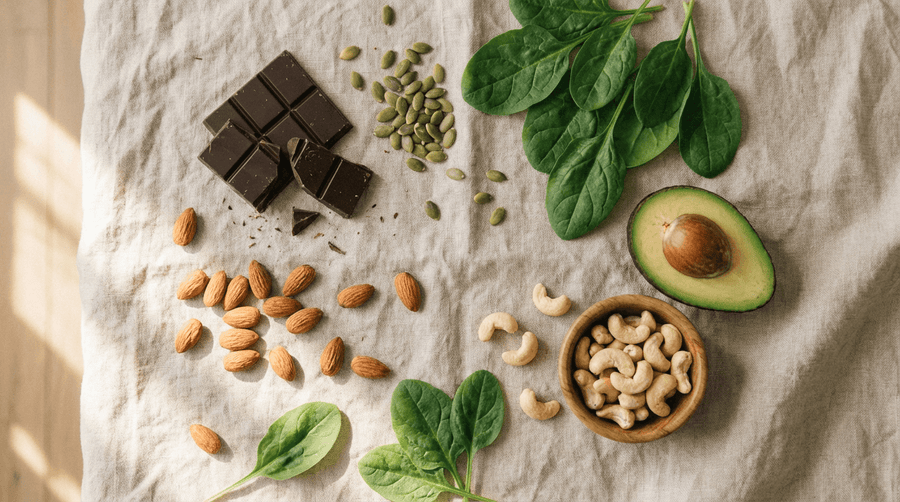
A handful carries magnesium, vitamin E and about 6 g of protein. The skins hold most of the polyphenols, so blanched almonds are the weaker version.
- A small handful, about 25 g
- Most days, if you like them
Dry goods
-
About 4 g of fibre in one apple with the skin on, and Danish varieties store from September into spring. Peeled, you lose roughly half of that fibre.
- One medium apple
- Most days
Produce
B
-
The most portable source of potassium and B6 in the shop, and cheap all year. A slightly green one carries resistant starch that a ripe one has already turned to sugar.
- One banana
- Most days
Produce
-
One of the richest dietary nitrate sources there is, plus folate and fibre. Vacuum-packed cooked ones cost little and save you the forty minutes of boiling.
- Two small ones, around 130 g cooked
- A couple of times a week
Produce
-
Frozen within hours of picking, so they hold their vitamin C better than fresh berries flown in out of season. A bag costs a third of the fresh punnet.
- A handful, about 80 g
- Most days. Frozen is just as good
Frozen · produce
-
Similar protein and fibre to kidney beans, with the dark skins carrying polyphenols the pale beans do not. Straight from the tin into a pan of anything tomato based.
- Half a tin, about 120 g drained
- Two or three times a week
Pantry
-
Roughly four times the vitamin C of an orange, gram for gram, and among the highest of any fruit grown here. Frozen year round, and they hold their colour and their acid.
- A small handful, about 60 g
- In season, or frozen
Frozen · produce
-
Among the richest food sources of B12 and iron there is, gram for gram. A kilo steams in a covered pot in six minutes and costs less than most meat.
- A bowl in the shell, about 300 g
- Once a week when they are in season
Refrigerated
-
Two nuts cover a day's selenium, which no other food manages. That density cuts both ways, so two or three a day is the sensible ceiling rather than a handful.
- Two nuts, about 10 g
- Two a day is plenty. More is not better with these
Dry goods
-
Vitamin C, vitamin K and folate in one head, and steaming keeps far more of the C than boiling does. Four minutes is done; anything more is the smell people complain about.
- A third of a head, roughly 80 g
- Two or three times a week
Frozen · produce
-
Keeps the bran that white rice has had polished off, which is where the magnesium and most of the fibre live. Rinse it first and it is far less sticky than people expect.
- 75 g dry, about half a mug
- One dinner portion
Dry goods
-
More vitamin C than an orange, gram for gram, and one of the best vitamin K sources in the shop. Roasted rather than boiled is the difference between liking them and not.
- Six or seven, roughly 80 g
- Through the winter months
Frozen · produce
-
Not wheat at all despite the name, so it is gluten free, and one of the better grain sources of magnesium. Ten minutes to cook, with a nuttier taste than rice.
- 60 g dry, a scant half mug
- Once or twice a week
Dry goods
-
Wholegrain wheat that needs no cooking, just boiling water and ten minutes under a lid. More fibre than couscous, which it otherwise resembles.
- 60 g dry, a scant half mug
- One lunch or dinner portion
Dry goods
C
-
Danish, stored and cheap all year, and the beta-carotene absorbs several times better when they are cooked with a little fat. Raw is fine too; it is just less efficient.
- Two medium, about 120 g
- Most days
Produce
-
More iron and zinc than most nuts, and soft enough to blend into a sauce. Buy them unsalted, since the salted versions carry a surprising amount.
- A small handful, about 25 g
- A few times a week
Dry goods
-
Danish through late summer and autumn, and a whole head is two or three meals. Roasted in wedges it caramelises; boiled it turns into the version people remember from school.
- A quarter of a head, about 80 g
- Two or three times a week
Frozen · produce
-
An ugly root that keeps for a month and costs almost nothing. Mashed half and half with potato it cuts the starch and adds fibre without anyone noticing.
- A thick wedge, roughly 120 g
- A couple of times a week in winter
Produce
-
About 10 g of fibre per 30 g, which is more than most people get from a whole meal. They need liquid and twenty minutes, or they simply pass through.
- One tablespoon, about 15 g
- Once a day, soaked first
Dry goods
-
Around 23 g of protein per 100 g, the highest of any everyday meat for the calories. Cooked in a batch on Sunday it turns three lunches into an assembly job.
- One breast, about 120 g
- Two or three times a week
Refrigerated
-
About 7 g of protein and 6 g of fibre per half tin, plus folate and iron. Rinse them and they are lunch with no cooking at all.
- Half a tin, about 120 g drained
- Two or three times a week
Pantry
-
About 18 g of protein per 100 g with almost no fat, plus iodine, which is hard to get elsewhere. Frozen loins cook from frozen in ten minutes.
- A palm-sized piece, roughly 150 g
- Once a week, or more if you like it
Frozen
-
Around 12 g of protein per 100 g, which is more than most yoghurt, plus calcium. On rugbrød with a grind of pepper it is a lunch that needs no cooking.
- Half a tub, around 100 g
- Most days if you like it
Dairy
-
Ninety five percent water, so it counts towards the fluid you are drinking as well as the vegetables you are eating. Leave the skin on; that is where the vitamin K is.
- A third of one, around 100 g
- Whenever you want something cold and crisp
Produce
D
-
A genuine magnesium source, not just a treat, but only at 70 percent or above. Two squares is a portion, and milk chocolate does not count here.
- Two or three squares, around 20 g
- Whenever you fancy it
Pantry
-
One of the better plant iron sources you can keep in a drawer, and the vitamin C in a piece of fruit alongside helps you absorb it. Six is a portion; the bag disappears faster than that.
- Four or five, about 30 g
- A small handful. They are concentrated
Dry goods
E
-
About 11 g of protein per 100 g, the most of any vegetable in the freezer. Four minutes in boiling water, and salted they work as a snack rather than a side.
- A small bowl, about 80 g podded
- Once or twice a week
Frozen
-
Two eggs give you about 12 g of protein and a useful amount of B12. Boiled ahead, they are the fastest breakfast protein there is.
- Two eggs
- Most days suits most people
Refrigerated
F
-
Whole flaxseed passes through you intact, so buy it ground or grind it yourself. Ground, a tablespoon gives a real dose of plant omega-3 and keeps a week in the fridge.
- One tablespoon ground, about 10 g
- Once a day. Ground rather than whole
Dry goods
-
The fortified cartons carry calcium, B12 and vitamin D at roughly the level of milk. The unfortified ones carry almost none, so the small print on the side is the whole decision.
- A glass, around 200 ml
- Once a day. Look for one with added calcium
Refrigerated
-
Frozen within hours of picking, so they often beat fresh peas on vitamin C. About 5 g of protein per 100 g, which is unusual for something in the vegetable aisle.
- A generous handful, about 80 g
- As often as you like, straight from the freezer
Frozen
H
-
The densest calcium in an ordinary fridge, roughly 700 mg per 100 g, and about 25 g of protein with it. Two slices on rugbrød is a portion; the block is easy to lose track of.
- Two thin slices, around 25 g
- Most days. It adds up quickly
Dairy
-
The best everyday source of vitamin E in the nut aisle, and they grow in Denmark. Toasted for six minutes in a dry pan they taste like a different food entirely.
- A small handful, about 25 g
- A few times a week
Dry goods
-
Vitamin D and omega-3 in a form Denmark has eaten for centuries. A jar on rugbrød is lunch in about four minutes, and it keeps for weeks once opened.
- Two or three fillets, about 100 g
- Once or twice a week
Frozen
-
Chickpeas and sesame in a tub, so it brings protein, fibre and iron with no preparation at all. On rugbrød it turns a slice of bread into something that holds you until dinner.
- Two heaped tablespoons, about 60 g
- Whenever you want something to dip into
Refrigerated
J
-
Full of inulin, a fibre your gut bacteria feed on directly. That is also why a large portion the first time is famously a mistake, so start small.
- A small handful, about 80 g
- Start small. They are famously windy
Produce
K
-
More vitamin K than almost anything else in the shop, plus calcium in a form that absorbs well. Massaged with a little oil it stops being tough enough to chew twice.
- A generous handful, about 80 g
- Two or three times a week through winter
Produce
-
More and more varied live cultures than yoghurt, plus calcium and B12. It is tart on its own, which is what the fruit at the bottom of the flavoured ones is hiding.
- A small glass, around 200 ml
- Once a day
Dairy
-
About 7 g of protein and 6 g of fibre per half tin, for a few kroner. Rinsing them well takes off most of the tinned taste and some of the gas-forming sugars.
- Half a tin, around 120 g drained
- Two or three times a week
Pantry
-
Live cultures in a drink, which suits people who will not eat fermented food. Check the sugar on the bottle; some brands are closer to a soft drink than the rest.
- A small glass, around 150 ml
- Once a day at most. It is still sugary
Refrigerated
L
-
The iron in meat is absorbed several times better than the iron in plants, and this is the cheapest way to get it. Eight to twelve percent fat keeps it lean without going dry.
- A palm-sized portion, roughly 100 g cooked
- Once or twice a week
Refrigerated
-
In season through the Danish winter when little else green is. The dark tops are the most nutritious part and the part most people throw away, so use them in stock.
- One medium leek, around 100 g
- A couple of times a week
Produce
-
Around 9 g of protein and 8 g of fibre per 100 g cooked, plus iron and folate. Red ones collapse in fifteen minutes and need no soaking at all.
- Half a mug cooked, roughly 150 g
- Two or three times a week
Refrigerated
-
Genuinely high in iron and B12, which is unusual for something this ordinary and this cheap. It is also very high in retinol, which is why it is left out entirely during pregnancy.
- A thin layer on one slice, about 20 g
- Once a week is plenty
Refrigerated
M
-
One of the few foods with real vitamin D in it, alongside omega-3. A tin keeps in the cupboard for months and needs nothing done to it.
- Half a tin, around 80 g
- Once or twice a week
Frozen
-
About 120 mg of calcium per 100 ml and the single largest iodine source in the Danish diet. Fat percentage changes the calories but barely touches the calcium.
- A glass, around 200 ml
- Once a day
Dairy
-
Fermented soy with live cultures and a lot of salt, so it is a seasoning rather than a portion. Stir it in after the heat is off, or the cultures do not survive.
- One teaspoon, about 15 g
- Stirred in off the heat rather than boiled
Refrigerated
-
The only non-animal food with any real vitamin D, and it rises sharply if you leave them gills-up on a windowsill for an hour of daylight. Danish autumn is their season.
- A handful, about 80 g
- Two or three times a week
Produce
No foods match that search.
We are putting together a handful of quick, easy meals built around the foods already on your list. Nothing that needs a shopping trip or an hour at the stove, just things you could genuinely make on a Tuesday evening. Would you like that?
We have got it, and thank you. Knowing you would use this is exactly what tells us to go and build it, and we read every one of these ourselves. If something else occurs to you later, just send us another message.
Self care
The things worth trying, gathered from each of your focus areas.
Before you start
Before you start
Four things decide most of what happens on this page: how you sleep, how you move, what you eat, and what you take. They are listed in that order deliberately, because that is roughly the order of how much each one is likely to change for you, and knowing the order is what stops effort going to the wrong place.
What a supplement is for
A supplement closes a gap. That is the whole job, and it is a genuinely useful one when a gap exists. Vitamin D through a Danish winter is the clearest case there is: between roughly October and March the sun never climbs high enough at this latitude for skin to make any, whatever the weather is doing, so what you take becomes the only route left. Vitamin D contributes to the maintenance of normal bones and to the normal function of the immune system, and none of that is available to you from sunlight for half the year here.
The same logic applies to iron when stores are genuinely low, to vitamin B12 on a diet without animal products, and to folate before and during pregnancy. In each case something specific is missing and something specific supplies it.
What a supplement will not do is stand in for a habit that is not there. It sits underneath the other three rather than beside them, which is why your plan is usually shorter than you expect and why the lists below are longer.
Movement has the strongest evidence of anything here
If everything on this page were ranked by weight of evidence, movement would come first, and it is not close. It is also the one most often approached as all or nothing, which is exactly what makes it fail.
- Resistance training: the most reliable way to maintain muscle and bone as you get older. Two sessions a week is the point at which most of the benefit appears, and carrying shopping, stairs and anything heavy all count towards it.
- Aerobic activity: works on the heart, the circulation and, on current evidence, the brain. The Nordic recommendation is 150 minutes a week at moderate intensity, which is a little over twenty minutes a day.
- Simply sitting less: separate from exercise and worth counting on its own. Breaking up long stretches of sitting appears to matter even for people who already train.
- The step from nothing to something: larger than any step that comes after it. Going from sedentary to lightly active is the biggest single change available to most people, and it does not require a gym.
Food does more than any capsule, and does it more slowly
Food carries nutrients in combinations and amounts that are hard to reproduce in a capsule, and it brings fibre, protein and the compounds in plants along with them. It is also the slowest of the four to show a result, which is why it gets abandoned first.
- Variety beats precision: the number of different plants across a week predicts more than the exact quantity of any one of them. Herbs, spices, nuts, seeds, wholegrains and pulses all count.
- Fibre is the most under-eaten thing in a Nordic diet: the recommendation is around 30 grams a day and most people are well under it. Rye bread, oats, pulses and berries are the least demanding way back to it.
- Protein is under-eaten without anyone noticing: it matters more with age, not less, and spreading it across the day does more than concentrating it in one meal.
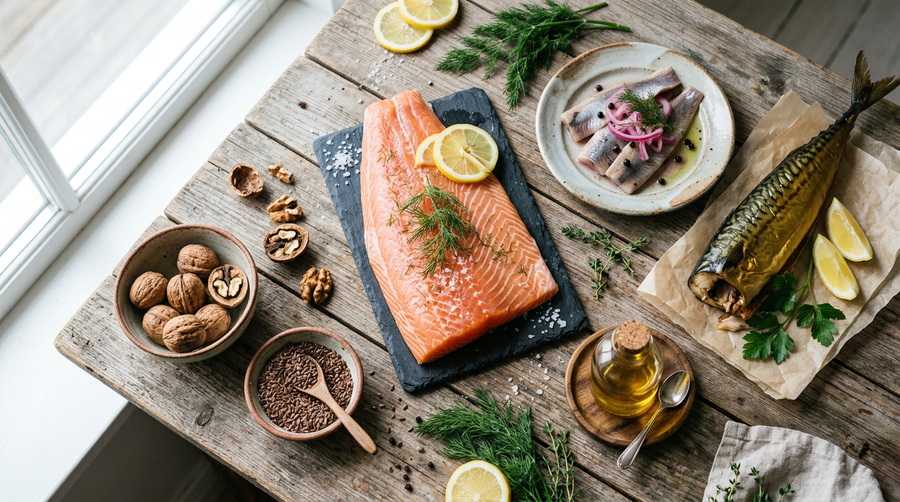
- Oily fish twice a week: the single most Nordic piece of dietary advice there is, and still among the best supported. Herring, mackerel and salmon are the cheap end of it.
Sleep is the multiplier
Sleep is listed first because it changes how well everything else works. Training recovers less well on broken sleep, appetite and food choices shift measurably after a short night, and the day after poor sleep is the day the other three are hardest to keep up. It is also the one people treat as the flexible part of the day, which is understandable and expensive.
The part worth knowing is that sleep answers better to the morning than to the evening. Light early in the day sets the clock that decides when you feel tired sixteen hours later, and a wake time that stays roughly steady does more than any bedtime routine.
How to use what follows
Below is a list for each of the areas you chose, written for you rather than for everybody. They are ordered by how little they ask of you, so the first item on each list is usually the one to start with. Nothing here needs to be done all at once, and doing one thing properly for a month tells you far more than doing six things loosely for a week.
Nothing here yet
Once your focus areas are written, everything worth trying appears here in one list.
Supplements
Everything we make, with the ones your answers pointed towards at the top. Open any of them to see what it is for, how much to take, and why it is or is not part of your plan.
Your priorities
Worth considering
Everything we make
A
-
Vitamin C contributes to the normal function of the immune system, collagen production, and protection of cells from oxidative stress. Our acerola-based formula supports your daily wellbeing naturally, with plant-based antioxidants and bioavailable vitamin C.
Not part of your plan. Nothing in your answers suggested you need this one.
- 30 days supply
- 1 capsule a day
When: Take it with food and a glass of water, ideally with a main meal to support absorption and comfort. You can adjust your intake to your needs, for example during times of increased stress or seasonal changes. We do not recommend taking it on an empty stomach, especially if you are sensitive to acids. Take it around the same time each day to help build the habit.
B
-
B-vitamins work together to support the release of energy from the food you eat, contribute to normal brain and nervous system function, and help maintain healthy red blood cell formation. They are essential for everyday vitality, especially during periods of stress, high mental demand, or increased physical activity. They don’t stimulate the body; they simply support its natural processes.
Not part of your plan. Nothing in your answers suggested you need this one.
- 30 days supply
- 1 capsule per day
When: Morning is ideal, especially as part of an energy-support routine. Some people feel more alert on B-complex, so take it at least 4 hours before bedtime. Taking it with food, especially a meal that contains healthy fats, may help your body absorb the nutrients more efficiently. Take it around the same time each day to help build the habit.
-
Biotin contributes to the maintenance of normal hair and skin, and supports normal energy-yielding metabolism. It also plays a role in the normal function of the nervous system and psychological function, as well as normal macronutrient metabolism. Taken daily, it offers gentle, ongoing nutritional support as part of a balanced lifestyle.
Not part of your plan. Nothing in your answers suggested you need this one.
- 30 days supply
- 1 tablet per day
When: Biotin can be taken at any time, but having it with a meal supports comfort and makes it easier to build into a routine. Morning or lunchtime works well for most people. Consistency is more important than the exact time of day.
C
-
CoQ10 Plus supports your body’s natural energy production and helps maintain healthy heart and muscle function. It’s especially useful if you’re feeling low on energy, under stress, or simply want to support your body as you age. Each capsule provides 100 mg of high-quality CoQ10 plus vitamin B1, which contributes to normal energy-yielding metabolism and heart function.
Not part of your plan. Nothing in your answers suggested you need this one.
- 30 days supply
- 1 capsule a day
When: Take it with a meal, preferably in the morning. Coenzyme Q10 is fat-soluble, so taking it with food, especially a meal that contains healthy fats, may help your body absorb it more efficiently. Morning is ideal if you use it as part of your energy-support routine. Some people feel more alert on Q10, so if you are sensitive to this, avoid taking it close to bedtime. If you have a sensitive stomach, start with half a capsule or take it with a larger meal for a few days. If you are on blood thinners, consult your healthcare provider first. Q10 works best when taken consistently over time. Pair it with your breakfast or morning vitamins to make it a habit.
D
-
Daily Multivitamin provides a broad spectrum of essential vitamins and minerals that contribute to normal immune function, energy metabolism, and overall health support.
Not part of your plan. Nothing in your answers suggested you need this one.
- 30 days supply
- 1 tablet per day
When: Take it ideally with a meal, to support absorption and be gentle on the stomach. Breakfast or lunch also helps avoid nausea. Not recommended for children, or during pregnancy or breastfeeding unless advised by a healthcare provider. Store in a cool, dry place to preserve freshness. Take it at the same time each day. Daily use brings the best results.
E
-
Our multivitamin supports immune function, energy metabolism, bone health, and cognitive balance, especially helpful for those following a plant-based diet. It covers all key vitamins and minerals your body needs daily
Not part of your plan. Nothing in your answers suggested you need this one.
- 60 Vegan capsules per bottle
When: Take them ideally with a meal, to support absorption and be gentle on the stomach. Breakfast or lunch also helps avoid nausea. You can take both tablets at once or split them across the day, depending on your routine. Not recommended for children, or during pregnancy or breastfeeding unless advised by a healthcare provider. Store in a cool, dry place to preserve freshness. Take it at the same time each day. Daily use brings the best results.
G
-
This formula provides a standardised Ginkgo Biloba extract together with a full B-complex. B-vitamins contribute to normal psychological function and the normal functioning of the nervous system, as well as helping to reduce tiredness and fatigue and support normal energy-yielding metabolism. Together, this supplement offers simple, everyday nutritional support as part of a balanced lifestyle.
Not part of your plan. Nothing in your answers suggested you need this one.
- 30 days supply
- 1 capsule per day
When: You can take it at any time of day, preferably with food. This supports comfortable digestion. If you take more than one capsule a day, you can take them together or spread them out, whichever feels best for your body. The timing is flexible. Consistency matters most.
H
-
Zinc contributes to the normal function of the immune system, the maintenance of normal skin, hair, and nails, and the protection of cells from oxidative stress. It also supports normal cognitive function and normal fertility and reproduction. Taken daily, it provides steady, foundational support for overall wellbeing.
Not part of your plan. Nothing in your answers suggested you need this one.
- 30 days supply
- 1 capsule per day
L
-
L-Tyrosine is a naturally occurring amino acid that serves as a building block for important neurotransmitters in the brain. These include dopamine, adrenaline, and noradrenaline , chemicals that help regulate mood, focus, and the body’s response to stress.
Not part of your plan. Nothing in your answers suggested you need this one.
- 30 days supply
- 1 capsule per day
When: Do not take it within 3 hours of bedtime, as it may slightly increase alertness. It is absorbed best on an empty stomach or with a light carbohydrate-only snack, as proteins can compete for absorption. For best results, take it in the morning or early afternoon.
M
-
Magnesium contributes to normal muscle function, normal psychological function, and the reduction of tiredness and fatigue. It also supports the normal functioning of the nervous system, normal energy-yielding metabolism, and the maintenance of normal bones and teeth. Vitamin B6 likewise contributes to the reduction of tiredness and fatigue, normal energy metabolism, and the normal function of both the nervous system and psychological processes. Together, magnesium and Vitamin B6 provide steady, daily nutritional support for both body and mind.
Not part of your plan. Nothing in your answers suggested you need this one.
- 30 days supply
- 1 capsules per day
When: You can take it with or without food. Many people prefer a meal, to support comfortable digestion. If you take more than one capsule a day, you can take them together or spread them out, whatever feels best for your body. Take it at any time of day: morning, midday or evening. Consistency matters more than the exact timing.
P
-
Our Pregnancy Multivitamin is a comprehensive prenatal formula designed for women of child-bearing age. It provides 400 mcg folic acid (which contributes to maternal tissue growth during pregnancy), 17 mg iron, 150 mcg iodine, 10 mcg vitamin D3, along with a full spectrum of B vitamins, vitamin C, vitamin E, vitamin K, magnesium, zinc, selenium, copper, and betacarotene. Together, these nutrients support both your wellbeing and your baby's healthy development.
Not part of your plan. Nothing in your answers suggested you need this one.
- 30 days supply
- 1 tablet per day
When: Take it with your main meal. A full stomach helps the nutrients absorb gently and effectively, and your most substantial meal helps with the fat-soluble vitamins D and E. Swallow the tablet whole with a glass of water or a cold drink. Hot tea or coffee can break down the coating too quickly. To absorb the iron, enjoy tea or coffee at least one hour away from your tablet. This formula is designed to support you through every stage of pregnancy and replaces your other multivitamins, so you need nothing extra. It is suitable for vegetarians, not vegans, and free from gluten, yeast, lactose, gelatin and artificial colours or preservatives. For allergy advice, see the Nutritional Information section. If you have a sensitive stomach, take it in the middle of your meal, rather than before or after.
-
Probio supports the balance of good bacteria in your gut, which can help promote smoother digestion, reduce occasional bloating, and support gut health overall. It’s a simple way to care for your inner balance daily.
Not part of your plan. Nothing in your answers suggested you need this one.
- 30 days supply
- 1 capsule per day
When: Do not swallow the capsules with hot drinks, as heat can affect the live cultures. If you are taking medication or have health concerns, consult your healthcare practitioner before use. Store in a cool, dry place, away from sunlight and out of reach of children. Try to take it daily. A diet rich in fibre helps nourish your gut bacteria.
S
-
Saw Palmetto is a botanical extract made from the berries of the Serenoa repens plant. The extract naturally contains fatty acids and plant sterols, and has a long history of traditional use in various wellness practices. Our extract is standardised to ensure consistent quality and composition from capsule to capsule. As with all botanicals, benefits are generally experienced gradually through consistent daily use as part of a balanced diet and healthy lifestyle.
Not part of your plan. Nothing in your answers suggested you need this one.
- 30 days supply
- 1 capsule per day
When: Take it with a meal, at whatever time fits your routine. Morning or lunchtime is ideal for most people. Consistency matters more than the exact time of day.
-
Selenium is an essential trace mineral that plays a supportive role in everyday health. It contributes to the normal functioning of the immune system and helps protect cells from oxidative stress. Selenium also supports normal thyroid function, maintains healthy hair and nails, and contributes to normal spermatogenesis. It works quietly in the background as part of your daily wellbeing.
Not part of your plan. Nothing in your answers suggested you need this one.
- 30 days supply
- 1 capsule per day
When: Selenium absorbs well, but taking it with a meal supports comfortable digestion and makes it easy to build into your routine. Morning or lunchtime tends to work best for most people.
-
Sleep+ supports your body’s natural relaxation and sleep cycle by combining calming amino acids, soothing plant extracts, and magnesium to help reduce stress and promote restful nights.
Not part of your plan. Nothing in your answers suggested you need this one.
- 30 days supply
- 1 capsule a day
When: A glass of water is enough. You do not need food unless you prefer it that way. Make it part of your wind-down routine, like brushing your teeth. Try not to mix it with caffeine, alcohol or other stimulants late in the day. They can work against what Sleep+ is trying to help your body do. If you are pregnant, breastfeeding or on medication, check with your doctor first. Take it around the same time every night to help your body settle into a rhythm.
V
-
AlgaePure Omega-3 provides a pure, plant-based source of the essential fatty acids DHA and EPA. DHA contributes to the maintenance of normal vision and brain function, while EPA and DHA together contribute to the normal function of the heart. Maternal intake of DHA also contributes to normal brain and eye development of the fetus and breastfed infants. The beneficial effects are obtained with a daily intake of 250 mg DHA (for brain and vision) or 250 mg EPA and DHA (for heart), in line with EFSA guidelines.
Not part of your plan. Nothing in your answers suggested you need this one.
- 30 days supply
- 2 softgel a day
When: Breakfast or lunch usually works best. Omega-3 absorbs better with food, especially meals that contain some healthy fat. Store it away from direct sunlight and heat to protect the oil. If you are on medication or have specific health concerns, check with your doctor first. Take it at the same time each day, for example with your morning tea or vitamins.
-
Vitamin D3 plays a key role in maintaining normal bone and muscle function, supporting a healthy immune system, and helping your body absorb calcium effectively. It’s one of the essential nutrients that keeps multiple systems working smoothly behind the scenes.
Not part of your plan. Nothing in your answers suggested you need this one.
- 30 days supply
- 1 soft gel a day
When: Any time of day works, but taking it with a meal can help absorption. Pick a time that is easy to remember. Habits build consistency, and consistency is what brings results.
-
Vitamin B12 plays several vital roles in your body. It supports normal energy metabolism, helping reduce tiredness and fatigue. B12 is essential for healthy red blood cell formation, proper nervous system function, and normal psychological function. It also contributes to a healthy immune system. With 40,000% of the Nutrient Reference Value per capsule, this supplement provides a substantial dose to help maintain optimal B12 levels, particularly beneficial for those who may have difficulty absorbing or obtaining adequate amounts through diet alone.
Not part of your plan. Nothing in your answers suggested you need this one.
- 30 days supply
- 1 tablet a day
When: Vitamin B12 is essential for energy metabolism. Many people find it slightly stimulating, so taking it in the morning helps power your day. A high dose late in the evening can sometimes interfere with falling asleep. B12 is water-soluble and does not need fat to be absorbed. Taking it on an empty stomach, about 30 minutes before food or 2 hours after, gives a high dose the best chance of being absorbed. If a high dose makes you feel jittery or gives you an upset stomach, take it with a light breakfast. It still works, even if absorption is slightly slower.
-
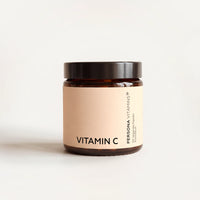
Vitamin C plays an essential role in supporting the immune system, protecting cells from oxidative stress, and contributing to normal collagen formation for healthy skin, bones, and blood vessels. It also supports normal energy metabolism and helps maintain overall wellbeing. It works as a gentle, foundational nutrient that your body relies on every day.
Not part of your plan. Nothing in your answers suggested you need this one.
- 30 days supply
- 1 tablet per day
When: You can take Vitamin C at any time of day. Taking it with a meal supports absorption and is gentler on the stomach, especially if you are sensitive on an empty stomach. Vitamin C is water-soluble, so your body absorbs what it needs and does not store the excess. Not recommended for children, or during pregnancy or breastfeeding unless advised by a healthcare provider. Take it around the same time each day to help build the habit.
Z
-
Zinc contributes to the normal function of the immune system, the maintenance of normal skin, hair, and nails, and the protection of cells from oxidative stress. It also supports normal cognitive function and normal fertility and reproduction. Taken daily, it provides steady, foundational support for overall wellbeing.
Not part of your plan. Nothing in your answers suggested you need this one.
- 30 days supply
- 1 capsule per day
When: Take it at any time during the day, with food. Some people may have mild stomach sensitivity if zinc is taken on an empty stomach. Morning or lunchtime is often a convenient choice.
Nothing matches that search.
Because of what you take
Each of these is here because of something specific in your plan. If your plan changes, this list changes with it.
-
Vitamin C, on purpose
This is the one worth going out of your way for. Vitamin C markedly increases how much iron your body takes up from plants, and it does not have to come from a capsule. A squeeze of lemon, a few strawberries or half an orange alongside your iron does the same job for almost nothing. If vitamin C is in your plan as well, this is the pairing to put the two of them in.
-
When in the day to take it
Iron is absorbed best when there is not much else in your stomach, which argues for first thing in the morning or between meals. It also sits badly with some people taken that way. If it leaves you queasy, take it with a small amount of food instead. Slightly less absorbed and actually taken beats perfectly timed and quietly abandoned.
-
Coffee and black tea
If your iron and your first coffee of the day happen at the same moment, this is the easiest thing on this page to change. The tannins in coffee and black tea hold on to plant iron and carry a good deal of it straight through you. An hour between the two is enough, and nobody is asking you to give up either one.
-
Skyr, cheese and milk
Calcium and iron take the same route into the body, and only one of them gets the seat. That is not a reason to eat less dairy, only a reason to keep it away from the moment you take your iron. Iron in the morning and the skyr, cheese and milk later on works perfectly well.
-
An empty stomach
Zinc taken on its own with nothing else in your stomach leaves a fair number of people feeling queasy an hour later, and it catches people out because nothing about the capsule suggests it. Take it with a meal and that mostly disappears. If iron is in your plan too, leave a couple of hours between the two, since they compete for the same way in.
-
Fat, and not much of it
Vitamin D will not dissolve in water, so a capsule swallowed with black coffee has very little to travel on. It does not take much to fix. Eggs, yoghurt, oats with milk or a slice of bread with butter is plenty. Whichever of your meals has some fat in it is the right home for this one.
-
Your biggest meal of the day
Omega-3 is an oil, and oils are absorbed considerably better arriving with a proper meal than on their own. There is a second reason nobody mentions until it has already happened: taken on an empty stomach it is far more likely to repeat on you an hour later. Dinner is usually the easiest home for it.
-
Evening suits it
Magnesium contributes to normal muscle function and to the normal working of the nervous system, and most people find the evening the easiest place to fit it into a day. Take it with something to eat rather than on its own, which is kinder on the stomach. If mornings already work for you, there is no reason to move it.
-
A course of antibiotics
Antibiotics do not distinguish between the bacteria you would rather keep and the ones you are treating, so swallowing your probiotic at the same moment wastes most of it. Two or three hours between the two is enough, and it is worth carrying on through the course rather than pausing until it ends. Your doctor's instructions on the antibiotic itself always come first.
-
Hot tea and coffee
Live cultures are living things, and heat is the quickest way to undo them. Washing the capsule down with a hot drink is the common version of this. Cool or room temperature water is all it needs, and the same logic is why the pack is happier in a cupboard than on a sunny windowsill.
-
More is not more
Vitamin C dissolves in water, so your body takes what it can use at that moment and passes the rest along. A large single dose is therefore partly wasted, and splitting it across the day gets more out of the same capsule. It is also why this is one of the harder nutrients in your plan to overshoot.
-
Timing barely matters here
There is no clever timing for this one. Collagen peptides are absorbed perfectly well whenever you take them, with food or without, morning or evening. What counts is taking it most days across a stretch of months, because it is one of the slower things in your plan to show itself. Put it wherever you are most likely to remember it.
-
With breakfast
Vitamin B12 contributes to normal energy-yielding metabolism and folate to the reduction of tiredness and fatigue, and breakfast is the natural home for both. Absorption does not depend on the hour, so this one is about habit rather than chemistry: the morning dose is the one people actually remember. Some also find B vitamins a little too lively late in the evening.
Nothing to keep apart
Nothing in your plan needs separating from a particular food or drink. The general timing notes below still apply to everyone.
Worth knowing generally
These hold for anyone taking anything, whatever ends up in your plan.
-
Most days beats perfect days
If you take only one thing from this page, take this one. A supplement swallowed five mornings out of seven at a slightly wrong moment does far more for you than a flawless routine you keep for a fortnight and then drop. Nutrient levels move over weeks and months, so what they respond to is the average rather than any single day. Missing one is genuinely fine.
-
Tie it to something you already do
The routines that survive are the ones attached to something that was happening anyway. Next to the kettle, beside your toothbrush, on the table where you eat breakfast. Most of what is on this page comes down to taking these alongside a meal, so the meal you never skip is the strongest hook you have.
-
Your last coffee of the day
Caffeine has a half life of around five to six hours, which means an afternoon coffee is still half with you at bedtime even when you fall asleep without trouble. If sleep is the thing you would most like to shift, moving your last cup earlier is usually a gentler change than drinking fewer of them, and it tends to be the one that lasts.
-
A drink close to bedtime
Alcohol gets most people to sleep faster and then quietly takes the good part of the night away. It suppresses the deeper stretches, which is why you can spend a full eight hours in bed after a nightcap and wake feeling as though you did not. Earlier in the evening is much kinder than the last hour before bed.
-
How long before you notice
Almost nothing here works in a week. Most nutrient levels need four to twelve weeks of steady taking before they have shifted enough for you to feel it, and a few of the slower ones sit at the far end of that. It is worth knowing at the start, so that the third week does not feel like a failure. We check in with you along the way, and anything that is not earning its place comes out again together.